Dr Ronald A. DePinho ? president of the University of Texas MD Anderson Cancer Center (Texas, USA) ? has received an Agilent Thought Leader Award.

Dr Ronald A. DePinho ? president of the University of Texas MD Anderson Cancer Center (Texas, USA) ? has received an Agilent Thought Leader Award.

DryLab?4 offers users an intuitive and visual software solution for method development, optimization, trouble-shooting, robustness testing, and training. The new robustness module establishes the reliability of your method.

In a random study of drugs from 713 pharmacies from 19 countries, 9.1% of anti-tuberculosis drugs analysed failed basic quality control testing using thin layer chromatography (TLC) for the required level of active pharmaceutical ingredient (API), according to a recent study published in the International Journal of Tuberculosis and Lung Disease.

Click here to view the complete E-Separation Solutions newsletter from March 7, 2013.

Lisa Witte, vice-president/general manager of Thermo Fisher Scientific's portable analytical instruments business (Massachusetts, USA), has received a Women in Manufacturing STEP (Science, Technology, Engineering and Production) award from the Manufacturing Institute/Deloitte, the University of Phoenix and the Society of Manufacturing Engineers.

Pittcon will be held in Philadelphia for the first time this year. Philadelphia is the centre of one of the top life science clusters in the USA, bringing together the pharmaceutical, biotechnology, medical devices, R&D and a wide range of other supporting industries.

Analytical Pixels Technology (APIX) (Grenoble, France) has teamed up with research organisations, CEA–Leti (Grenoble, France) and Caltech (California, USA).

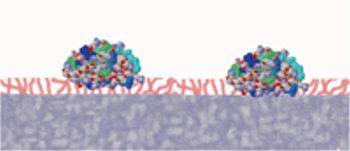
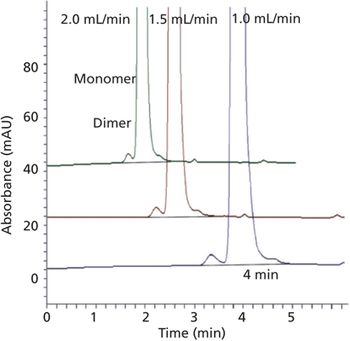
Mary Wirth, the W. Brooks Fortune Distinguished Professor in the Department of Chemistry at Purdue University, Indiana, USA, discusses her groundbreaking work involving protein column efficiency.

Quantitative proteomics aims to provide large-scale qualitative and quantitative data about every protein in a biological sample. However, drawbacks associated with current techniques can make it difficult to generate the data required. Research scientists have recently developed a new approach that allows highly multiplexed high-resolution MRM quantitation of most of the detectable proteins in a sample in a single analysis.

An interview with Mark Hayes, a finalist for the 2012 FACSS-SciX Innovation Award. Part of the 2013 podcast series presented in collaboration with the Federation of Analytical Chemistry and Spectroscopy Societies (FACSS), in connection with SciX 2013, the federation?s North American conference.

Wyatt Technology Corporation


Wyatt Technology Corporation


Answers to common questions about operational qualification software.

In this month's instalment, we address common questions about various gases and their delivery to a gas chromatograph.

Application Note

This article discusses the details of how the newer techniques of sample prepaation are simplified by the use of LC–MS–MS and GC–MS–MS technology.

With so many HPLC columns on the market we present a simple guide to what's important when making your stationary phase and column dimension choices.

MS: The Practical Art Editor Kate Yu interviews Fred McLafferty about his pioneering career in mass spectrometry.

A panel of experts discuss the latest trends in sample preparaion.

Small solid rubber samples can be analyzed without sample preparation.

This article describes a new analytical method for the global profiling of molecular lipids in biological samples, with particular emphasis on the plasmalogen lipids.

Fast, easy, and resproducible determination of capsaicinoid content

A sensitive method that reduces the number of false-positive results

American Chemical Society Honors Brian Bidlingmeyer

A how-to on understanding gradient elution

A systematic approach for the identification of nontargeted species using nominal and accurate mass data searching both mass spectral and "spectral-less" databases is described.

The detection limit, analytical precision, dynamic range, and robustness of a method for the targeted quantification of peptides using a capillary-flow LC–MS system were evaluated by spiking known amounts of isotopically labeled yeast peptides into a 500-ng yeast digest matrix.