
The Application Notebook
Wyatt Technology Corporation
The Application Notebook
Wyatt Technology Corporation

LCGC Europe
Click the title above to open the LCGC Europe March 2014 Analytica Guide Supplement, Vol 27 No s3, in an interactive PDF format.
LCGC North America
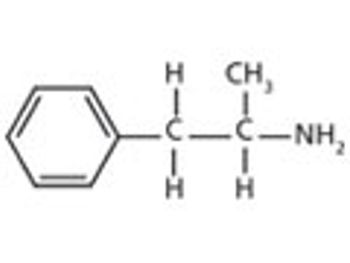
An efficient method for forensic analysis of amphetamines and synthetic cathinones - the illicit drugs often called "bathsalts" - in hair samples

LCGC Asia Pacific
The advent of ultrahigh-pressure liquid chromatography (UHPLC) and its successful commercialization in the last few years has brought forth a modern high performance liquid chromatography (HPLC) platform capable of higher speed, resolution, precision, and sensitivity. Currently, all major HPLC manufacturers have some type of low-dispersion UHPLC products with upper pressure limits ranging from 15,000 to 19,000 psi (1000 to 1300 bar) on the market. This installment describes a number of popular myths or half-truths in UHPLC and provides data that contradict or even repudiate some of these commonly held beliefs.
LCGC North America
Daniel W. Armstrong, a professor of chemistry and biochemistry at the University of Texas Arlington in Arlington, Texas, is to receive the 2014 American Chemical Society Award in Separations Science and Technology.

LCGC Europe
In the pharmaceutical industry, the demonstration of drug substance (DS) or drug product (DP) stability over the shelf life is an important aspect of the regulatory requirements.


LCGC Europe
If scaling isocratic separations is so simple, why is gradient scaling so confusing?

LCGC North America
Stacking and sweeping injection methods are compared and practical suggestions are provided about how to enhance sensitivity for charged and neutral compounds.
LCGC Europe
This instalment discusses the storage and use of carrier and detector gases, gas filtration, and the means by which pressures are controlled on the way from the gas supplies to a GC instrument.

LCGC Asia Pacific
What good is that big, ugly peak at the beginning of the chromatogram?
LCGC Asia Pacific
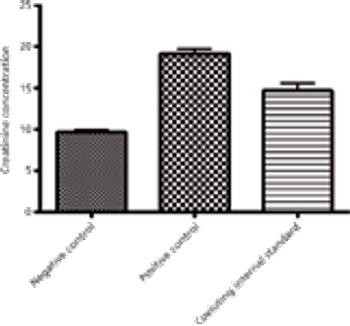
Currently available methods for the detection of matrix effects in liquid chromatography–mass spectrometry (LC–MS) are tedious and complex; therefore, a simpler method is required. Although there are no methods to completely eliminate matrix effects, the most well-recognized technique available to correct for matrix effects is that of internal standardization using stable isotope–labelled versions of the analytes. As this method can prove expensive, an alternative method of correction is likely to be useful. In this study, a simple method based on recovery is assessed for the detection of matrix effects. Two alternative methods for the rectification of matrix effects in LC–MS are also assessed: Standard addition and the coeluting internal standard method.

LCGC Europe
The mechanisms of mixed-mode chromatography are discussed with reference to the parameters that are used to optimize selectivity and retention. Illustrative examples are presented with strategies for column selection and screening to allow this technique to be quickly and effectively adopted by end users.

LCGC Asia Pacific
There has been a significant resurgence in the development of antibody-drug conjugates (ADC) as target-directed therapeutic agents for cancer treatment.
LCGC Asia Pacific
Click the title above to open the LCGC Asia Pacific March 2014 regular issue, Vol 17, No 1, in an interactive PDF format.
LCGC Europe
Click the title above to open the LCGC Europe 2014 regular issue, Vol 27 No , in an interactive PDF format.
LCGC North America
Click the title above to open the LCGC North America March 2014 regular issue, Vol 32 No 3, in an interactive PDF format.
Special Issues
Click the title above to open the March 2014 issue of Current Trends in Mass Spectrometry, Volume 12, Number 1, in an interactive PDF format.

By 2020, more than 50% of approved drugs are expected to be protein biopharmaceuticals. Koen Sandra discusses the challenges of characterization and why LC–MS is now indispensable.
The latest newsletter from February 27.
The Column
The efficiency of protein separation by ion-exchange chromatography could be increased by up to a factor of 5 according to a new study, potentially speeding up biopharmaceutical production.1 Christy Landes of Rice University in Texas (USA) and her team performed the first molecular-scale investigation into protein ion-exchange chromatography by using direct super-resolution techniques and the stochastic theory.
E-Separation Solutions
Lisa A. Holland, of West Virginia University (Morgantown, West Virginia), will preside over this Wednesday morning session.
E-Separation Solutions
This Monday afternoon session will be presided over by Stephen G. Weber, of the University of Pittsburgh (Pittsburgh, Pennsylvania).
E-Separation Solutions
This morning, the ACS Division of Analytical Chemistry Award for Young Investigators in Separation Science will be presented to Michael Roper of Florida State University.
E-Separation Solutions
This morning at 8:30, award sessions will be held for two important awards of strong interest to scientists working in chromatographic and mass spectrometry techniques: The Dal Nogare Award from the Chromatography Forum of the Delaware Valley and the Pittsburgh Conference Achievement Award.
E-Separation Solutions
This Tuesday morning oral session will be presided over by Elizabeth Harris, of Mankind Corporation (Valencia, California).
E-Separation Solutions
Click here to view the complete E-Separation Solutions newsletter from February 25, 2014.
E-Separation Solutions
This Monday morning session will be presided over by Timothy A. Policke of BWXs Technologies.
E-Separation Solutions
This Monday morning session will be presided over by Milton L. Lee of Brigham Young University, who also arranged the session.