
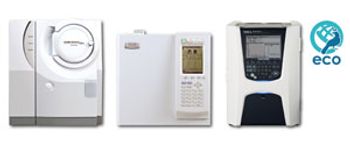
Shimadzu product profile
Shimadzu product profile
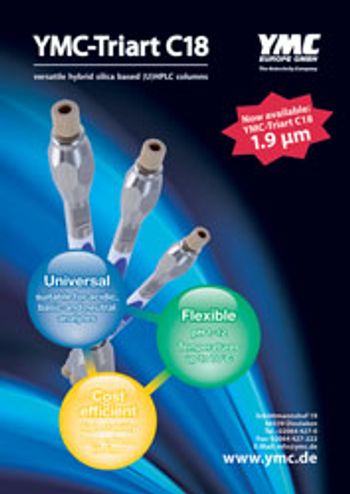
YMC Product Profile

Agilent Profile

E-Separation Solutions
Click here to view the complete e-Separation Solutions newsletter from June 2, 2011
An improved method for high temperature simulated distillation based upon ASTM D7169 is presented using the Zebron ZB-1XT SimDist column. This column utilizes a Glass Infusion™ Technology that results in more improved efficiency, resolution, and unmatched column-to-column reproducibility. This technology also allows simulated distillation methods, such as ASTM D6352 and D7169, to be extended from C100 to C120 while still meeting all the system suitability requirements.
Thermo NA - Identification of Metabolites from Maropitant Using a Dual-Pressure Linear Ion Trap Mass Spectrometer and Mass Frontier Software


LCGC North America
A case of over-recovery of a preservative on ageing of a pharmaceutical product provides a good example of how to approach solving a problem of overlapping peaks in an LC separation.

LCGC North America
Converting a method from conventional HPLC to high-throughput HPLC or UHPLC is easy with a method translation calculator. Here's how to use them and where to find them, for free.
The Application Notebook
LCGC is planning to publish the next issue of The Application Notebook special supplement in September.
The Application Notebook
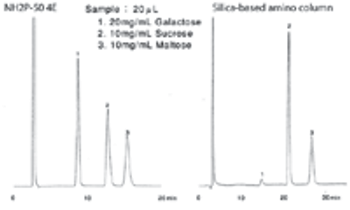
Hydrophilic interaction chromatography (HILIC) has become a popularly used separation mode for carbohydrate HPLC method. There are wide variations in HILIC stationary phase.

The Application Notebook
As the number of chiral columns and chiral separations has grown, it has become difficult to organize the information for use in developing new methods. The success of chiral method development depends on the introduction of appropriate columns. The RegisPack? polysaccharide-based chiral stationary phase (CSP) is most successful in achieving a majority of chiral separations. However, there are cases in which this proven chiral selector leads to partial or no separation. Excellent separations using the newly introduced RegisPack? CLA-1 CSP have been obtained for a range of compounds, either by improving or complementing RegisPack's selectivity.
The Application Notebook
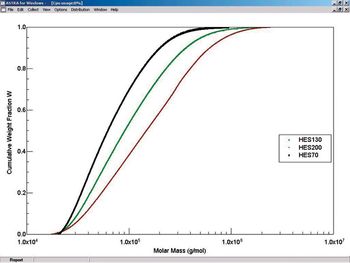
Hydroxyethylstarches (HES) are used increasingly as plasma expanders in medical applications. The HES's circulation time in the blood depends strongly on its molar mass distributions.
The Application Notebook
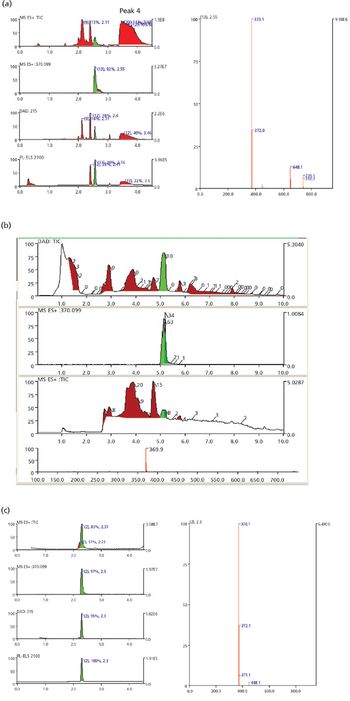
Aggregated singletons for automated purification (ASAP) is a purification workflow that provides singleton sample purification, registration, and delivery to the materials management department as 30 mM dimethyl sulfoxide solutions for biological screening.
The Application Notebook
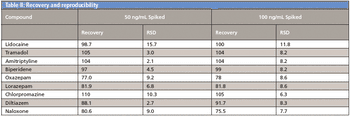
Determination of pharmaceuticals in biological matrices is commonly employed in ADME (DMPK), clinical, and forensic analysis. The main techniques used for drug monitoring and analysis are immunoassays, LC, and GC methods.

EMD Millipore, the life science division of Merck KGaA of Germany, has opened a biopharmaceutical technical and training centre in Shanghai, China.

The Application Notebook
Polyolefin (PO) is the largest volume industrial polymer in the world for making a wide range of commercial products that touch nearly every aspect of our daily lives, such as automobile parts, pipes, packaging films, household bottles, baby diapers, and so on.

The Application Notebook
Synthetic cannabis products have garnered a great deal of media attention recently. Countless products are being sold at smoke shops, convenience stores, and online sites.
The Application Notebook
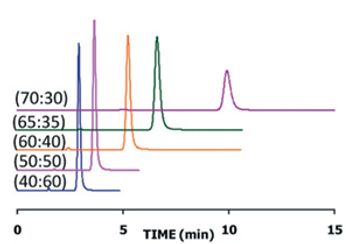
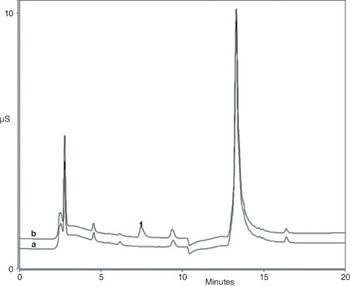
Using a bonded polymeric zwitterionic stationary phase, in HILIC mode, polar quaternary herbicides like Diquat can easily be retained, with good peak symmetry. The impact of ionic strength and organic content in the mobile phase is discussed.

The Application Notebook
BioPharma Compass? is a fully automated solution for the rapid characterization of biopharmaceutical products such as proteins, peptides, RNA, and DNA. This push button solution assists nonspecialist operators to generate high quality, accurate data for automatic comparison with laboratory reference standards. Automated, visual reports are then generated for each sample and important information regarding a products purity and identity can be observed at a glance. In this application note, we will apply the BioPharma Compass workflow to the QC characterization of two proteins including intact IgG1 and digested transferrin.
The Application Notebook
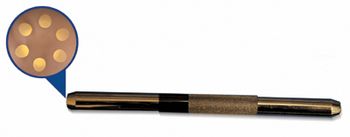
Resistive glass tubes and plates are designed to guide ions by generating a uniform electric field. PHOTONIS resistive glass products are composed of a proprietary lead silicate glass that has been specially processed to create a resistive layer at the surface. The resistivity can be varied over several orders of magnitude to suit the specific application.
The Application Notebook
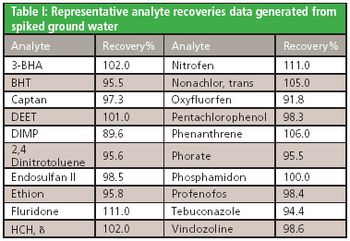
EPA is updating method 525.2. The CCL3 includes 104 analytes. UCT has evaluated the recoveries of these compounds, including the current list, using proposed changes to the method with the C18-based UCT ENVIRO-CLEAN? 83 mL Extraction Cartridge ECUNI525.


LCGC Asia Pacific
Metrohm Application Note

The Application Notebook
Fast, flexible platforms for peptide quantification are needed, particularly for a discovery setting. This type of methodology would be especially advantageous in the case of amyloid beta (a?) peptides.
The Application Notebook
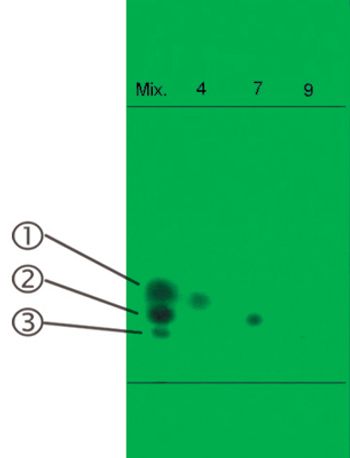
Benzylideneacetophenone forms the central core for a variety of important biological compounds, known collectively as chalcones. Many of these compounds have significant medicinal value as they demonstrate antibacterial, antifungal, antitumor, and anti-inflammatory properties.

The Application Notebook
Metabolomics, the study of small molecule metabolites that are found within a biological sample, is an emerging field of study. Progress in this field depends upon technological advancement in the fields of LC–MS and separation technology.
The Application Notebook
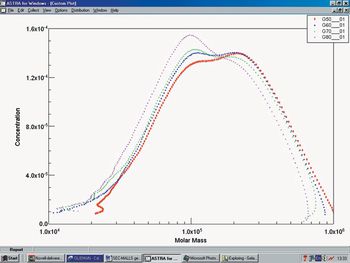
Gelatin is the denatured form of collagen, the main component of skin, bone, and connective tissues of animals. Its special properties are a sharp sol-gel transition, low sol viscosity, and high effectiveness as a protective colloid.
The Application Notebook
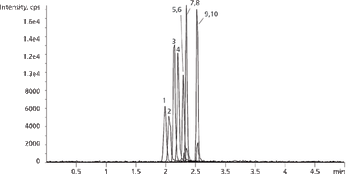
This study demonstrates a faster method of analysis when coupling a simplified and effective SPE procedure with a core-shell HPLC column and LC–MS-MS detection.