
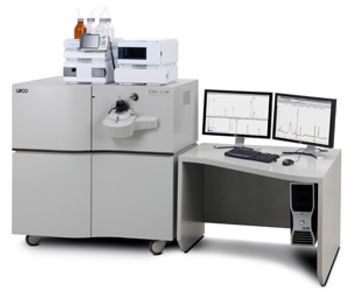
LECO Product Profile
LECO Product Profile
The Column
The N-methylcarbamates and the N-methylcarbamoximes are among the most widely used pesticides in agriculture. Dionex has announced an improved HPLC method for the determination of these chemicals.

The Open University and Agilent Technologies UK have announced the launch of the Agilent Centre of Excellence in Comprehensive Chromatography.

The Column
Researchers in Japan have found a way to separate nanometre-sized particles in a water-filled capillary using a laser-induced shockwave.
Thermo Fisher Scientific has announced the completion of its tender offer for Dionex Corporation.
Showa Denko and its consolidated subsidiary Shoko have decided to integrate their businesses in high-performance liquid chromatography (HPLC).

LCGC Europe eNews
Dafydd Milton and Bob Wiedemer of Thermo Fisher Scientific spoke to us about how analytical laboratories have had to adapt to meet the changing needs of our times.
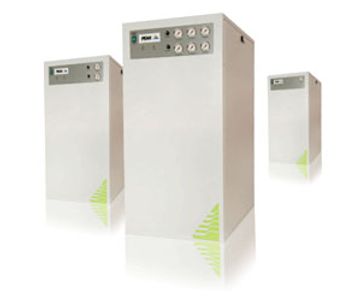
Peak product profile
The Column
Unlike wine and whisky, beer tastes best when consumed fresh. After 6-12 months in storage, beer develops an unpleasant, bitter aftertaste. A study to identify the key substances that cause this bitter taste has been published in the Journal of Agricultural and Food Chemistry.
E-Separation Solutions
Click here to view the complete e-Separation Solutions newsletter from May 19, 2011.
The Column
Scientists from the national laboratories of five African nations, including participants from Ethiopia, Ghana, Kenya, Senegal and Sierra Leone, have gathered in Accra, Ghana, Africa, to take part in technical training for detecting substandard and counterfeit medicines.

The Column
The interactive charting capabilities provide chemists with powerful new tools for analysing chromatography data more efficiently.
Thermo Fisher Scientific will hold a free summer symposium in the UK to present the latest developments in the field of laboratory solutions.

The Column
The Singapore Eye Research Institute will advance biomarker candidates that it has identified for chronic inflammatory eye conditions into large-scale clinical trials for validation using AB SCIEX technology.

E-Separation Solutions
Bioanalysis uses a variety of separation techniques to analyze samples ranging from plasma and urine to dried blood spots. Participants in this Technology Forum are Ling Bei, Patrik Appelblad, and Dave Lentz of EMD Millipore; Nadine Boudreau of PharmaNet Canada; Diab Elmashni, Jeff Zonderman, and Simon Szwandt of Thermo Fisher Scientific; and Debadeep Bhattacharya of Waters Corporation.
LGC has launched a new business unit, Health Sciences, which combines the group?s sport, food, consumer safety and pharmaceutical testing activities within a single entity.
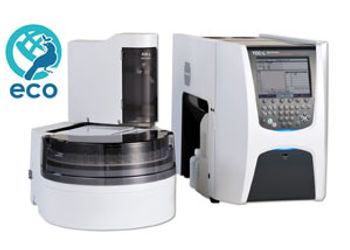
Shimadzu Product Profile
Diversity Alliance for Science will hold its Fourth Annual Networking Conference and Expo on May 17?18, 2011 in Newark, New Jersey.
Agilent Product Profile

The Column
Researchers have successfully extracted proteins from 600000 year old mammoth bones, using a technique that could be used to identify remains of very old extinct animals from tiny bones fragments.
E-Separation Solutions
Click here to view the complete e-Separation Solutions newsletter from May 12, 2011.
Applied Biology Company has purchased the assets of LAB Research, which consists of three facilities located in Hungary, Denmark and Canada.
Dionex EU - Determination of Lactose in Lactose-Free Milk Products
The Column
Dionex has updated its methods to allow for more sensitive testing of toxic hexavalent chromium in drinking water.
E-Separation Solutions
A recent reinterpretation of the GC–MS results from the Viking landers that went to Mars in the 1970s has suggested that the possibility of life on Mars may be much greater than we previously thought.
E-Separation Solutions
Flash chromatography is a type of preparative liquid chromatography commonly used in the separation of organic compounds.
American based Avantor Performance Materials will acquire polish performance materials supplier POCH S.A.

Agilent Technologies has expanded its Life Sciences and Chemical Analysis Centre of Excellence in Bangalore, India.

Agilent Product Profile