
Special Issues
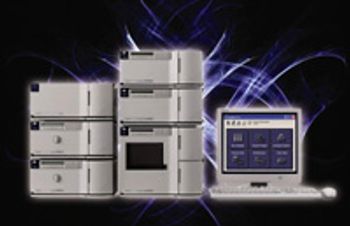
Hitachi High Technologies America, Inc. (HTA), located in Schaumburg, Illinois, is the North American Division headquarters for Hitachi High Technologies Corporation (Tokyo, Japan).
Special Issues
Hitachi High Technologies America, Inc. (HTA), located in Schaumburg, Illinois, is the North American Division headquarters for Hitachi High Technologies Corporation (Tokyo, Japan).

LCGC North America
Investigating Solvent Purity Using Comprehensive Gas Chromatography: A Study of Acetones

Special Issues
Analytical Sales & Services has spent more than twenty years offering innovative chromatography products and services to the scientific community.

Special Issues
J.G. Finneran designs, engineers, and manufactures glass and plastic chromatography sample vials and accessories in compliance with ISO 9001:2008 guidelines, specifically for laboratory use.
Special Issues
KNAUER develops and manufactures chromatography instrumentation for use in laboratories for tasks such as identification, quantification, and isolation of the components of liquids with complex composition.

Special Issues
PHOTONIS is a multinational high-technology group, with more than 40 years experience in manufacturing, sales, and innovation, specializing in charged particle and photon sensor technology.

Special Issues
Chiral Technologies, Inc. provides products and custom services for resolution of racemic compounds by enantioselective chromatography.

Special Issues
In 1985, Optimize Technologies was founded on the simple idea of offering innovative products for HPLC at the highest quality. Since then, the company has grown from simple beginnings to the present worldwide recognized brand.

Special Issues
Shimadzu Scientific Instruments (SSI) is the North American subsidiary of Shimadzu Corp., headquartered in Kyoto, Japan. SSI was established in 1975 to provide analytical solutions to a wide range of laboratories in the Americas.

Special Issues
LEAP Technologies, Inc. is the official American dealer of CTC Analytics. Customers look to us for fast, competent support and service.

Special Issues
Our HPLC columns have been designed and manufactured by Imtakt Corporation with exceptional craftsmanship and decades of industry experience.

Special Issues
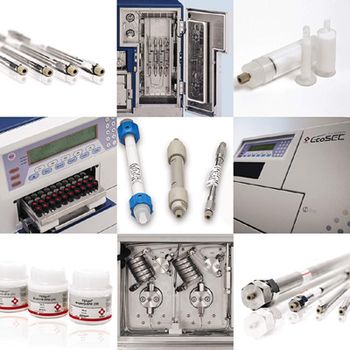
Tosoh Bioscience LLC is a major supplier of chromatography products worldwide, particularly to the pharmaceutical, biotechnology, and polymer industries.

Special Issues
For over 40 years, Valco Instruments Co., Inc. (VICI) has been the leading designer and manufacturer of standard and custom valves and fittings for precision analytical, biomedical, and biocompatible instrumentation.

Special Issues
Restek celebrates our 25th year in business with the launch of our new website October 15th, 2010. Innovative chromatography solutions are at your fingertips, including an enhanced technical library featuring hundreds of chromatograms, simplified product selections tools, and easy-to-use multicomponent chemical standard search.

Special Issues
Orochem Technologies was founded in 1996 in suburbs of Chicago.
Special Issues
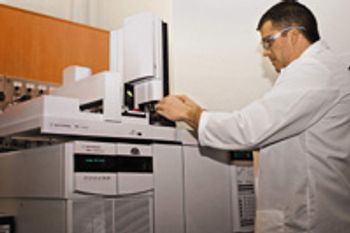
Agilent Technologies, Inc. (NYSE:A) is a global leader of measurement technology for life sciences, chemical analysis, communications, and electronics.

Special Issues
Pawling Engineered Products is a vertically integrated business that designs and manufactures highly specialized elastomeric septa, seals, gaskets, and other unique rubber products for many different industries.

Special Issues
Thermo Fisher Scientific is the world leader in serving science, enabling our customers to make the world healthier, cleaner, and safer. Serving customers through two premier brands, Thermo Scientific and Fisher Scientific, we help solve analytical challenges from routine testing to complex research and discovery.

Special Issues
DataApex is an independent software company with expertise in developing and manufacturing chromatography data stations.

LCGC Europe
A non-invasive near-infrared spectroscopy method to characterize a wide range of stationary phases.
Special Issues
Over the past 25 years, UCT has distinguished themselves as a major competitor in the field of silica based solid phase extraction technology.

Special Issues
Supelco, a Sigma-Aldrich Corporation subsidiary, is an ISO 9001-registered company that manufactures and distributes an extensive selection of HPLC, chiral, and GC columns as well as SPE products, SPME materials, chemical standards, and customized products and services (such as resin, media processing, and small unit packaging).

LCGC Europe
The concluding part of the series on the role of system suitability tests in the pharmaceutical industry.

Special Issues
IDEX Health & Science LLC designs, develops, and manufactures liquid subassemblies and precision components for a wide range of applications requiring precise control and measurement.
Special Issues
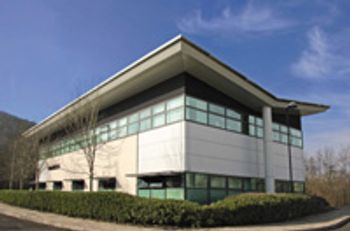
Formed in 1997, Markes International is the world's leading supplier of thermal desorption (TD) instrumentation and related sampling accessories for monitoring toxic and odorous chemicals in air, gas, and materials.

Special Issues
Designed for purification and engineered for science, Gilson, Inc. provides high quality, dependable solutions for today's demanding liquid chromatography, solid phase extraction, liquid handling, and gel permeation chromatography clean-up requirements.
Special Issues
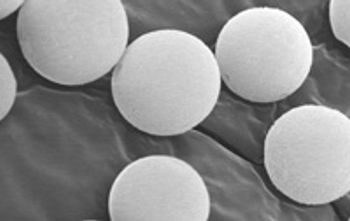
Daiso is one of the world's largest manufacturers of spherical chromatographic-grade silica gel.
Special Issues
Beckman Coulter develops, manufactures, and markets products that simplify, automate, and innovate complex biomedical testing.