

All News
Advertisement
Advertisement
Advertisement

LCGC Europe
The Centers for Disease Control and Prevention (CDC) estimates that each year in the United States, 76 million people get sick, 325000 are hospitalized and 5000 die from food-related illnesses. Food-borne illness is a serious public health problem. -National Library for the Environment, Food Safety Issues in the 107th Congress, 2001, Donna U. Vogt.
LCGC Europe
Conventional pyrolysis can cause defunctionalization of polar structural moieties carrying functional groups, which leads to biased results.
LCGC Europe
The Eighth International Symposium on Advances in Extraction Techniques (ExTech) highlights new extraction technologies for chemical and biochemical analysis in laboratory and on-site settings. Generally, the series focuses on solvent-free sample preparation including methods for rapid and selective enrichment prior to analysis and micro-sample preparation. Major emphasis will be placed on the fundamental understanding of extraction processes that result in greater selectivity and efficiency in method development and a rationalization of method selection for specific applications. On-site environmental methods and biomedical applications will be covered. The ExTech symposium series was initiated in 1999 by Professor Janusz Pawliszyn. The 2006 edition will focus especially on passive sampling methods, use of molecular imprinted polymers, biologically modified sorbents, novel coatings and sorbent material and will take place on 6–8 February at the Moat House Hotel, York.
Advertisement
LCGC Europe
A new combination of analytical chemistry and mathematical data analysis techniques allows the rapid identification of the species, strain and infectious phase of a potential biological terrorism agent. Coxiella burnetii causes the human disease Q fever, which can cause serious illness and even death.

LCGC Europe
Whether in industrial nations or developing countries, an international harmonized method for drug residue monitoring in animal products is needed.
The Column
News All the news from October 2005 Opinion Zosimus questions whether marketing hype has infiltrated into scientific advertisements and taken over from the science. Market Trends & Analysis Glenn Cudiamat provides an overview of the UV/visible spectroscopy market. Comparison of HPLC-Chip/MS with nanoflow LC-MS for proteomic analyses Experts from Agilent Technologies offer a comparison of these two techniques. Country focus This month we take a look at developments within the German and Austrian analytical markets. Q&A Jean-Christophe Mifsud, CEO of Alpha MOS, talks to The Column about the company's range of analytical instruments for organoleptic analysis. Supplies & services

LCGC Europe
One of the biggest problems facing researchers involved in pharmacogenomics is analysing the recombinant proteins of interest to monitor if they are in a folded state. This article describes a rapid and economical method using asymmetric flow field-flow fractionation combined with multi-angle light scattering (AF4–MALS) to characterize refolded proteins, which overcomes some of the disadvantages associated with other techniques.

LCGC Europe
This method describes an attempt to identify the source of licit Indian opium based on the fatty acid profile. The analysis was based on gas chromatography (GC) with flame ionization (FID) and mass spectrometric detectors (MS). A total of 124 Indian opium samples were collected and fingerprinted for the presence of various fatty acids. Qualitative analysis of fatty acids indicated the acids such as behenic, stearic and lignoceric were significant biochemical markers, making it a useful method to identify the source of opium for forensic purposes.
LCGC North America

LCGC North America
The authors take a look at three recently published documents in the validation literature from groups working to (hopefully!) clear up some of the potential for confusion.
The Application Notebook
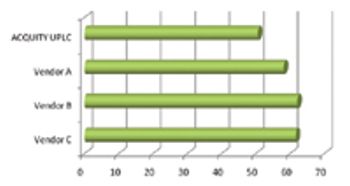
In 2004, Waters introduced the ACQUITY UPLC® System. Since this launch, many liquid chromatography (LC) vendors have introduced modified high-performance liquid chromatography (HPLC) systems designed for ultra-high-pressure liquid chromatography (UHPLC). Although these systems may provide satisfactory performance for analytical-scale compressed chromatography (4.6-mm I.D.), they struggle significantly to provide high-resolution chromatography with sub-2-μm microbore columns (2.1-mm I.D.), which require a system designed to maximize the separation efficiency.
The Application Notebook
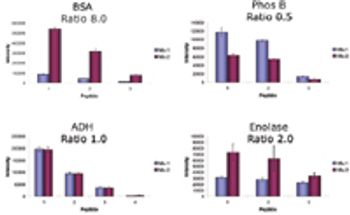
A biomarker is measured as an indicator of normal biological processes, pathogenic processes, or pharmacologic responses to therapeutic intervention. Many times, a putative biomarker is a protein or peptide that is expressed at a relatively low level compared to the surrounding proteome. The constitutive or housekeeping proteins are present in concentrations that are orders of magnitude above the protein of interest, which makes identification and quantitation difficult. In order to validate a candidate biomarker, many samples need to be analyzed to prove that the same analytes are reproducibly identified and are changing in a statistically significant manner due to a perturbation.
The Application Notebook
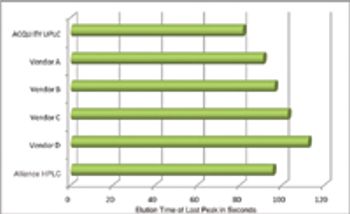
Since the introduction of the Waters® ACQUITY UPLC® System, many vendors have introduced modified high-performance liquid chromatography (HPLC) systems designed for fast LC or ultra-high-pressure liquid chromatography (UHPLC). These systems, which can yield satisfactory chromatography at an analytical scale (4.6-mm I.D.), where system volume and system bandspread have less of an impact on peak width, struggle significantly with microbore chromatography (2.1-mm I.D.). These low-volume separations require a system designed to maximize the separation efficiency to provide greater quality information for the user.
Advertisement
Advertisement
Trending on LCGC International
1
Using UHPLC-MS/MS to Help Pinpoint Time of Death
2
LC-MS/MS Method Detects Rat Poison in Cats
3
The Case for Radical Cations: Bringing EI-Style Spectra to LC–MS
4
Automated Sample Preparation for Oligonucleotide Bioanalysis Using Magnetic SPE
5