

All News
Advertisement
Advertisement

LCGC Europe
The best parts of the GAMP laboratory system GPG are the life cycle models for both development and implementation of computerized laboratory systems.

LCGC Europe
Any wine can suffer from that corked wine taint. This spoilage, recognized by a distinct aroma of damp musty leaves and a damp cardboard taste, makes a wine undrinkable.

LCGC Europe
VICAM, the food safety technology business, headquartered in Watertown, Massachusetts, USA, has been acquired by Waters. The deal also included the associated net assets of VICAM and has proceeded under undisclosed terms.
Advertisement
Special Issues
Column developments in HPLC have benefited protein aqnd peptide separations in a number of ways. More silica based phases and column formats have become available, expanding the use of HPLC for the separation of proteins by different modes of chromatography as well as improving resolution and throughput. Hydrophobic interaction chromatography, immobilized metal affinity chromatography as well as ion Exchange and size exclusion are now practical analytical tools for proteins and peptides. New enrichment columns are benefiting proteomic research.
Special Issues
Chiral separations remain high on the priority list of drug developers. Liquid chromatography and supercritical fluid chromatography continue to vie for dominance in the chiral separation market but might be reaching the state of complementary methodologies. New separation technologies and new advances in current products continue to elevate the state of the art of chiral separations. Automation in both screening for chiral selectivity and preparative purifications has helped make significant gains in productivity in this area.
Special Issues
Although size exclusion chromatography (SEC) is a fairly mature separation technique, improvements are continually made in packing technology. Howard Barth and Greg Saunders review some of the basics of SEC and look at the current status of column technology, including developments for faster and higher resolution size separations.
Special Issues
Ultrahigh-pressure liquid chromatography (UHPLC) is a technique that is experiencing continued growth due to the benefits in separation power and speed of analysis over traditional HPLC. We attempt here to give an overview of some of the advances that have occurred in UHPLC since 2003, from the standpoint of both fundamental research and the introduction of commercially-available technology.
Advertisement
Special Issues
With the advent of column materials that can be used effectively at temperatures well over 100 degrees Celsius, high temperature liquid chromatography (HTLC) separations have gained more attention in the last few years. Advantages of HTLC include fast analysis time, better selectivity, improved column efficiency, and minimization of the use of organic solvents involved in the mobile phase.
Special Issues
The author describes several commercially available novel phases for high performance liquid chromatography separations. Novel phases can provide an alternative and complementary separation for many analyses performed on C8 or C18 columns. Many of the separations discussed in the article could not be accomplished on C8, C18, or even phenyl phases.
Special Issues
Column packing materials continue to evolve as user needs for highthroughput, high-resolution and high-sensitivity HPLC analyses drive further developments. In this introductory article to this supplement, Ron Majors covers basic column packing morphology and particle design and compares and contrasts modern HPLC columns. Some applications of modern HPLC columns are provided. Future directions in packing developments are predicted.
Special Issues
Monoliths are separation media in the format that can be compared to a single large "particle" that does not contain interparticular voids. As a result, all the mobile phase must flow through the stationary phase. This convective flow greatly accelerates the rate of mass transfer. In contrast to diffusion, which is the typical driving force for mass transfer within the pores of particulate stationary phases during chromatographic processes, convective flow through the pores enables a substantial increase in the speed of the separation of large molecules such as proteins. A thorough theoretical treatment of the mass transfer within monolithic materials has been developed by Liapis (1) and Tallarek (2).
Special Issues
Ion exchange is one of the older of the chromatographic techniques yet each year new products continue to hit the market. In this paper, Chris Pohl of Dionex will summarize some of the stationary phases that have been developed for modern ion-exchange and ion chromatography. He will focus on phase design and then turn his attention to new anion and cation columns introduced in the last couple of years.

The Column
Biologists entering liquid chromatography-mass spectrometry (LC-MS) from a background of general LC rarely use their mass spectrometer to its full potential. Isotope peaks offer huge possibilities both in semi-quantitative interpretation of structure and in quantitative labelling studies. This article examines charge state, "easy" isotopes, such as chlorine, the slightly harder problem of sulphur compounds, and finally looks at a method for improved measurement of heavy labels in a metabolic study.

The Column
A new method for the on-line solid-phase extraction of polycyclic aromatic hydrocarbons (PAH) from water samples followed by high performance liquid chromatography with fluorescence and UV detection was developed. The solid-phase extraction was optimized on a polymer-based sorbent that features a unique polar-enhanced technology.
The Column
News All the news from April 2006 Opinion Zosimus describes chromatography as a "thinking" analytical science and tells us to put more thought into it. Market Trends & Analysis Glenn Cudiamat provides a report on pharmaceutical market demand for life science instrumentation. Highly selective detection and identification of nitrofurans metabolites in honey using LC-MS-MS. Eduardo Matus, Jean-Jacques Dunyach and Alejandro Albornoz Radiochromatography and its applications Duncan Carmichael Q&A Don Kuehl of Cerno Bioscience talks to The Column about a new software package for mass spectrometers.

LCGC Europe
Is it possible to combine a serious scientific meeting together with social events and fun? Well if it is possible then the ExTech and HTC-9 meeting held in York, UK between 6?10 February came very close.
LCGC Europe
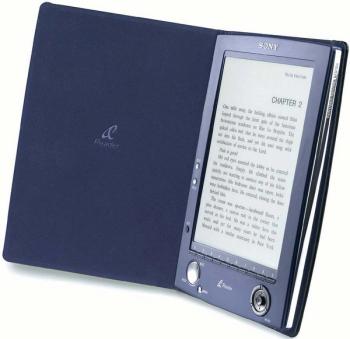
Sony has released details of its new e-book reader using E-Ink technology. This could transform the electronic reading experience. The lightweight reader could bring a whole new meaning to "book smart".

LCGC Europe
The department of Chemistry and Chemical Biology at Harvard University has purchased a site licence of the ACD/2D NMR processor. The Advanced Chemistry Development (ACD/Labs) processor will be deployed to all faculty staff and students for use on department-owned or leased computers as well as personal PCs.
LCGC North America
LCGC North America
LCGC North America
LCGC North America
LCGC North America
Advertisement
Advertisement
Trending on LCGC International
1
Using UHPLC-MS/MS to Help Pinpoint Time of Death
2
LC-MS/MS Method Detects Rat Poison in Cats
3
The Case for Radical Cations: Bringing EI-Style Spectra to LC–MS
4
Automated Sample Preparation for Oligonucleotide Bioanalysis Using Magnetic SPE
5