




Analytical Instrumentation
Latest News
Advertisement
Advertisement

Researchers have introduced MCnebula, a new framework for untargeted LC–MS/MS data analysis. MCnebula focuses on critical chemical classes and utilizes visualization techniques to streamline the analysis process, enabling efficient pathway analysis, biomarker discovery, and classification of unknown compounds beyond the limits of spectral libraries.

A new way to control ion transports in microfluidic systems has the potential to improve the technology and expand applications.

With Shimadzu Corporation's new location, the company hopes to innovate their research and technological efforts.

This comparison of various silica-based HILIC stationary phases with different types of coatings provides a better understanding of how stationary phase selectivity can be influenced.

When the unique shape-selective properties of PGC are appropriately identified, PGC stationary phases can be harnessed for fine separations of structurally related compounds.

An examination of the new high performance liquid chromatography (HPLC), mass spectrometry (MS), chromatography data systems (CDS), and related products that were introduced over the last year.

Given that artificial intelligence (AI) seems to be on everyone’s mind, it’s worth pausing to look at how AI works, and how it can fit into analytical chemistry.

This installment of Tips & Tricks will provide some helpful pointers to keep your GPC/SEC system in good shape.

With suspect PFAS screening becoming more popular, and the list of known PFAS now in the thousands, novel analytical tools are needed to generate transferable data sets. We highlight key updates here.

Online 2D-LC is a powerful—and accessible—tool for analyzing pharmaceutical and biopharmaceutical samples, in both R&D and QC. It’s now easier than ever to develop 2D-LC methods, and they can be run in a fully automated manner.

Is the informing power of separation science without limits?

The fundamental mechanisms of band broadening are usually introduced to students through the van Deemter equation. Dimensional analysis of this equation can give physical meaning to the equation coefficients and enhance our understanding relative to qualitative descriptions. This approach can also guide improvements to future liquid chromatography (LC) column designs.

Further miniaturization of separations will greatly extend the reach of single-cell proteomics, metabolomics, and lipidomics, but key challenges in instrumentation, column technology, and ionization sources must be addressed.

This paper provides an overview of some current and emerging physicochemical analytical challenges associated with these sophisticated drug systems and some of the technical advances needed in chromatographic systems to enable their design, development, and manufacture.

As two-dimensional liquid chromatography (2D-LC) becomes more widely used, system suitability tests (SSTs) become even more important.

With a new prototype, we explore how to improve the resolution power and usability of LC–MS instruments for routine analysis in pharmaceutical applications.

New sample preparation workflows for intact proteins in biological matrices are needed. We hope that others will join in this important field of research.

Paul Bohn, the Arthur J. Schmitt Professor of Chemical and Biomolecular Engineering at the University of Notre Dame, is the 2022 recipient of the Society for Electroanalytical Chemistry (SEAC) Charles N. Reilley Award.

Our annual review of new gas chromatography products.

Our annual review of new high performance liquid chromatography instruments, mass spectrometry systems, and data processing software.

Reviewing your contract laboratory’s QA/QC protocols can reveal much about the accuracy of the data the lab generates. Here is what to look for.

An undeniable effect of the COVID-19 pandemic is that we have learned how to adapt (quickly) to sudden changes.
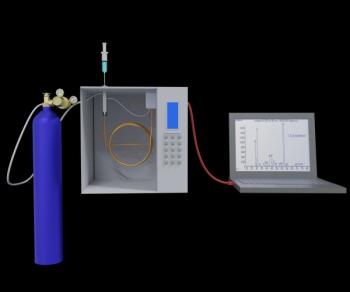
Compact instrumentation offers important advantages for many workflows, as illustrated by these examples.

The quadrupole mass analyzing device is now accessible to many analytical chemists as a detector in either HPLC or GC instruments due to their increasingly accessible price point. While it’s not vital that we understand the working principle of these detectors, insight into their design and operation can help enormously when planning or optimizing analyses or troubleshooting issues.
Advertisement
Advertisement
Trending on LCGC International
1
Using UHPLC-MS/MS to Help Pinpoint Time of Death
2
LC-MS/MS Method Detects Rat Poison in Cats
3
The Case for Radical Cations: Bringing EI-Style Spectra to LC–MS
4
Peaks & Pioneers: Isabelle Kohler on Life Beyond the Traditional Academic Track
5