

News|Videos|July 10, 2026
Non-Targeted Screening in PFAS Analysis
Advertisement
Episodes in this series



Building on the harmonization debate, the panel turns to non-targeted screening and the question of what routine per- and polyfluoroalkyl substances (PFAS) methods leave undetected. David Megson acknowledges his own bias toward non-targeted analysis, but stresses it isn't feasible to run on every sample given the cost and labor involved. Instead, he advocates screening smarter: pairing targeted analysis with a broader "total" method, such as total organic fluorine, chosen to fit the matrix and investigation at hand, then performing mass balance to see how much of that total the targeted method actually captures.
Megson points to trifluoroacetic acid as an example of a compound that fell through the cracks of older targeted methods until researchers switched analytical approaches and discovered an entire class of PFAS chemistry they hadn't been looking for. He argues that non-targeted analysis and toxicology research are interdependent: without exploratory science flagging a chemical's prevalence, there's little incentive to study its toxicity, and without that toxicology, there's no case for building a standardized method to measure it.
Bryan Vining characterizes the process as something of an endless cycle, moving between detecting a potential concern, evaluating whether it's truly harmful, and then developing methods to measure it precisely. Pasquale Avino brings the conversation back to quality assurance and quality control, arguing that because so little is known about many PFAS compounds, rigorous QA/QC at every step of the analytical process, from procedure to chromatographic run, becomes essential rather than optional. He notes that controlling every variable in this field is notably difficult compared with more established analytical work, and that the instrumentation itself, largely liquid chromatography tandem mass spectrometry (LC–MS/MS), is capable; the real challenge lies in the operating procedures behind it.
Advertisement
Related to this article

Quantitative non-targeted screening with predicted response factors is not for regulation, but can rank environmental chemicals by concentration and toxicity.
Multidimensional chromatography cuts ion suppression in complex environmental samples by separating salts and coeluting compounds from target analytes.

Gert Desmet explores the current role of AI/ML in separation science.
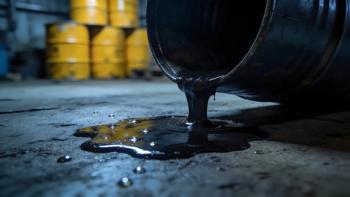
Gas chromatography–mass spectrometry (GC–MS) reveals a four-stage polycyclic aromatic hydrocarbons (PAH) breakdown in oil sludge co-composted with manure.

This new high-performance liquid chromatography-ultraviolet (HPLC-UV) method measures glutathione and thiol levels across 12 berries.
Piotr Alvarez explains how HILIC complements reversed-phase LC for GLP-1 peptides, and why the field is moving toward MS-friendly TFA alternatives.
In this third part of " Conversations with Michael Dong," a series on fundamentals of HPLC in pharmaceutical analysis, LCGC International’s "Perspectives in HPLC" column editor discusses the retention mechanism of hydrophobic interaction.

Liquid chromatography–tandem mass spectrometry (LC–MS/MS) shows hydrogel cuts dogs' peak bupivacaine blood levels fivefold.
Advertisement
Advertisement
Trending on LCGC International
1
HILIC and the Shift Beyond TFA in GLP-1 Analysis
2
Conversations with Michael Dong: Reversed-Phase Chromatography: Retention Mechanism of Hydrophobic Interaction
3
Green Chemistry Meets Affinity Chromatography
4
Getting More From Chromatography Data: From Summary Metrics to the Full Chromatogram
5