

News|Videos|July 2, 2026
The Big Picture
Advertisement
Episodes in this series



In the second episode of this LCGC International Peer Exchange®, the panel turns to the foundational question underlying all PFAS analysis: what exactly are we dealing with, and how do we even begin to measure it? Bryan Vining opens the discussion by inviting the panel to identify the biggest challenges facing separation scientists working with per- and polyfluoroalkyl substances (PFAS) today, and the answers reveal the sheer scale of the problem.
David Megson homes in on what he describes as perhaps the most exciting and daunting challenge in the field: understanding how many PFAS actually exist in the environment. Pointing to recent literature identifying over 7 million structures that could be classified as PFAS, he highlights the gap between the compounds we currently regulate and measure and the vast chemical space that remains largely unexplored—including unknown compounds that may be rising in concentration even as regulated PFAS levels begin to fall. He notes that as analytical chemists, a key question is whether a given method is designed to map the entire chemical space, align with existing regulations, or hunt for new compounds of emerging concern.
Pasquale Avino adds that the challenge is not just one of scale, but of matrix complexity and the need for validated, trace-level methodologies. He argues for clustering matrices—water, soil, environmental samples—and developing robust analytical workflows appropriate to each group, acknowledging that reaching the very low concentrations at which PFAS compounds are typically found demands both chromatographic and procedural precision. He also points to a striking knowledge gap: despite the vast number of known PFAS structures, relatively little is understood about their toxicological behavior or environmental interactions.
Vining builds on both contributions, noting that even within the LC-amenable fraction of the PFAS universe, resolving 60 to 70 target compounds in a single analysis is already a significant undertaking, and barely scratches the surface of the wider chemical space. The episode closes with all three panelists reflecting on the toxicological data void that compounds these analytical challenges, and on the pace at which both the science and the regulatory landscape continue to evolve.
Advertisement
Related to this article
Quantitative non-targeted screening with predicted response factors is not for regulation, but can rank environmental chemicals by concentration and toxicity.
Multidimensional chromatography cuts ion suppression in complex environmental samples by separating salts and coeluting compounds from target analytes.
Gert Desmet explores the current role of AI/ML in separation science.
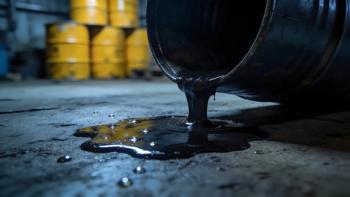
Gas chromatography–mass spectrometry (GC–MS) reveals a four-stage polycyclic aromatic hydrocarbons (PAH) breakdown in oil sludge co-composted with manure.

This new high-performance liquid chromatography-ultraviolet (HPLC-UV) method measures glutathione and thiol levels across 12 berries.
Piotr Alvarez explains how HILIC complements reversed-phase LC for GLP-1 peptides, and why the field is moving toward MS-friendly TFA alternatives.
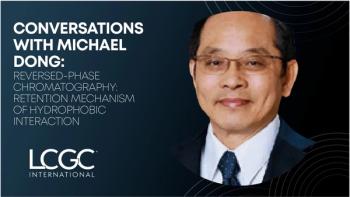
In this third part of " Conversations with Michael Dong," a series on fundamentals of HPLC in pharmaceutical analysis, LCGC International’s "Perspectives in HPLC" column editor discusses the retention mechanism of hydrophobic interaction.

Liquid chromatography–tandem mass spectrometry (LC–MS/MS) shows hydrogel cuts dogs' peak bupivacaine blood levels fivefold.
Advertisement
Advertisement
Trending on LCGC International
1
HILIC and the Shift Beyond TFA in GLP-1 Analysis
2
Conversations with Michael Dong: Reversed-Phase Chromatography: Retention Mechanism of Hydrophobic Interaction
3
Green Chemistry Meets Affinity Chromatography
4
Getting More From Chromatography Data: From Summary Metrics to the Full Chromatogram
5