

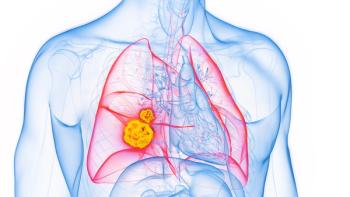
To analyze circulating tumor cells (CTCs) more efficiently in clinical whole blood samples, a team of scientists from Chengdu, China, created their own simplified CTC analysis system.
Aaron Acevedo is the Assistant Editor for LCGC and Spectroscopy. Direct correspondence to: aacevedo@mjhlifesciences.com
To analyze circulating tumor cells (CTCs) more efficiently in clinical whole blood samples, a team of scientists from Chengdu, China, created their own simplified CTC analysis system.

At the Cannabis Sciences Conference, Zacariah Hildenbrand held a talk which focused on various analytical methods and how they affect the cannabis production process.

Scientists from Dalian Maritime University in Dalian, China, are testing a new amphetamine-type stimulant extraction system on wastewater and urine samples.

A team of scientists from Universitat Rovira i Virgili in Tarragona, Spain, is investigating a new method for testing water samples for contaminants of emerging concern.

Scientists from the National Institute of Pharmaceutical Education and Research (NIPER) in India used a variety of techniques to characterize erdafitinib and its various products.

Scientists based out of Zhejiang Academy of Agricultural Sciences in Hangzhou, China, recently used a new QuEChERS method for analyzing pesticides in fruit samples.
Researchers from Corteva Agriscience tested a new approach for separating and quantifying small molecule structure elucidation.

A pair of scientists from Gdańsk University of Technology (GUT) in Gdańsk, Poland, used the method to analyze the presence of antibiotics in animal products like milk and eggs.
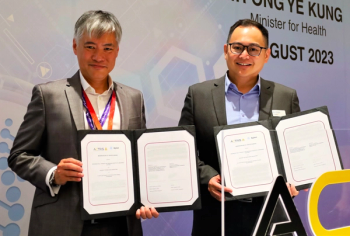
Agilent has entered a partnership to use its technology to help further cell and gene therapy advancements.

Brazilian scientists are testing a system to detect endocrine disruptors in wastewater samples to help improve public health.
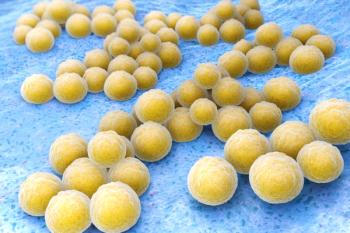
Researchers from the University of Washington have begun testing a new system to fight antimicrobial resistance by combining liquid chromatography (LC) with ion mobility (IM) separation.

The phenolic compounds of Chrysanthemum morifolium have recently been separated in a study meant to identify their medical benefits.
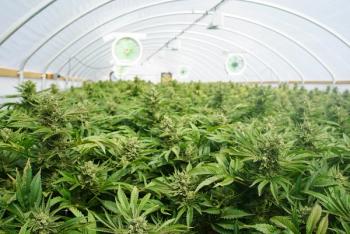
Orange Photonics said the agency will use its LightLab 3 as part of a broader effort to regulate and test the safety of food-related cannabis products.

Using mass spectrometry and fingerprint analysis, scientists are investigating a new way to screen for lung cancer.

Researchers in China studied a new process for measuring aberrant metabolites.

To further understand what role ion chromatography (IC) plays in urine analysis, scientists investigated urine pretreatment techniques and how IC systems are designed and developed to measure various chemicals.

HRPs, while vital to creating drugs meant to fight serious diseases, are very difficult to quantify. To streamline the process, a group of scientists used a new approach for analyzing HRPs using MSPE and HPLC-UV.

As researchers demonstrated in a second recent report, their devised method was effective for identification of cocaine, but there is no consensus as to a “best” algorithm for all necessary scenarios.

To gain a better understanding of phosphatidylinositols, scientists used different LC–MS/MS techniques to find classifications to use in identifying further species of Pls.

A new study published in the Journal of Chromatography A aims to further characterize different classes of biomolecules through size-exclusion chromatography.

Scientists at NACRW discussed using CE–MS to analyze highly polar agrochemicals.

During the North American Chemical Residue Workshop, scientists discussed predicting liquid chromatographic retention times to identify contaminants.

Researchers have developed a polybutylene terephthalate-based stationary phase for ion-pair-free reversed-phase liquid chromatography.
A study conducted by researchers at Rowan University explores column selection in compact capillary liquid chromatography (LC) systems.

Scientists from the Pacific Northwest National Laboratory are using high-resolution ion mobility spectrometry-mass spectrometry to identify unknown compounds.

Here, we preview the 16 Wednesday evening workshops that will take place from 5:45–7:00 pm at ASMS.

Today from 2:30–4:30 pm, an oral session on non-targeted analysis and emerging environmental contaminants will take place. We preview this session here.

On June 7th from 2:30–4:30 pm, an oral session on GC–MS instrumentation and applications will take place. We preview this session here.

On June 7th from 8:30–10:30 am at ASMS, an oral session on artificial intelligence and mass spectrometry will take place. We preview this session here.

On June 7th from 8:30–10:30 am at ASMS, an oral session on drug discovery and development will take place. We preview this session here.