


The Berlin-based manufacturer of high-tech laboratory measuring instruments, Knauer, celebrated the company’s 60th anniversary in July.
Alasdair Matheson Is Executive Editor on LCGC International and has worked in science publishing for thirty years. He has a Masters Degree in Instrumental Methods of Analysis from Strathclyde University, Glasgow, UK and a Postgraduate Diploma in Marine Pollution Chemistry from Liverpool University, Liverpool UK. He also worked as an environmental research scientist at the Torry Research Centre in Aberdeen and as an industrial research scientists at the ICI Wilton Research Centre in Wilton.
The Berlin-based manufacturer of high-tech laboratory measuring instruments, Knauer, celebrated the company’s 60th anniversary in July.

LCGC is proud to announce that Szabolcs Fekete is the winner of the 2022 HTC Innovation Award. Fekete was honoured at the Hyphenated Techniques and Separations Technology (HTC-17) conference in Ghent, Belgium on Friday 20 May 2022 for his outstanding contributions to the field of separation science.

The Column spoke to Stefan Van Leeuwen and Bjorn Berendsen about a novel nontargeted approach to analyze PFASs using LC–HRMS with FIF.

Filip Cuyckens from Janssen R&D in Belgium spoke to LCGC Europe about recent innovative approaches he and his team developed to support drug metabolism and pharmacokinetic studies, and the inventive role that two-dimensional liquid chromatography (2D-LC) plays in his laboratory to boost sensitivity, solve recovery issues, and increase overall efficiency.

The Column spoke to Irma Bongers from Wageningen Food Safety Research (WFSR) in The Netherlands, about a recent research project to analyze prohibited pharmaceutical active substances (PPAS) in milk.

Markes International moved its entire Welsh operations in March this year to relocate from Llantrisant to a newly refurbished site in Bridgend, which is twice as large as its former premises.

Lipidomics researchers from Örebro University have developed a method to analyze levels of per- and polyfluoroalkyl substances (PFAS) in human breast milk using UHPLC–QTOF-MS.

LCGC Europe spoke to Hans-Gerd Janssen from the Unilever Foods Innovation Centre in The Netherlands, about the advantages of a novel, rapid method to analyze antioxidants that inhibit oxidation, and he explains that the maturity of GC technology is actually an advantage to the analyst.

This month we interview Katelynn Perrault, Associate Professor of Forensic Sciences and Chemistry at Chaminade University of Honolulu in Honolulu, Hawaii, about her work translating 1D GC methods to effective comprehensive 2D GC (GC×GC) methods for forensic applications and the benefits that GC×GC offers the analyst.

Per- and polyfluoroalkyl substances (PFAS) in surface water have become a major concern due to their persistency and toxicity. We recently spoke to Stefan Van Leeuwen and Bjorn Berendsen of Wageningen Food Safety Research (WFSR), in The Netherlands, about their novel research into non-targeted PFAS screening using an LC–HRMS method with fragment ion flagging.

In the first of the series, Mariosimone Zoccali, discusses the development of a powerful analytical method to analyze important bioactive molecules using online SFE–SFC–QqQ-MS.

A panel discussion on the latest advances and future developments in data handling.

The Column spoke to Martin Giera of Leiden University Medical Center about his innovative research using GC–MS in bioanalysis applications.

LCGC Europe spoke to Yada Nolvachai about a new approach that offers “super-resolution” for comprehensive two‑dimensional gas chromatography (GC×GC) methods.

A panel discussion on the latest advances and future developments in sample preparation.

LCGC Europe spoke to André Striegel about the role and benefits of interaction polymer chromatography (IPC) for polymer analysis.

A panel discussion on the latest advances and future developments in gas chromatography mass spectrometry (GC–MS).

A novel chemical fingerprinting method has been developed using multidimensional chromatography and multivariate analysis to investigate potential arson attacks. The Column spoke to Oliver Jones and Jessica Pandohee of RMIT University in Melbourne, Australia, about their research in this field.
A panel discussion on the latest advances and future developments in liquid chromatography mass spectrometry (LC–MS).
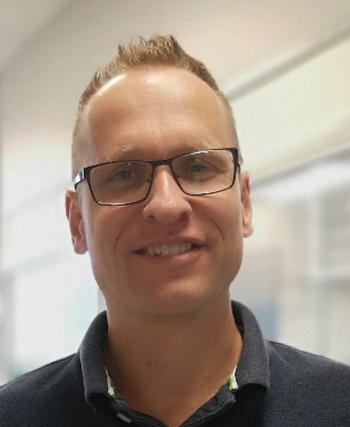
LCGC Europe spoke to Ton Brooijmans, from DSM Coating Resins in The Netherlands, about the array of innovative techniques he has recently implemented in his laboratory to analyse polymers. These include the development of a selective derivatization technique followed by size‑exclusion chromatography (SEC) to analyze polymeric carboxylic acid functionality, the benefits of non-aqueous ion‑exchange chromatography (NAIEC) for analysing synthetic macromolecules, and the important role of pyrolysis gas chromatography (Py‑GC–MS) in polymer analysis. Brooijmans also discusses future trends in this application area.
Filip Cuyckens from Janssen R&D in Belgium spoke to LCGC Europe about recent innovative approaches he and his team developed to support drug metabolism and pharmacokinetic studies, and the inventive role that two-dimensional liquid chromatography (2D-LC) plays in his laboratory to boost sensitivity, solve recovery issues, and increase overall efficiency.

LCGC Europe
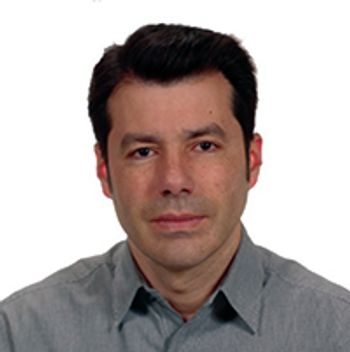
LCGC Europe spoke to Leon Barron and Matteo Gallidabino to discuss novel nontargeted approaches to analyze explosive materials using ion chromatography (IC) with high resolution mass spectrometry (HRMS), and the challenges and solutions analysts can encounter when developing nontargeted methods.
LCGC Europe
In the second part of this interview on size-exclusion chromatography (SEC) André Striegel discusses the benefits of the technique to analyze nanoparticles and quantum dots, the complementary role of hydrodynamic chromatography (HDC), and the future of SEC in two-dimensional liquid chromatography (2D-LC) separations.
![LCE0918_Liu Bio[2]-1.jpg](https://cdn.sanity.io/images/0vv8moc6/chroma/bdc67a7da979cf6ba6cf989305aae36e6b3a9575-200x262.jpg?w=350&fit=crop&auto=format)
LCGC Europe
LCGC Europe spoke to Zhanfei Liu from the Marine Science Institute at the University of Texas at Austin, Texas USA, about the advantages of ramped pyrolysis GC–MS to analyze petroleum pollution from the Deepwater Horizon oil spill.
LCGC Europe
André Striegel spoke to LCGC Europe about innovations in size-exclusion chromatography (SEC) in polymer analysis, including the benefits of hyphenating SEC with on-line multi-angle static light scattering (MALS) and differential refractometry (DRI) detection, the non-trivial nature of a “trivial” solution, the complementary value of “interaction” polymer liquid chromatography (LC) techniques, and the role of quintuple detection in practice.
LCGC Europe
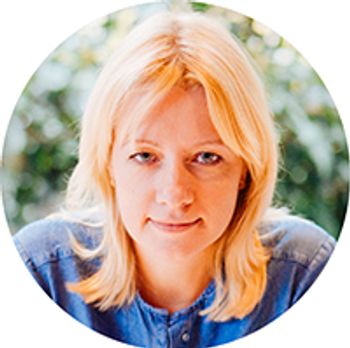
Lipidomics is one of the youngest branches of “omics” research. Maria Fedorova from Leipzig University, in Leipzig, Germany, discusses the latest trends and challenges in lipidomics research and highlights how innovative bioinformatics solutions are addressing data handling issues in this evolving field.
Special Issues
Data-independent acquisition (DIA) makes it possible to re-interrogate data from earlier analyses to determine if new compounds have appeared in a sample previously analyzed. In this interview, Craig Wheelock of the Karolinska Institute discusses the use of DIA in metabolomics.

LCGC Europe
LCGC Europe spoke to Yong Liu and Adam Socia from MSD about the cost-saving benefits of implementing green chromatography in the pharmaceutical sector, the importance of analytical method volume intensity (AMVI), and effective practices to reduce solvent consumption and replace harmful solvents, including supercritical fluid chromatography (SFC), fast chromatography, and “cocktail chromatography”.
LCGC Asia Pacific
LCGC Asia Pacific spoke to Yong Liu and Adam Socia from MSD about the cost-saving benefits of implementing green chromatography in the pharmaceutical sector, the importance of analytical method volume intensity (AMVI), and effective practices to reduce solvent consumption and replace harmful solvents, including supercritical fluid chromatography (SFC), fast chromatography, and “cocktail chromatography”.

LCGC Europe
LCGC Europe spoke to Alina Muscalu from the Organic Contaminants Section at Ontario Ministry of the Environment, Conservation and Parks (MECP) in Toronto, Canada, about the practical advances in environmental analysis using comprehensive GC×GC for targeted and nontargeted analysis, the role of GC×GC in routine analysis, and the benefits of using a micro-electron capture detector (μECD) for environmental analysis.