

News|Videos|October 6, 2026
Untangling Closely Eluting and Isobaric Impurities in GLP-1 Peptides
Advertisement
Episodes in this series



This segment tackles one of the thorniest problems in peptide characterization: distinguishing impurities that differ from the main compound by as little as a single mass unit. Sam Whitmarsh sets up the challenge by describing how a deamidation-type impurity can sit almost on top of a carbon-13 isotope peak of the parent compound, especially at the high molecular weights typical of GLP-1 peptides, where resolving power of 250,000 or more may be needed to separate them.
Piotr Alvarez responds with a detailed deamidation case study. His team's approach starts with high-resolution mass spectrometry (HRMS), which can reach sub-5-ppm accuracy and reveal a one-Dalton mass shift consistent with deamidation—enough to raise suspicion, but not to confirm it. Confirmation requires liquid chromatography (LC)–MS/MS with collision-induced dissociation (CID) to localize the modification to a specific residue, such as asparagine at a defined sequence position. Alvarez notes that lower-resolution instruments can still provide useful early signals—distinguishing, for instance, between an isomer and a deamidation product—but HRMS remains the preferred starting point whenever it's available.
Nitish Sharma extends the discussion to isomeric impurities arising from amino acid racemization during synthesis, which can produce diastereomers separable by reverse-phase chromatography even though their intact mass—and often their MS/MS fragmentation pattern—matches the main compound. For these especially subtle cases, Sharma explains that his lab turns to two-dimensional liquid chromatography (2D-LC) coupled to MS, which isolates a pure fraction of the low-intensity impurity peak and avoids the carryover signal that can otherwise contaminate MS or MS/MS data collected too close to the dominant main peak.
Together, the panelists demonstrate that resolving near-isobaric peptide impurities depends on layering chromatographic and mass spectrometric techniques rather than relying on any single method.
Advertisement
Related to this article

The panel considers how AI and automation could reshape peptide method development, and why scientific judgment will remain essential.

High-performance liquid chromatography–tandem mass spectrometry (HPLC-MS/MS) was used in a reverse triiodothyronine (rT3) test to separate canine hypothyroidism from illness.
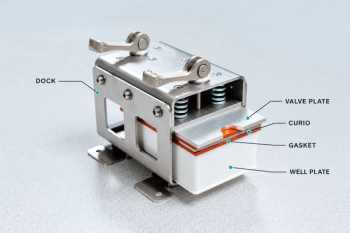
Quantera Analytical’s Terry Bates discusses parallel headspace extraction for gas chromatography-mass spectrometry (GC–MS) and direct analysis in real time–mass spectrometry (DART–MS) analysis.

Amandaa Brewer warns a shortage of large-molecule chromatography experts, as practitioners retire, could leave the next generation without the fundamentals.

Christopher Chouinard of Clemson University discusses with LCGC International how derivatization reshapes steroid mass for sharper liquid chromatography-ion mobility-mass spectrometry (LC-IM-MS) separations.

Gas chromatography (GC) tests show spoilage yeasts alter flavor and raise alcohol in NoLo beer.
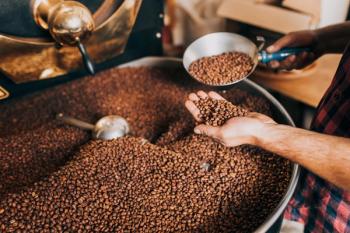
Liquid chromatography–tandem mass spectrometry (LC–MS/MS) finds low glyphosate residues of the weedkiller glyphosate in coffee beans.

This week, Chromatography Online explored how the technique is advancing wastewater drug monitoring, siRNA method development, and food safety testing, with previews of RAFA 2026 and a return to HPLC fundamentals with Michael Dong.
Advertisement
Advertisement
Trending on LCGC International
1
GC Reveals How Yeasts Spoil Non-alcoholic Beer
2
LC–MS/MS Tracks Glyphosate in Coffee Beans
3
Peaks & Pioneers: Amandaa Brewer on Chromatography’s Coming Expertise Gap
4
Derivatization Enhances LC-IM-MS of 11-Oxosteroids
5