

News|Videos|October 5, 2026
Confirming GLP-1 Peptide Identity and Structure
Advertisement
Episodes in this series



Building on the impurity landscape outlined in the previous episode, Sam Whitmarsh turns the conversation toward a more fundamental question: once an impurity or component is detected, how do analytical scientists confirm exactly what it is? Piotr Alvarez walks through his lab's standard identity-confirmation workflow, beginning with high-resolution mass spectrometry (HRMS) to establish an accurate molecular weight. That measurement alone, he cautions, cannot confirm whether the correct amino acid sequence is present, which is why the workflow typically advances to liquid chromatography (LC)–MS/MS analysis. Even that step has limits: collision-induced dissociation (CID), the standard fragmentation approach, cannot distinguish between certain isomeric amino acids, such as leucine and isoleucine. For those cases, the team turn to alternative fragmentation mechanisms like electron-capture dissociation (ECD). He also describes a complementary technique for cases requiring full amino acid analysis: hydrolyzing the peptide completely, then derivatizing and analyzing the individual amino acids using liquid chromatography with fluorescence detection.
Nitish Sharma describes a parallel workflow from his own laboratory, which similarly starts with direct mass analysis via HRMS, checking measured mass against theoretical mass within an acceptable ppm error. From there, amino acid sequencing is confirmed using either HRMS or dedicated peptide sequencing methods. Sharma adds a regulatory dimension often overlooked outside peptide-focused labs: confirming the D- or L-configuration of specific isomeric amino acids to demonstrate that no racemization occurred during synthesis—a requirement increasingly expected by regulators for peptide therapeutics.
Taken together, the two workflows illustrate that identity confirmation for GLP-1 peptides is rarely a single test, but a layered combination of mass accuracy, sequence confirmation, and stereochemical verification.
Advertisement
Related to this article

The panel considers how AI and automation could reshape peptide method development, and why scientific judgment will remain essential.
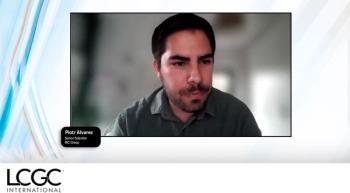
Piotr Alvarez explains how HILIC complements reversed-phase LC for GLP-1 peptides, and why the field is moving toward MS-friendly TFA alternatives.
Gas chromatography (GC) tests show spoilage yeasts alter flavor and raise alcohol in NoLo beer.
Liquid chromatography–tandem mass spectrometry (LC–MS/MS) finds low glyphosate residues of the weedkiller glyphosate in coffee beans.

This week, Chromatography Online explored how the technique is advancing wastewater drug monitoring, siRNA method development, and food safety testing, with previews of RAFA 2026 and a return to HPLC fundamentals with Michael Dong.

Recent EU legislation on PFAS shifts from monitoring individual compounds toward managing them as a chemical class.

In this seventh part of " Conversations with Michael Dong," a series on fundamentals of HPLC in pharmaceutical analysis, LCGC International’s "Perspectives in HPLC" column editor explains why 2.1-mm i.d. columns are less preferred for pharmaceutical quality control.
Ultrahigh-performance liquid chromatography–quadrupole time-of-flight mass spectrometry (UHPLC–QTOF-MS) shows how soaking and cooking break down soybean fats.
Advertisement
Advertisement
Trending on LCGC International
1
GC Reveals How Yeasts Spoil Non-alcoholic Beer
2
Keeping Pace With PFAS Regulation: Analytical Strategies for Food Testing Laboratories
3
Limits of Food Authentication: A Separation Science Approach to Maximum Tolerable Levels
4
GC-MS Reveals Aroma Markers of Three Cinnamons
5