Articles by Waters Corporation

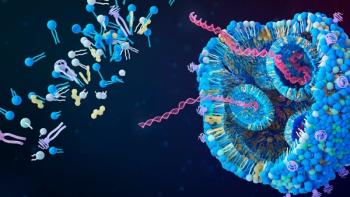
This executive summary examines how field-flow fractionation coupled with multi-angle light scattering (FFF-MALS) characterizes lipid nanoparticles (LNPs) as regulatory expectations from FDA, EMA, and USP converge on a shared set of critical quality attributes. It walks through how FFF-MALS resolves particle size, molar mass, and payload distribution in a single non-destructive run, and includes a case study comparing two authorized mRNA vaccines. Readers will see how size-resolved analysis uncovered differences in payload distribution that bulk-average methods missed.
This custom eBook examines how advanced analytical characterization is changing biosimilar development following the FDA's October 2025 draft guidance. It covers modern SEC separations for biosimilar antibodies, LC-MS and MAM workflows for protein characterization and attribute monitoring, and the role of multi-angle light scattering (MALS) in biosimilar approval. A closing Q&A with Matthew A. Lauber, PhD, of Waters Corporation, explores how integrating these complementary techniques builds a more complete, regulatory-ready picture of biosimilarity.
See how CDMS accurately characterizes AAV reference materials and generates robust data to support development, comparability, and QC workflows.
Directly distinguish empty, partial, full, and overfilled capsids while detecting additional impurities in a single analysis.
Learn how key attributes such as encapsidation, aggregation, potency, purity, and genome integrity influence AAV quality and what analytical strategies are needed to characterize them with confidence.
Discover how direct mass measurement reveals viral vector heterogeneity and provides a more complete understanding of capsid populations and product quality.
Simultaneously measure aggregates, capsid titer, genome titer, molecular weight, size, and empty/full ratio from a single analysis.
Monitor AAV enrichment as it happens to improve process understanding, increase consistency, and reduce manufacturing risk.

Webinar Date/Time: Thu, Sep 3, 2026 11:00 AM EDT
BioAccord LC-MS System with ACQUITY Premier - Product Brochure
Webinar Date/Time: Thu, Aug 6, 2026 11:00 AM EDT
As biopharmaceutical pipelines diversify, laboratories must deliver reliable, high-quality data across increasingly complex sample types. Download this eBook to explore how next-generation liquid chromatography (LC) systems are enabling robust, flexible bioanalysis through real-world QC applications.
From method concept to routine QC, analytical scientists must balance innovation with scalability, compliance, and reproducibility. This eBook explores how next-generation liquid chromatography (LC) systems are helping bridge that gap. Through three real-world examples you’ll see how modern LC platforms support confident decision-making across the entire analytical lifecycle.
Webinar Date/Time: Monday, December 8, 2025
8am PST | 11am EST | 4pm GMT | 5pm CET
CDMS is reshaping the characterization of complex biotherapeutics by enabling precise analysis of large, heterogeneous biomolecular complexes and gene therapy vectors. This article explores how CDMS enhances resolution in quality assessments across biotherapeutic development and structural biology research—surpassing the capabilities of conventional analytical techniques.
Applying Analytical Quality by Design (AQbD) principles to impurity method development enables robust, science-based strategies for characterizing and controlling critical quality attributes in protein therapeutics. This webinar will present a case study on developing a fluorescence-based (FLR) method for quantifying Mannose-5 glycans, demonstrating how risk-based design and systematic evaluation of method parameters enhance reliability, reproducibility, and product understanding across the biopharmaceutical lifecycle.
n this application note, a USP
monograph is modernized to a shorter column using 5 µm particles, which can be allowable under USP
<621> as long as the N value is within the guidelines. By using highly efficient CORTECS 5 μm particles,
this type of modernization is possible and reductions in solvent usage and run times are achieved
In this work the development of two key attributes of the 5um CORTECS Columns is examined. First column efficiency is compared across CORTECS and other solid-core 5 μm columns. Next scalability from sub-2 μm to 5 μm particles is examined between the CORTECS Column lines and competitive column lines. It was found that CORTECS columns have higher efficiency compared to other solid-core columns and that CORTECS particles are fully scalable.
Slalom chromatography separates
nucleic acids >3 kbp in <6 minutes using shear-based molecular stretching for high-resolution, gel-free
analysis.
he United States Pharmacopeia (USP)
has designations for all columns stationary phases used in the monograph methods. These designations
outline the stationary phase type, i.e. fully porous or solid-core, and any ligand attachments, i.e. C18 or
Phenyl to be used.1 However, beyond that no column specifics are given. With a multitude of columns
that fit into the different designations, understanding that not all columns are the same is vital when
selecting a stationary phase for a monograph method. This application note examines three columns
that all fit into the L1 designation when analyzing paracetamol impurities. Selectivity differences
between the columns are considered in relation to the impurities.
Explore how wide-pore SEC delivers sharp, reproducible separation of megadalton-sized DNA vectors and plasmids with minimal secondary interactions.
Webinar Date/Time: Thu, Nov 6, 2025 11:00 AM EST
Webinar Date/Time:
Wed, Oct 1, 2025 10:00 AM EDT
Explore how next-generation high-performance liquid chromatography (HPLC) systems are elevating biopharmaceutical analysis. This eBook showcases innovations in size-exclusion chromatography (SEC), method updates, and proven approaches to increase efficiency, consistency, and resolution in the lab.

The launch of Alliance iS v2.0 Software delivers unmatched traceability, operational efficiency, and ease of use—empowering laboratories to strengthen compliance, streamline training, and continuously improve workflows.



