

LCGC Europe eNews
Click here to view the full European E-newsletter from October 10.
LCGC Europe eNews
Click here to view the full European E-newsletter from October 10.
E-Separation Solutions
Click here to view the complete E-Separation Solutions newsletter from October 10, 2013.

The LCGC Blog
Choosing the correct column for an application really requires that we consider the many factors which can influence the efficiency and selectivity of a separation including column hardware, support and surface chemistry. On a rainy day a little while ago our technical support group came up with a list of 23 such factors which need to be considered.
LCGC Europe eNews
Intertek (Texas, USA) has opened a new chemical laboratory to support the growth of the growing refining and petrochemical complex in Texas City (Texas, USA).
LCGC Europe eNews
Porvair (Leatherhead, UK) has signed a technology licensing agreement with Thermo Electron Manufacturing, a division of Thermo Fisher Scientific (California, USA). Porvair has licensed its filter technology to Thermo to develop a range of life science sample preparation filters. Porvair will manufacture the products, and Thermo will distribute and market the products worldwide.

E-Separation Solutions
What would you do if faced with a zombie invasion in your analytical laboratory? LCGC Blog editor Kevin Schug provides guidelines and suggestions for fending off an attack, including how to use glassware and dead chromatography columns as defensive weapons and novel applications for laboratory lasers.

The Column
A novel orally active insecticidal peptide (OAIP-1) has been isolated from the venom of one of Australia's largest spiders, the Australian tarantula (Selenotypus plumipes) using reversed-phase liquid chromatography (reversed-phase LC) coupled with mass spectrometry (MS). The study was recently published in the journal PLOS ONE.1

The Column
The latest on-line highlights, company, and research news in brief as selected by the LCGC editorial team.

The Column
This article presents applications of ELSD in GPC/SEC. It discusses both the advantages and disadvantages as well as the practical considerations for use in GPC/SEC.

The Column
In this technical tip from CHROMacademy we re-visit some of the lesser known or remembered facts relating to silica particles used in chromatography.
LCGC Europe eNews
Click here to view the full European E-newsletter from October 3.

The Column
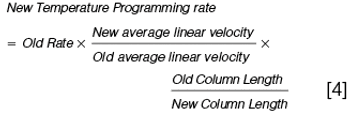
An excerpt from LCGC's e-learning tutorial on translating GC methods at CHROMacademy.com

The Column
The Urine Metabolome Database (UMDB) (www.urinemetabolome.ca) containing detailed information on over 3000 metabolites has been launched following the comprehensive quantitative metabolome characterization of urine by scientists at the University of Alberta, Canada.1 The project is part of the on-going Human Metabolome Project launched in 2005 by Genome Canada and Genome Alberta, and has so far received $600 million in funding from the Canadian government.
LCGC Europe eNews
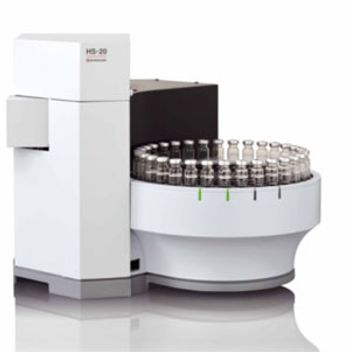
Environmental and pharmaceutical application, forensics, material and food production analyses – Shimadzu’s HS-20 headspace sampler serves GC and GCMS applications particularly in testing and inspection organizations.

LCGC Europe eNews
Malvern Instruments (Malvern, UK) has acquired NanoSight (Amesbury, UK), a nanoparticle characterization company. The acquisition was completed on 27 September 2013.

LCGC Europe eNews
Peak Scientific has recently opened an extension of their head office in Inchinnan, Scotland, named Cherry Tree House. The extension will accommodate the expansion of the company since it launched in 1997.
Mobile Phase Reservoirs from Corning
PYREX HPLC Mobile Phase Reservoir, Single Cavity
Mobile Phase Reservoirs from Corning

Lab Innovations 2013

Special Issues
The experimental design that considers gradient time and temperature was expanded to include a third factor, either pH or ternary composition, and modelling software facilitated the analysis.
Special Issues
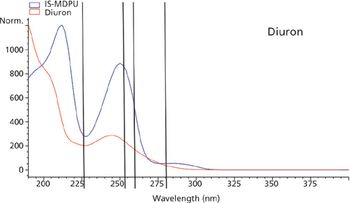
The parameters that should be considered in the optimization of HPLC methods are explained and then illustrated through the analysis of two commercial agricultural products.

Special Issues
Supercritical fluid chromatography has become a viable option for the separation scientist in diverse areas, and the field now seems more adequately described as an extension of HPLC, or perhaps as "carbon dioxide–based HPLC".
Special Issues
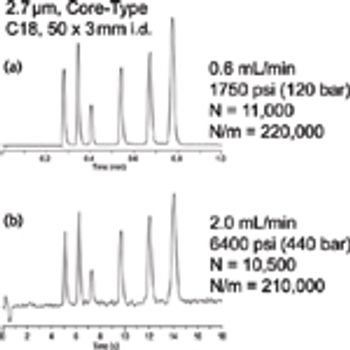
The authors explain modern UHPLC instrument design and outline simple procedures to identify causes of poor column and method performance.

Special Issues
When choosing the articles to include in this supplement, my selection was based on a very simple criterion.
Special Issues
Click the title above to open the LCGC Europe October 2013 Recent Developments in HPLC and UHPLC Supplement, Vol 26 No s10, in an interactive PDF format.

LCGC Europe
John Hinshaw examines the anatomy of chromatographic peaks with attention to features that help determine the suitability of individual chromatographs for a specific analysis task.
LCGC Europe
The innovative and inspiring career of Barry Karger is described, including his pioneering work in bioanalysis.
LCGC Europe
There are many parameters that need to be considered when considering the use of hydrogen as a carrier, however, the benefits to chromatography and money saved make this a worthwhile exercise.

LCGC Europe
In any field, there are "misconceptions" or "myths" that arise and are perpetuated and passed on to the next generation. These myths are often driven by a lack of understanding of the real issues by practitioners. In the first of a two-part feature from Ron Majors, the top 10 high performance liquid chromatography (HPLC) column myths are presented and attempts are made to demystify them by offering some evidence that they are untrue. This part will feature myths 10 to six.