LCGC Europe eNews
Christie Hunt, Director of Proteomics Applications at AB Sciex (Massachusetts, USA), has won the Human Proteome Organization (HPO) 2013 Science and Technology Award.
LCGC Europe eNews
Christie Hunt, Director of Proteomics Applications at AB Sciex (Massachusetts, USA), has won the Human Proteome Organization (HPO) 2013 Science and Technology Award.

The Column
Incognito rallies a call on the power of published research. Is open access the way forward?
The Column
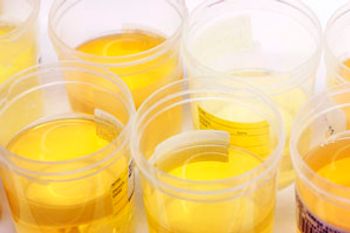
The first pilot study demonstrating the application of a prototype "scent device" (commercially known as "OdoReader") to detect bladder cancer has been published in the journal PLOS ONE.1

LCGC Europe eNews
Click here to view the full European E-newsletter from 19 September.

The Column
Analytical chemists from Indonesia have developed a metabolomics-based method to determine the authenticity of the world?s most expensive coffee, Asian palm civet coffee (Indonesian Kopi Luwak).1 Currently, there is no reliable, standard method for determining authenticity, making it an ideal target for fraud.
LCGC North America
The Eastern Analytical Symposium (EAS) will be held this year from November 18 to 20, 2013, in Somerset, New Jersey. EAS is the second largest conference and exposition for laboratory science in the United States dedicated to the needs of analytical chemists and those in the allied sciences.

LCGC Europe eNews
Kevin A. Schug, professor at the University of Texas, Arlington (Texas, USA) and LCGC North America EAB member, has led a team to survey and assess the impact of natural gas extraction from shale, also known as "fracking", on nearby water sources. The results of the assessment were recently published in the journal Environmental Science & Technology.1
LCGC Europe eNews
Agilent Technologies Inc. (Santa Clara, California) and ABC Instrumentacion Analitica (ABCIA) (Mexico City, Mexico) have signed a definitive agreement for Agilent to acquire assets from ABCIA.
LCGC Europe eNews
Click here to view the full European E-newsletter from 12 September.
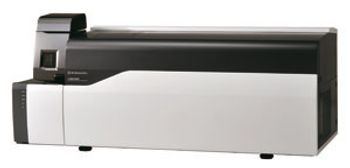
Shimadzu?s new LCMS-8050 triple quadrupole LC-MS/MS meets the growing demand for trace-level quantitation in clinical research and other markets. It incorporates proprietary ultrafast technologies as well as a newly developed ion source and collision cell technology. As the flagship model of Shimadzu?s UFMS (Ultra-Fast Mass Spectrometry) product line, the LCMS-8050 features high sensitivity, high data quality and the world?s fastest data acquisition rates.

The Microlute SPE sample preparation system from Porvair Sciences provides a faster, trouble-free alternative to cartridges for high throughput sample clean-up. Handling samples as small as 150?l the Microlute? SPE sample preparation system helps you increase your assay sensitivity by providing pre-injection clean-up and concentration you can trust.
LCGC North America
Thermo video application note: organic brown rice syrup analysis

LCGC North America
Researchers coupling high performance liquid chromatography to mass spectrometry face the challenge of segregating the ionized, typically nonvolatile analytes from a large amount of solvent, and the mobile phase is an important component in the process. LCGC Blog editor Kevin Schug discusses factors to consider when choosing a mobile phase for LC-MS.
The Column
Kevin A. Schug, professor at the University of Texas, Arlington (Texas, USA) and LCGC North America EAB member, has led a team to survey and assess the impact of natural gas extraction from shale, also known as "fracking", on nearby water sources. The results of the assessment were recently published in the journal Environmental Science & Technology.1

The Column
Choosing proper tubing connections throughout the entire system, especially when capillary tubing is used, can dramatically improve the level of sensitivity and quality of data obtained with most LC–MS systems.

The Column
A German/Chinese team led by Rainer Lehmann, of the University of Tuebingen (Tuebingen, Germany) and Guowang Xu, of the DICP (Dalian, China), has developed a method of simultaneously extracting metabolites and lipids using methyl tert-butyl ether (MTBE) from single small tissue samples for analysis by ultrahigh-pressure liquid chromatography–mass spectrometry (UHPLC?MS).
LCGC Europe eNews
Click here to view the full LCGC Europe E-newsletter from 5 September.
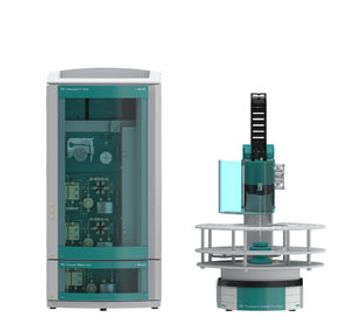
Metrohm launches the 940 Professional IC Vario, the new high-performance ion chromatography system for research applications and routine use. The 940 Professional IC Vairo is Metrohm?s most versatile IC system yet.
LCGC Europe eNews
Chromatography can be approximated by a series of equilibrium events between the mobile phase and stationary phase. Here, LCGC Blog editor Kevin Schug discusses an exceptional spreadsheet macro written by an undergraduate researcher that helps users visualize the development of chromatographic separations.
LCGC Europe eNews
Alan Rawle, Divisional Applications Manager at Malvern Instruments (Malvern, UK), has been accepted as a Fellow of the Royal Society of Chemistry (FRSC).
LCGC Europe eNews
Emmanuel Barillot, Director of Bioinformatics and Systems IT at the Institut Curie (Paris, France), has received an Agilent Thought Leader Award. Agilent will contribute financial support, products, and expertise to the work by Barillot to develop a database of cellular signalling pathways and a visualization tool to help the pharmaceutical industry develop more effective cancer treatments. The web-based tool will enable the identification of off-pathway effects of new drugs.
The Application Notebook
Shimadzu Europa GmbH

The Application Notebook
PSS Polymer Standards Service GmbH
The Application Notebook
Metrohm
The Application Notebook
Tosoh Bioscience
The Application Notebook
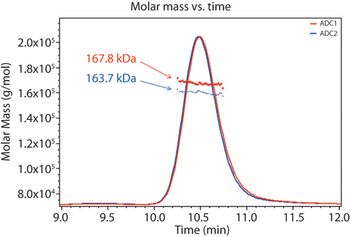
Wyatt Technology Corporation
The Application Notebook
Biotage LLC

The Application Notebook
Toxicology Laboratory at the Veterans Administration, Portland, Oregon, USA, Agilent Technologies