All News

The Pittcon 2013 award winners for scientists specializing in separation science have been announced. Each of the award winners will be presented with their awards in a series of prize-giving presentations at the Pittsburgh Conference (Pittcon), Philadelphia, USA from 17th?21st March 2013.

Knauer-799438-1408599080075.jpg

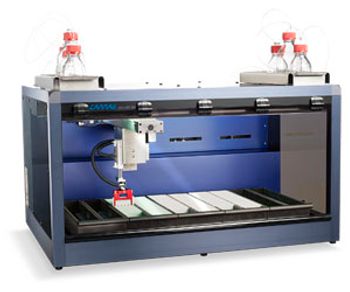
A preparative HPLC system should be as versatile as possible, since purification tasks can change frequently. AZURA Preparative HPLC was designed for flexibility and to comfortably handle large sample volumes. Extensive automation makes fraction collection easy and allows for solvent as well as peak recycling.

A Shotgun Approach

Dr Shabaz Mohammed, from Utrecht University, The Netherlands, spoke to LCGC about his group's activities in protein analysis and the importance of "shotgun proteomics."

Nexera-798077-1408595470756.jpg

Ultra-high sensitivity, expanded flexibility, increased stability and robustness - the new Nexera X2 UHPLC system targets routine analysis and applications in highly regulated environments demanding complex system setups.

The Column spoke to Steve Maynard, Lab Director at LGC's HFL Sport Science, about his work in the world of horse doping and his laboratory's involvement in this years Olympic and Paralympic Games.

Sugar-798090-1408595453768.jpg

Sweet potential

A group of researchers led by Dr S. Habtemariam from the University of Greenwich, London, UK,1believe they have identified potential sources of new natural‑origin drugs to treat diabetes that may have reduced adverse clinical side effects.

Ham-798060-1408595488859.jpg

Healthy ham

A collaborating team of investigators1 based in Spain, Japan and the UK believe they may have discovered the potential health benefits of Spanish dry-cured ham. They consider that the ham could reduce high blood pressure associated with cardiovascular disease when consumed as part of a healthy diet.

GM seeds to save salmon?

Scientists in Australia1 have genetically engineered the plant Arabidopsis thaliana to produce high levels of omega-3 oils that are normally found within coldwater fish like salmon.

The complexity of method development for GPC/SEC is often underestimated. Although only isocratic separation is applied, the development of a robust and stable method can be challenging. It is important that measures are taken to develop a suitable method that will deliver long-term reproducible results, especially when biomolecules, ions or functional groups are present.

The most accurate method for measuring dioxins and related compounds, such as polychlorinated biphenyls (PCBs), is isotope dilution?selected ion monitoring?mass spectrometry (ID-SIM-MS). To use the method correctly, however, analysts need to take various factors into account, such as proper spiking of the extraction and injection standards and establishing proper quality control approaches that are applicable to ID-SIM-MS. Below, renowned dioxins expert Yves Tondeur of SGS-Analytical Perspectives in Wilmington, North Carolina, answers questions about dioxin analysis that were raised during a recent web seminar.

Thermo-794656-1408597593475.jpg

Analytical and nano scale Thermo Scientificâ„¢ Accucoreâ„¢ 150-C18 and 150-C4 columns are rugged and easy to use. The columns are designed to improve protein and peptide assay robustness by enhancing peak capacity and run times at moderate operating pressures.