All News

LCGC Europe eNews

The University of Manchester (Manchester, UK) has announced the start of the world’s biggest allergy study.

LCGC Europe eNews

Method validation is a concept that has been ingrained (or should have been ingrained) in the minds of most analytical chemists. Any new method that is created has to be proven reliable and provide some level of performance under well-defined conditions.

LCGC Asia Pacific eNews

Waters Corporation (Massachusetts, USA) has announced the opening of a Solution Centre based within the Singapore Science Park II (Singapore).

LCGC Europe eNews

The heart of Richard I ? King of England from 1189?1199 and nicknamed ?Richard the Lionheart? ? has been analysed by gas chromatography?mass spectrometry (GC?MS), combined with an array of other bioanalytical techniques.

E-Separation Solutions

Concerns have been raised throughout the scientific community about the potential effects of pharmaceuticals on the environment.

Bruker-808716-1408541734091.jpg

LCGC Asia Pacific eNews

Bruker (Massachusetts, USA) has built on its 30-year history in India by opening two new centres of excellence in Mumbai and Bengaluru.

The LCGC Blog

A number of retention time issues can cause problems in HPLC. Here's advice on how to handle common ones, such as retention time drift, temperature variability, problems arising from column equilibration, and difficulties validating a method.

LCGC Europe eNews

Scientists at The Scripps Institute (California, USA) have used liquid chromatography?mass spectrometry (LC?MS) to identify a new biomarker for the diagnosis of river blindness.1

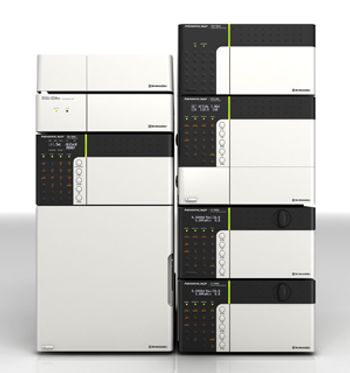
Shimadzu-806726-1408545965899.jpg

The two triple quadrupole mass spectrometers LCMS-8040 and GCMS-TQ8030 complete Shimadzu?s UFMS series consisting of seven powerful systems. The UFMS product family provides higher sensitivity, greater excellence in data quality, increased analytical throughput and a wider range of applications.

Eye-808660-1408546953391.jpg

The Column

Scientists at The Scripps Institute (California, USA) have used liquid chromatography?mass spectrometry (LC?MS) to identify a new biomarker for the diagnosis of river blindness.1