

LCGC June 2007 BPA
LCGC June 2007 BPA

LCGC North America
Quantitative assessment of protein expression in biological systems in response to perturbations is an important element in the discovery and validation of biomarkers and drug targets. This can be a challenging task given the complexity and dynamic range of biological extracts. Many methods are currently in use to address protein quantification. This installment of "Directions in Discovery" reviews several of the more popular ones and reports on a collaborative study organized by the Association of Biomolecular Resource Facilities.
LCGC North America
Ron Majors awarded gold medal; Airgas acquires Dantack; Molex acquires Polymicro
The Pittsburgh Conference on Analytical Chemistry and Applied Spectroscopy, an event that features the newest applications and technologies in the chromatography industry, have announced the 2008 Pittsburgh Conference Memorial National College Grants (PCMNCG) Program.
Eksigent, a developer of advanced low-flow fluid delivery liquid chromatography technologies, announced distribution agreements with three companies in Europe for sales and service of the company's high performance liquid chromatography (HPLC) and liquid chromatography (LC) product lines.
Waters Corporation and Thar Instruments, Inc., have entered into a new phase of their cooperative agreement to help bring "green" alternatives to chemical analysis.
DSM Venturing announced that it has participated in an equity investment round in the Danish company Upfront Chromatography, a developer of customized industrial protein chromatography processes.
The Green Chemistry Group, a non-profit organization dedicated to promoting the benefits of environmentally-friendly research and development processes, will host the 1st International Conference on Supercritical Fluid Chromatography (SFC) September 23-25, 2007 at the Sheraton Station Square Hotel in Pittsburgh, Pennsylvania.
Leipziger Messe, organisers of L.A.B. - the trade fair and conference devoted to analysis, bio and laboratory equipment - have announced that the show will host 88 exhibitors from countries including the UK, US, France, Italy, Finland, the Netherlands, and Germany. L.A.B. takes place from 2-4 October 2007 at ExCeL London.

Ronald E. Majors, LCGC North America columnist and Senior Chemist for the Columns and Supplies Division of Agilent Technologies, Inc., has been awarded the 2007 Martin Gold Medal by the Chromatographic Society in the United Kingdom for outstanding contributions to the chromatography field.
LabLogic Systems has acquired IN/US Systems Inc., the manufacturer of radio chromatography flow-through detectors and counters for bio-medical research.
Waters Corporation (Milford, Massachusetts) and Lambda Therapeutic Research Ltd (Mumbai, India) recently announced a joint cooperative agreement that provides innovative analytical laboratory equipment designed to enhance research quality service and business solutions for Lambda and its clients.
Science Daily, a website that features news revolving around the sciences, has published an article that describes new chromatographic techniques for the analysis of pesticides and antibiotics in food and beverage samples.
Applied Biosystems (Foster City, California) recently announced three new value-added services for laboratories that are utilizing Applied Biosystems/MDS SCIEX mass spectrometry (MS) instrument systems as part of an overall workflow solution.
Nanostream, provider of products and services that increase productivity in laboratories at pharmaceutical and biotech companies, extends its global reach to Europe by establishing a sales and support office in The Netherlands.
Biodiesel Magazine has recently posted an article that gives an overview of biodiesel test methods, which includes gas chromatography (GC), infrared spectrometry (IR), and inductively coupled plasma (ICP).
Reuters Health has published an article that describes how Dr. Ping Wang of Zhejiang University, Hangzhou, and his colleagues used solid-phase microextraction combined with gas chromatography (GC) to analyze exhaled volatile organic compound (VOC) markers to help with the diagnosis of lung cancer.

The Victoria Advocate (Victoria, TX) published an article about the random testing of high school student-athletes in the Texas public school system. The article is entitled "No Steroid Test is Foolproof" and focuses on the process of drug testing using gas chromatography-mass spectroscopy (GC-MS).
The Montreal Gazette published an article about the use of analytical techniques in the wine industry. The author discusses the difference between "natural" wines and "industrial" wines that are created with a certain taste profile in mind and with the assistance of gas chromatography.
Molex Incorporated (Lisle, Illinois), a global electronic components company, recently announced that it has completed its acquisition of Polymicro Technologies, LLC (Phoenix, Arizona).
Airgas, Inc. (Radnor, Pennsylvania) recently announced it has acquired the assets and operations of Dantack Corporation (Grand Prairie, Texas) safety distributor with branches in Columbus, Ohio, and Richmond, Virginia.
The Pittsburgh Conference has recently announced the continuation of its partnership with the ACS Division of Analytical Chemistry at Pittcon 2008, 1-7 March 2008, Ernest N. Morial Convention Center, New Orleans, Louisiana.

The Application Notebook
Cara Tomasek, Tosoh Bioscience LLC
The Column
High-Speed Amino Acid Analysis of Beverages Cliff Woodward and john W. Henderson Detecting Solvent Residues in Packaging Foils Using Headspace GC Ulrich Servos and Margit Geissler ExTech 2007 Report Stig Pederson-Bjergaard, Graham Andrew Mills and Knut Einar Raasmussen News All the news from September 2007 Has Chromatography Been Helped by the Internet? This month Zosimus wonders if the world wide web has had any impact on the world of separation science. Market Trends & Analysis Glenn Cudiamat reports on the latest developments affecting the markets of GC-MS. Q&A: My Name is Earl Tony Taylor talks about Crawford Scientific's new e-training program launched to boost the practical and theoretical expertise of chromatographers.
LCGC Asia Pacific
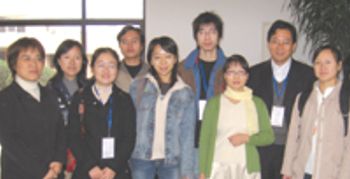
This feature highlights some of the current analytical research being undertaken across China by focusing on the work of several research groups at academic institutions.
LCGC Europe
FACSS, the Federation of Analytical Chemistry and Spectroscopy Societies, will hold this year's annual conference from 14–18 October, at the Memphis Cook Convention Center, Memphis, Tennessee, USA. It will cover analytical chemistry with an emphasis on spectroscopy. Bringing together leading scientists across many disciplines for scientific exchange, the exhibition also provides a variety of informal networking opportunities.
LCGC Europe
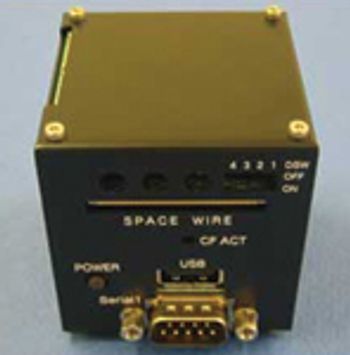
Easy-to-use multimemory card reader; Presentations with a new wireless twist; Multimedia wristwatch has arrived; Space cube is a computer with a tiny difference
E-Separation Solutions
Polymer Laboratories Varian