All News

i1_t-164900-1408696715089.gif

Peaks of Interest

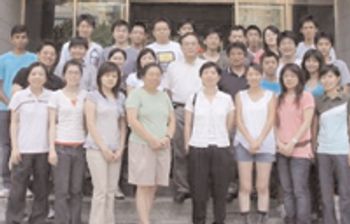
Agilent (Palo Alto, California) recently announced plans to open a new training center in Shanghai, China.

i4-164892-1408696726013.jpg

Reversed-phase high performance liquid chromatography (HPLC) is one of the most utilized forms of chromatography (1). The C8 and C18 stationary phases are the most widely used for reversed-phase HPLC. However, analysts occasionally encounter difficult separations for which selectivity, ruggedness, or reproducibility are not obtained easily using traditional C8 and C18 phases. These separations might require the use of novel or selective phases that interact with analytes in a manner different than C8 or C18 phases (2). These types of stationary phases separate compounds based upon selective stationary phase interactions such as steric recognition charge transfer or ?–? interactions (3). One class of selective or novel phases that have been used for a variety of separations are fluorinated phases (4). These fluorinated phases have provided an alternative and complementary separation for many analytes performed on C8 or C18 columns. Fluorinated phases can provide different elution orders, leading to..

News All the news from May 2005 Opinion Zosimus sparks a debate on the significance of scientific journals in out contemporary world of communications as a means of providing information. Market trends & analysis Glenn Cudiamat analyses the demand for CE-MS across various laboratory application fields. Country focus This month we turn our attention to Switzerland and monitor the growth of some companies whose foundations lie there. Q&A Rene Trost from Dionex Corporation speaks about the latest developments for ion chromatography, nano and capillary applications within the company.

i1_t-159252-1408695807657.gif

Peaks of Interest

ESA Biosciences, Inc. (Chelmsford, Massachusetts) announced that it has been awarded a "Roadmap Initiative" grant from the National Institutes of Health to accelerate ESA's ongoing work in metabolomics research. Under this grant, ESA will extend and integrate electrochemical and MS technologies to facilitate a range of metabolomics studies.