

Airgas, Inc. (Radnor, Pennsylvania) recently announced it has acquired the assets and operations of Dantack Corporation (Grand Prairie, Texas) safety distributor with branches in Columbus, Ohio, and Richmond, Virginia.
Airgas, Inc. (Radnor, Pennsylvania) recently announced it has acquired the assets and operations of Dantack Corporation (Grand Prairie, Texas) safety distributor with branches in Columbus, Ohio, and Richmond, Virginia.
The Pittsburgh Conference has recently announced the continuation of its partnership with the ACS Division of Analytical Chemistry at Pittcon 2008, 1-7 March 2008, Ernest N. Morial Convention Center, New Orleans, Louisiana.

The Application Notebook
Cara Tomasek, Tosoh Bioscience LLC
The Column
High-Speed Amino Acid Analysis of Beverages Cliff Woodward and john W. Henderson Detecting Solvent Residues in Packaging Foils Using Headspace GC Ulrich Servos and Margit Geissler ExTech 2007 Report Stig Pederson-Bjergaard, Graham Andrew Mills and Knut Einar Raasmussen News All the news from September 2007 Has Chromatography Been Helped by the Internet? This month Zosimus wonders if the world wide web has had any impact on the world of separation science. Market Trends & Analysis Glenn Cudiamat reports on the latest developments affecting the markets of GC-MS. Q&A: My Name is Earl Tony Taylor talks about Crawford Scientific's new e-training program launched to boost the practical and theoretical expertise of chromatographers.
LCGC Asia Pacific
This feature highlights some of the current analytical research being undertaken across China by focusing on the work of several research groups at academic institutions.
LCGC Europe
FACSS, the Federation of Analytical Chemistry and Spectroscopy Societies, will hold this year's annual conference from 14–18 October, at the Memphis Cook Convention Center, Memphis, Tennessee, USA. It will cover analytical chemistry with an emphasis on spectroscopy. Bringing together leading scientists across many disciplines for scientific exchange, the exhibition also provides a variety of informal networking opportunities.
LCGC Europe
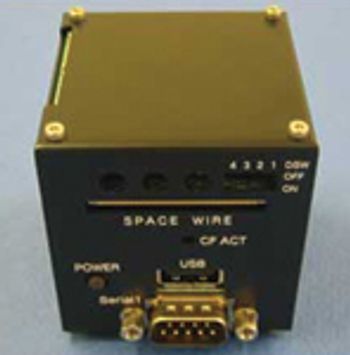
Easy-to-use multimemory card reader; Presentations with a new wireless twist; Multimedia wristwatch has arrived; Space cube is a computer with a tiny difference
E-Separation Solutions
Polymer Laboratories Varian
LCGC North America
The Pittsburgh Conference announced that Dr. Leroy Hood will deliver the plenary lecture, Systems Biology and Systems Medicine, during the opening session of Pittcon 2008 at the Ernest N. Morial Convention Center, New Orleans, Louisiana on 2 March 2008.
The Column
Arnel Inc. (Parlin, New Jersey) recently opened a sales office in Bangcok, Thailand. The office will feature consultation facilities and appropriate demonstration equipment.
The Column
The Pittsburgh Conference recently announced that Dr. Leroy Hood will deliver the plenary lecture, Systems Biology and Systems Medicine, during the opening session of Pittcon 2008 at the Ernest N. Morial Convention Center, New Orleans, Louisiana on March 2, 2008.
The Column
Agilent Technologies (Palo Alto, California) and the National Jewish Medical and Research Center (Denver, Colorado) recently announced a collaboration to provide applications-focused technical training in the field of systems biology.
Chiral Technologies Inc., a provider of chiral chromatography columns, has announced that it will expand Latin American sales efforts by partnering with exclusive distributors.
Thermo Fisher Scientific has announced that its informatics solutions have won Scientific Computing's 2007 Readers' Choice Awards in four categories.
Waters is acquiring Calorimetry Sciences, a manufacturer of high-performance calorimeters.
A Team of Scientists from MIT have developed a method for unveiling the genetic code of heparan sulfate (a sugar molecule found on the surface of all cells in the body) and heparin (a commercial drug used to stop clotting).
Residue analysis data from guaranteed lifetime-untreated animals can now be obtained by gas chromatography, liquid chromatography, and tandem mass spectrometry.
Scientists from the Federal Institute for Materials Research and Testing, Department of Analytical Chemistry have derived a new way to test for Ochratoxin A (OTA) in beer.
A Space experiment seeking to find an in situ analysis of the environment on the planet Mars is scheduled to be a part of NASA Mars Science Laboratory 2009 (MSL 2009).
Brazilian scientists have teamed to use gas chromatography (GC) and electron-capture detection (ECD) for the testing of wastewater.
As part of a new method developed by researchers from The Nisshin OilliO Group, Ltd., analysis of trans-fatty acids was completed in 20 minutes for non-hydrogenated oils and just 40 minutes for hydrogenated oils.
Results from a study of flux distribution in central metabolic pathways of Desulfovibrio vulgaris Hildenborough suggest that fluxes through both pathways are limited to biosynthesis.
The six weeks that graduate student Tinashe Mudzviti spends at the University at Buffalo this summer could help more than 100,000 people with HIV receive life-saving treatments back in his home country of Zimbabwe.
The 1st International Conference on SFC, sponsored by The Green Chemistry Group, has received an overwhelming response to its scientific program consisting of distinguished speakers from around the world. Topics range from chiral and achiral purifications to SFC-MS.
In an article recently published in Rapid Communications in Mass Spectrometry, researchers developed an application to show that an N, C, and S measurement system allows a three-dimensional view of element dynamics in estuarine systems that are undergoing pollution inputs from upstream watersheds.
In an article recently published in Public Health Nutrition that discusses medicinal herbs? growing popularity, researchers report that While Western medicine currently employs pure, single compounds, CM has long used multiple combinations of compounds in the form of processed natural products, primarily medicinal herbs, to treat and relieve the symptoms of many different human diseases.
CSI, the hit television show that has been credited with popularizing many otherwise unknown areas of science, has added ?gas chromatograph-mass spectrometer? to the ?Tools? section of its homepage.
In an article recently published in the British Journal of Nutrition, researchers used gas chromatography to determine the fatty acid concentrations of plasma phosphatidylcholine, triacylglycerol, NEFA and cholesteryl esters to test the hypothesis that gender-related differences in n-3 PUFA metabolism are reflected in the concentrations of n-3 PUFA in plasma lipids.