

PerkinElmer expands globally with new facilities in the U.K. and China and launches a strategic partnership with Covaris and Hamilton to enhance laboratory solutions and diagnostics worldwide.
PerkinElmer expands globally with new facilities in the U.K. and China and launches a strategic partnership with Covaris and Hamilton to enhance laboratory solutions and diagnostics worldwide.

Twenty years ago, the fraud at Able Laboratories was uncovered. A chromatography data system (CDS) was at the center of the fraud. What have regulated laboratories learnt since then?

We highlight how chromatography is being used to analyze Irish whiskeys.

Researchers evaluated metabolic abnormalities in six neonatal Noma foals that died shortly after birth, using laboratory tests, pathological examinations, serum amino acid (AA) analyses, genetic analyses, and gas chromatography-mass spectrometry (GC-MS).

The concept of theoretical plates is the key measure of column efficiency in chromatography, linking Nobel Prize–winning theory with practical tools for achieving sharper peaks, better resolution, and reliable separations.

This explainer video highlights why Analytica coming to North America is a big deal in the separation science community.
LCGC International spoke with Aristeidis S. Tsagkaris, associate professor in the Department of Food Analysis and Nutrition at the University of Chemistry and Technology in Prague (Czech Republic), about his team’s study analyzing 19 Italian-grown chili pepper varieties using ultrahigh-performance liquid chromatography coupled with quadrupole time-of-flight mass spectrometry.

Lina Mikaliunaite shares her journey from studying liquid chromatography as an undergraduate to working in industry with GC×GC, highlighting the mentors, research experiences, and career steps that shaped her path in separation science.


This week, LCGC International published a variety of articles on hot topics in separation science. From a feature article on about the latest challenges in U.S. research funding to an article that recaps the latest HPLC products sent to market this year, we remain dedicated to sharing the latest in chromatographic advancements. Below, we’ve highlighted some of the most popular articles that were published this week.

A multi-laboratory study involving 10 research groups has highlighted the challenges and constraints of current untargeted metabolomics data annotation methods using mass spectrometry (MS).

Thermo Fisher Scientific has opened a 375,000-square-foot, carbon-neutral site in Mebane, N.C., designed to produce 40 million pipette tips per week.

Click here to access the LCGC International July/August 2025 Europe PDF in an interactive format.
Click here to access the LCGC International July/August 2025 North America PDF in an interactive format.
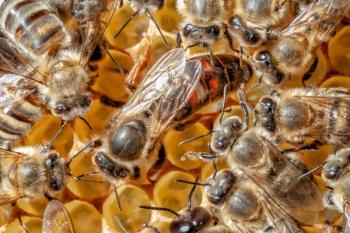
A joint study conducted by the University of Copenhagen, the Technical University of Denmark, and the University of Cambridge explored a potential untapped archive from natural history collections (particularly specimens relating to historical beeswax) using liquid-chromatography-tandem mass spectrometry (LC-MS/MS) to examine a honeybee queen cell specimen from the 19th century.

In early 2025, major U.S. science agencies faced deep budget reductions under the new Department of Government Efficiency (DOGE), disrupting research funding, delaying projects, and creating widespread uncertainty.

A joint study conducted by the University of Guelph, the University of Illinois, and Champion Petfoods Holdings used high performance liquid chromatography (HPLC) in their analysis of the polyphenol profile in cat and dog kibble with blueberries listed on the ingredient deck.
In recent years, analytical chemists have increasingly adopted a sustainability viewpoint. Yet, at the same time, they still use traditional organic solvents for extractions and other procedures. In this installment of Sample Preparation Perspectives, we will look at solvent selection from green considerations. Trends on solvent use are presented, followed by a discussion on what makes a green solvent. Finally, the CHEM21 Solvent Selection Guide is examined as representative of tools for selecting green solvents for use in analytical methods and other chemical processes.

Learn how the flame ionization detector (FID) works in gas chromatography, plus tips to optimize sensitivity, troubleshoot baselines, and improve results.

Researchers have developed a rapid and sensitive analytical method for tracing lufenuron in cabbages using ultra-high-performance liquid chromatography-tandem mass spectrometry (UHPLC-MS/MS).
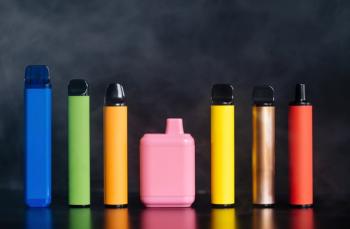
Researchers at the University of Huddersfield analyzed 60 new and used disposable e-cigarettes using HS-GC–MS and HPLC–DAD, finding concerning levels of ethyl maltol and benzoic acid and detailing their chemical composition and changes with use.

A review article written by researchers at Imperial College London (United Kingdom) explored the potential of volatile organic compounds (VOCs) as early, non-invasive biomarkers for Parkinson’s disease (PD), a neurodegenerative condition that currently lacks reliable diagnostic tools for early-stage detection. LCGC International spoke to Ilaria Belluomo of Department of Surgery and Cancer, Imperial College London and lead author of the review, about how chromatography and mass spectrometry played a part in the team’s research.

In this study, we applied a high-sensitivity MAPPs workflow using magnetic bead-based HLA-DR/DP/DQ immunoprecipitation and high-resolution mass spectrometry (HRMS) to assess the immunogenicity risk of six marketed mAbs across a panel of 10 HLA-typed donors.

The first analytica USA will take place from September 10–12, in Columbus, Ohio

In this installment, we explore the key relationships between efficiency and mobile phase flow rate and particle size, as well as secondary determinants of efficiency, including analyte retention, size, and chemistry, and instrumental effects.
This week, LCGC International published a variety of articles on hot topics in separation science. From a feature article on how to improve productivity in the laboratory to spotlighting some of the latest research in forensic analysis, we remain dedicated to sharing the latest in chromatographic advancements. Below, we’ve highlighted some of the most popular articles that were published this week.

Here, we provide a compilation of some of the rising stars of separation science, detailing their ongoing contributions to the industry.


Researchers from the U.S. Horticultural Research Laboratory’s Agricultural Research Service present a preliminary characterization of the citrus peel materials responsible for elevated high performance liquid chromatography-ultraviolet (HPLC-UV) chromatogram baselines from citrus peel extracts using Fourier-transform infrared (FTIR) and proton-nuclear magnetic resonance (1H-NMR) spectroscopy.

For the first time in the United States, Analytica brings leading exhibitors, research insights, and interactive lab technology showcases to Columbus, connecting professionals across the entire laboratory value chain.