

Brett Paull, a recognized expert in the field of ion chromatography (IC) discusses the past, present, and future of the technique, and questions some misconceptions about the compatibility of IC with mass spectrometry.
Brett Paull, a recognized expert in the field of ion chromatography (IC) discusses the past, present, and future of the technique, and questions some misconceptions about the compatibility of IC with mass spectrometry.

HPLC is indispensable in pharmaceutical analysis and quality control despite some notable shortcomings in laboratory testing and processes to ensure regulatory compliance.

Liquid chromatography (LC) is an incredibly powerful analytical tool that can be used to characterize materials across an astonishingly wide array of applications, ranging from 1 megaDalton polystyrenes to small genotoxic impurities of concern in pharmaceutical manufacturing. However, with this power also comes with a lot of detail related to successful operation of an LC instrument and analysis of the data it produces. This can be challenging when onboarding new LC users—how do we train someone new, where do we start, and which resources are best? In this installment, I will highlight ten high priority topics that every new user should be familiar with, no matter the training mechanism.

Research conducted by the University of Tolima evaluated the effects of chromium-yeast supplementation at different doses and timepoints on physiological and molecular stress biomarkers in heat-stressed lambs, with chromium bioavailability assessed by blood levels using absorption chromatography.

Click here to access the LCGC International October 2025 Europe PDF in an interactive format.
Click here to access the LCGC International October 2025 North American PDF in an interactive format.

Chris Pohl, a recognized and respected contributor to the evolution of ion chromatography and recipient of LGCC International’s Lifetime Achievement Award, discusses the past, present, and future of ion chromatography (IC).

Researchers characterized lipid profiles from Hass Portuguese avocado pulp using C18 reversed-phase HPLC-MS/MS, and their biological activities were evaluated.

The founders of the International Women in Chromatography group share their diverse career paths, the challenges of balancing motherhood with scientific work, and the systemic barriers women face in advancing within the field.

In the first in a series of interviews to celebrate the 50-year anniversary of ion chromatography (IC), Joachim Weiss, Chris Pohl, and Brett Paul offer advice to chromatographers who want to specialize in this branch of separation science.

A recent joint study by the University of Lyon (Villeurbanne, France) and the University of Texas at Arlington studied the chromatographic variations induced by replacing classical solvents with carbonate esters using simple reverse phase liquid chromatography (RPLC), hydrophilic interaction chromatography (HILIC), and normal phase liquid chromatography (NPLC) separations of model compounds. LCGC International spoke to Sakil Islam, one of the authors of the resulting paper.

The International Women in Chromatography group was founded to combat gender disparity in the field, creating a supportive global community that fosters belonging, advocacy, and recognition for women at all career stages. LCGC International spoke with the founders to find out more about the initiative.
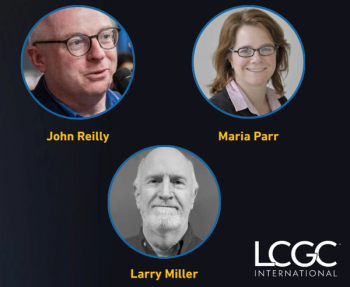
SFC Europe 2025—the 19th International Conference on Packed Column Supercritical Fluid Chromatography and Related Techniques—will be held in Basel, Switzerland, on October 5–7, 2025. LCGC International spoke to John Reilly, Maria Kristina Parr, and Larry Miller about the application of supercritical fluid chromatography (SFC) outside the life sciences, and the sustainability credentials of the technique.

In this interview, John Cashman, product manager for lab filtration at Sartorius, reveals how TFF and affinity chromatography are continuing to advance biopharmaceutical analysis and meeting the needs of the new complex purification workflows that exist.
SFC Europe 2025—the 19th International Conference on Packed Column Supercritical Fluid Chromatography and Related Techniques—will be held in Basel, Switzerland, on October 5–7, 2025. LCGC International spoke to John Reilly, Maria Kristina Parr, and Larry Miller about the important role that SFC now plays in life science analysis

In the final part of this roundtable discussion focused on the experiences, challenges, and contributions of Women in Chromatography, Noor Abdulhussain, Lotte Schreuders, and Mimi den Uijl—co-founders of the Sisters in Science initiative—look to the future.

This week, LCGC International published a variety of articles on hot topics in separation science. From an interview about the latest advancements in supercritical fluid chromatography (SFC), a news article about a new product from Thermo Fisher, and an article about bioanalytical liquid chromatography–mass spectrometry (LC–MS), we’ve highlighted some of the most popular articles that were published this week.

In this interview segment, Christian Mayer discusses the benefits of using pressure cycling to study prebiotic chemistry.

Researchers at the Spanish National Research Council’s Institute of Marine Research published a review article exploring MS-based approaches for the detection and quantification of seafood allergens, with a focus on technological advancements, current challenges, and future perspectives to enhance food safety and regulatory compliance.
In the sixth part of this roundtable discussion focused on the experiences, challenges, and contributions of Women in Chromatography, Noor Abdulhussain, Lotte Schreuders, and Mimi den Uijl—co-founders of the Sisters in Science initiative—reveal the best advice they have received in their career.
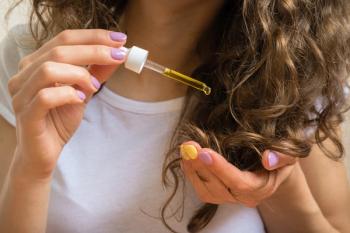
Researchers evaluated hair care formulations containing 0.5–1.5% fractionated patchouli oil (LFPO) for antidandruff activity against M. globosa and hair growth effects in male rabbits. LFPO, derived from crude patchouli oil (CPO), was characterized using GC-MS to enhance efficacy.

LGC Standards has released a range of 13C-labelled per- and polyfluoroalkyl substances (PFAS) reference materials designed for use with EPA Method 1633.

In the fifth part of this roundtable discussion focused on the experiences, challenges, and contributions of Women in Chromatography, LCGC International spoke to Noor Abdulhussain, Lotte Schreuders, and Mimi den Uijl—co-founders of the Sisters in Science initiative—about how industry and academia can offer better support for women in STEM.
SFC Europe 2025—the 19th International Conference on Packed Column Supercritical Fluid Chromatography and Related Techniques—will be held in Basel, Switzerland, on October 5–7, 2025. LCGC International spoke to John Reilly, Maria Kristina Parr, and Larry Miller about the evolution of supercritical fluid chromatography (SFC) in terms of technology and applications.

Michael Bartlett, Torgny Fornstedt and Mark Dickman elaborate on the possible reasons why ion-pair reversed-phase high performance liquid chromatography (IP-RP-HPLC) has risen to such prominence for the separation of oligonucleotides.

Wenzhou University researchers developed a comprehensive broccoli volatile metabolite database using SPME-GC-HRMS with dual ionization (EI and CI), analyzing 191 cultivars to capture wide chemical diversity for metabolomics, cultivar differentiation, and quality assessment.
In the fourth part of this roundtable discussion focused on the experiences, challenges, and contributions of Women in Chromatography, LCGC International spoke to Noor Abdulhussain, Lotte Schreuders, and Mimi den Uijl—co-founders of the Sisters in Science initiative—about how popular chromatography is as a subject.
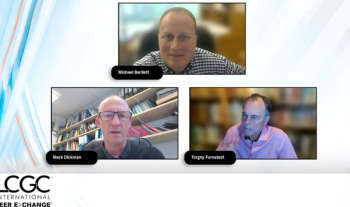
The panelists introduce themselves and outline their practical experience and knowledge of oligonucleotides, setting the stage for an illuminating discussion on current challenges, solutions and innovations in this ten-part panel discussion series organised by LCGC International in collaboration with the Chromatographic Society (ChromSoc).
Thermo Fisher’s Chromeleon 7.4 centralizes chromatography and mass spectrometry workflows with networked access and data management.

Knauer has been nominated for a German Sustainability Award 2026 in the Products category.