

Discover how to optimize LC×LC orthogonality for organic micropollutants analysis, enhancing method development with a new open-source Python tool.
Discover how to optimize LC×LC orthogonality for organic micropollutants analysis, enhancing method development with a new open-source Python tool.

As part of “From Sample to Verdict,” LCGC International sat down with Noemi Procopio, who is the Principal Investigator of the "Forens-OMICS" team and a Senior Research Fellow in Forensic Science at the University of Central Lancashire to talk about her team’s work. In Part III of our conversation with Procopio, she discussed how her team analyzes bone samples for post-mortem interval (PMI) estimation. In the final part of our conversation, Procopio discusses what a routine omics-based PMI assay could look like in the future.

Researchers used orthogonal analytical methods, including anion-exchange chromatography (AEC), to investigate the impact of successive freeze/thawing cycles on the stability of the Covid vaccine ChAdOx1-S/nCoV-19.
Researchers in Japan characterized heat-induced chemical modifications and changes in the molecular size distribution and structure of liquid transfer proteins, using size-exclusion chromatography (SEC) and liquid chromatography-mass spectrometry (LC-MS).

As part of our “From Sample to Verdict” series, LCGC International sat down with Furton to discuss his team’s work in the Global Forensic and Justice Center. In Part II of our conversation with Furton, he discusses the applicability of SPME in other forensic applications, as well as the limitations of using SPME.
As part of “From Sample to Verdict,” LCGC International sat down with Noemi Procopio, who is the Principal Investigator of the "Forens-OMICS" team and a Senior Research Fellow in Forensic Science at the University of Central Lancashire, to talk about her team’s work. In Part I of our conversation with Procopio, she discussed the development of the Forens-OMICS approach and how her team estimates PMI using metabolomics, proteomics, and metabarcoding. Part II dives deep into post-mortem interval (PMI) estimation and how bone proteomics can be used to accurately estimate PMI.
Discover how a multi-metric orthogonality score enhances LC×LC separation quality, reducing bias and improving method development in chromatography.

LCGC International sat down with Daniel Petras to discuss persistent challenges in non-targeted liquid chromatography-tandem mass spectrometry (LC-MS/MS) metabolite annotation, where only a small fraction of acquired spectra match existing libraries, and how the multiplexed chemical metabolomics (MCheM) workflow introduces functional group-specific derivatization to generate orthogonal chemical data.
As part of “From Sample to Verdict,” we present a compilation of the latest news articles and peer-reviewed content that highlight the utility of chromatography in forensic analysis.
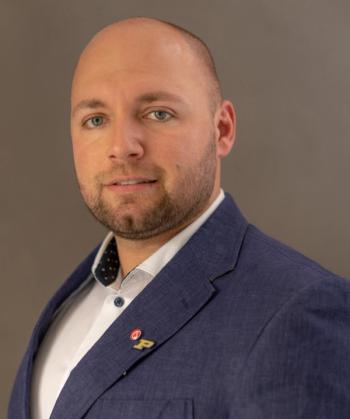
Petr Vozka highlights how GC×GC–TOF-MS reveals time-dependent chemical changes in fingerprints, enabling age estimation through chemometric modeling and advancing forensic timelines beyond traditional ridge pattern analysis.

LCGC International spoke with Ira Lurie, a professional lecturer at George Washington University in the USA, about his research using innovative chromatographic strategies to improve the specificity and efficiency of forensic drug analysis. He details the application of “flip-flop” chromatography using silica hydride stationary phases to alternate between reversed-phase and aqueous normal-phase separations without changing solvents. Lurie also highlights the use of derivative gas chromatography–vacuum ultraviolet spectroscopy (GC–VUV) to differentiate challenging synthetic cannabinoid isomers, emphasizing the critical legal and scientific importance of accurate isomer identification in forensic casework.

Ida Marie Marquart Løber explores postmortem interval estimation using UHPLC–QTOF-MS and machine learning, profiling rat tissue metabolites and outlining pathways for human adaptation toward objective, AI-driven forensic timelines.

As part of “From Sample to Verdict,” LCGC International sat down with Ed Sisco and Sarah Shuda, Research Chemists at NIST, to discuss the work that their groups are conducting that are helping to advance forensic analysis.
As part of “From Sample to Verdict,” LCGC International sat down with Furton to talk about his team’s work in the Global Forensic and Justice Center. In Part I of our conversation with Furton, he discusses his work in environmental forensics, including applying solid-phase microextraction (SPME-GC–MS) in distinguishing crude oil sources.
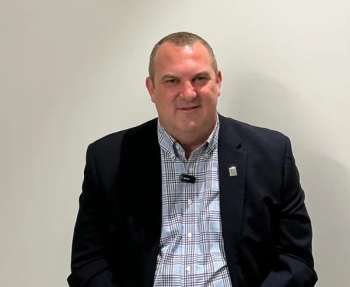
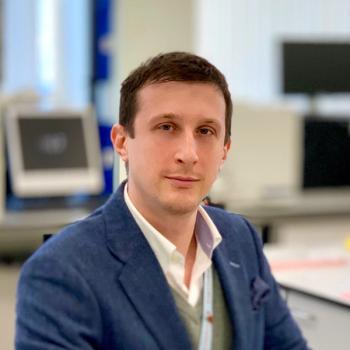
As part of “From Sample to Verdict,” LCGC International sat down with Procopio to talk about her team’s work. In Part I of our conversation with Procopio, she discusses the development of the Forens-OMICS approach and how her team estimates PMI using metabolomics, proteomics, and metabarcoding.

A study conducted by the Georgia Bureau of Investigation Division of Forensic Sciences, (Decatur, Georgia) validated a salt-assisted liquid–liquid extraction (SALLE) with liquid chromatography-tandem mass spectrometry (LC–MS/MS) method for detecting amphetamine-type stimulants (ATS) and cocaine metabolites in forensic toxicology. LCGC International spoke to Jon Stephenson of the Georgia Bureau of Investigation Division of Forensic Sciences about the study and the resulting paper inspired by it.
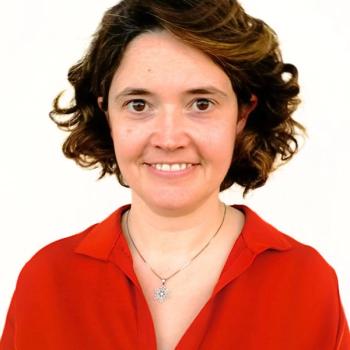
A recent joint study between Linköping University and the Department of Forensic Genetics and Forensic Toxicology of the National Board of Forensic Medicine (both in Linköping, Sweden) demonstrated a 32-element metal oxide semiconductor (MOS)-based e-nose, integrated with advanced supervised machine learning (ML) algorithms, for forensic applications including distinguishing human vs. animal samples, postmortem vs. antemortem states, and estimating postmortem intervals. LCGC International spoke to Donatella Puglisi, associate professor at Linköping University, and corresponding author of the paper that resulted from this work.

A recent study investigated early post-mortem volatile organic compounds (VOCs) from human donors in an outdoor environment. Using comprehensive two-dimensional gas chromatography time-of-flight mass spectrometry (GC×GC-TOF-MS)—a first for early post-mortem human VOC profiling outdoors—the research aims to track VOC changes, pinpoint the ante-mortem to post-mortem odor transition, and improve scent detection dog training strategies. LCGC International spoke to Darshil Patel, of the University of Windsor and lead author of the article published about his team’s findings.
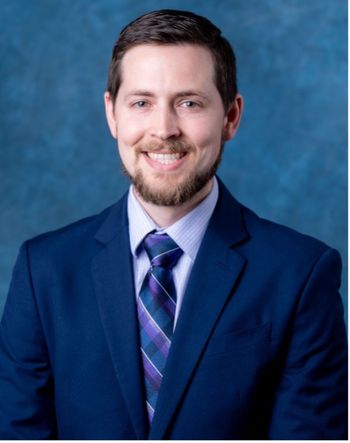
J. Tyler Davidson of the Department of Forensic Science at Sam Houston State University (Huntsville, Texas) used liquid chromatography-electrospray ionization-tandem mass spectrometry (LC–ESI–MS/MS) to structurally characterize 38 nitazene analogs and propose fragmentation mechanisms that generate diagnostic product ions for analog differentiation. LCGC International spoke to Davidson about his work, and the paper that resulted from it.

Dave Abroamowitz of Thermo Fisher Scientific concludes his five-part video series with thoughts on how laboratories can address potential biases or errors introduced by artificial intelligence (AI) models, especially when these analyses inform high-stakes decisions such as clinical research or regulatory submissions.

LCGC International sat down with Chip Cody to discuss his work at JEOL USA, as well as how to determine when ambient ionization techniques should be used for analysis.

In this interview segment, Gerda Morlock explains how 12D hyphenation works in practice and how it improves the rapid identification of hazardous compounds compared to traditional workflows.
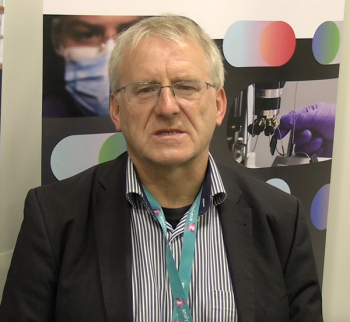
At Analytica USA, LCGC International sat down with Ralf Zimmermann to talk about his research.
In this clip, Ahmed Hamid addresses the advantages of using LC-IM-MS/MS over traditional microbial lipid profiling techniques and how ion mobility overcomes several key challenges in this space.
LCGC International sat down with Grinias at Analytica USA to talk about capillary-scale LC and green analytical chemistry.