

Machine Learning for Oligonucleotide Analysis in Practice
Published: | Updated:
Torgny Fornstedt describes how machine learning can work in practice for oligonucleotide analysis.
Torgny Fornstedt describes how machine learning can work in practice for oligonucleotide analysis.
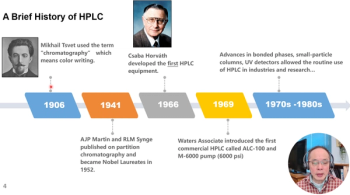
“Perspectives in HPLC” column editor Michael Dong presents a brief history of the technique as part of his 26-episode video series, “HPLC for Practicing Scientists - Fundamentals."

The panel discuss the role of ion-exchange chromatography (IEX) and hydrophilic interaction liquid chromatography IHILIC) in oligonucleotide analysis, and if these techniques could challenge ion-pair reversed-phase high performance liquid chromatography (IP-RP-HPLC) in the near future.

A joint study by India’s Mohanlal Sukhadia University and the Central University of Punjab identified fungal pathogens linked to ginger rhizome rot and analyzed their effects and mycotoxins using molecular and chromatographic techniques.

How does liquid chromatography (LC) assist in forensic analysis?

A global team led by Michal Holčapek, professor of analytical chemistry at the Faculty of Chemical Technology, UPCE, Pardubice (Czech Republic), and Jakub Idkowiak, a research associate from KU Leuven (Belgium), has unveiled a powerful R and Python-based toolkit for tackling the complexities of lipidomics and metabolomics data, offering researchers a new approach for “omics” analysis.

A recent study examined single-particle inductively coupled plasma time-of-flight mass spectrometry (SP-ICP-TOF-MS) as a novel technique for uranium particle isotope ratio measurements.LCGC International spoke to Benjamin Manard, Senior R&D Staff Scientist and the Group Leader of the Chemical & Isotopic Mass Spectrometry Group at Oak Ridge National Laboratory (ORNL) as well as to Sarah Szakas and Jordan Stanberry, postdoctoral researchers at ORNL, three of the authors of the paper that resulted from this study.

The role of gas chromatography (GC) in forensic analysis is spotlighted.

This week, LCGC International published a variety of articles on hot topics in separation science. From an interview about the evolution of ion chromatography to a discussion about using ultrahigh-pressure liquid chromatography (UHPLC) coupled with tandem mass spectrometry (MS) to analyze 26 per- and polyfluoroalkyl substances (PFAS), we’ve highlighted some of the most popular articles that were published this week.

Recognizing that the long-term fate of tire and road wear particles (TRWP) influences the distribution of tire-related chemicals, researchers at the Helmholtz Centre for Environmental Research analyzed 27 polar and moderately polar compounds by LC–MS, including para-phenylenediamines, phenylguanidines, benzothiazoles, and known transformation products.

We explore a core analytical question that every chromatographer faces: How many injections are really enough to achieve both scientific reliability and practical efficiency?

Knauer Wissenschaftliche Geräte GmbH has acquired Labomatic AG (Möhlin, Switzerland). The acquisition expands the Berlin, Germany scientific equipment manufacturer’s portfolio in preparative high-performance liquid chromatography (HPLC), particularly with HPLC systems designed for flow rates of up to 540 liters per hour.

A joint study conducted by United States Department of Agriculture and Pomona College developed a healthy, marketable juice by combining the nutritional benefits of noni fruit juice with the palatability of pineapple juice and then evaluating the physical, chemical, and sensory properties of the resulting blend.
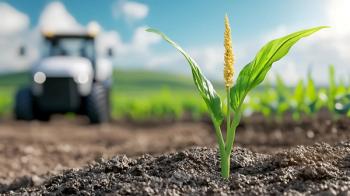
A look at recent advances in pesticide residue analysis across diverse food matrices.
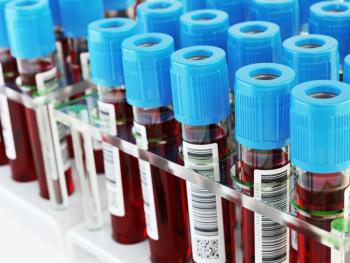
Researchers found that blood collection tubes from different manufacturers can interfere with LC-MS/MS measurement of serum 25-hydroxyvitamin D [25(OH)D], a critical preanalytical quality control issue affecting assay accuracy.

ACD/Labs and Covestro have launched an AI-powered solvent selection tool within the Percepta platform, giving chemists a new data-driven option to reduce environmental impact.

The development of a high-throughput LC–MS/MS method for quantifying 135 pesticides with improved accuracy and robustness is discussed.

Research conducted at the Federal University of Campina Grande developed an active pharmaceutical ingredient (API) derived from Psilocybe mushrooms for application in the management of mental health disorders.
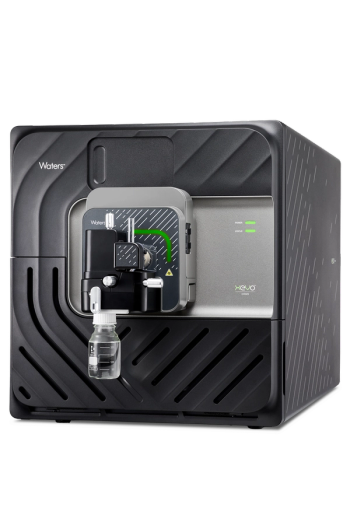
Waters Corporation announced the Waters Xevo Charge Detection Mass Spectrometer for the measurement and characterization of mega-mass biomolecules central to next-generation therapeutics and structural biology.

A recent study details the development of an LC–MS/MS method for detecting pesticide residues in a challenging matrix, chili powder.

Joachim Weiss is a pioneer in the true meaning of the word in the world of ion chromatography (IC). In this in-depth interview, Joachim offers his insights into the past, present, and future of the technique.

A recent study expanded PFAS biomonitoring in hair to 26 analytes—including fluorotelomer sulfonic and carboxylic acids, FTUCAs, diPAPs, diSAmPAP, FOSA, N-EtFOSAA, and the ionic liquid NTf2—to characterize exposure patterns in non-occupationally exposed individuals and explore links with physical and lifestyle factors. LCGC International spoke to Miriam Haußecker, lead author of the paper that resulted from this study.

The 2025 Gulf Coast Conference in Galveston, Texas, highlights advancements in analytical precision, chemometrics, and process-scale separation science across chromatography, spectroscopy, and elemental analysis for petrochemical, environmental, and industrial applications.

Researchers utilized HS-SPME-GC-MS combined with relative odor activity values (rOAV) analysis to investigate the temporal dynamics of volatile metabolites during long-term cigar aging.

This week, LCGC International published a variety of articles on hot topics in separation science. From an interview about the evolution of ion chromatography to an article about the top ten topics that new liquid chromatography (LC) users should know, we’ve highlighted some of the most popular articles that were published this week.

Achieving lasting gender equity in chromatography demands systemic reform, from rethinking promotion criteria and tackling bias in publishing to creating flexible career pathways that retain talent. With the active support of allies and institutions, these changes can build a stronger, fairer, and more innovative scientific community.

The aim of this article is to provide a validated and optimized CIC-based method for accurate measurement of total fluorine in materials with polymeric PFAS content in the low-ppm range, which could be used in the consumer electronics and potentially other industries. This, in turn, can aid companies in tracking and mitigating PFAS ahead of regulations.
Joachim Weiss is a pioneer in the true meaning of the word in the world of ion chromatography (IC). In this in-depth interview, Joachim offers his insights into the past, present, and future of the technique.

Researchers from the University of Toledo and Wayne State University investigated the prognostic importance of oxylipins in a cohort of 90 participants with heart failure with preserved ejection fraction (HFpEF) with preserved ejection fraction over a 5-year period used high-performance liquid chromatography (HPLC) to extract polyunsaturated fatty acyl (PUFA) metabolites from serum samples.

Artificial intelligence and machine learning have the potential to reshape the scientific landscape. Yet, as the International Women in Chromatography founders stress, these advances must be grounded in uncompromising data quality and rigorous quality control to ensure reliable, transformative science.