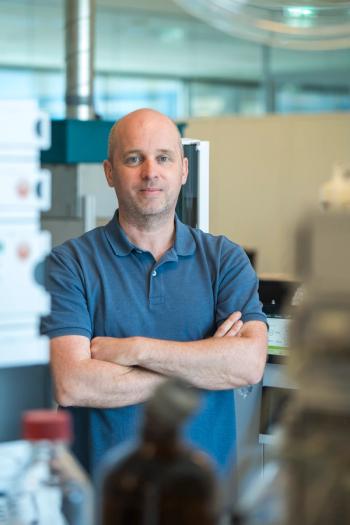
The Schauenburg Analytics Group (Bridgend, UK), which consists of Markes International and SepSolve Analytical, has appointed Nigel Fry as its chief executive officer (CEO).

The Schauenburg Analytics Group (Bridgend, UK), which consists of Markes International and SepSolve Analytical, has appointed Nigel Fry as its chief executive officer (CEO).

The Green Analytical Chemistry Workshop (1st TGAC) will be held 5–6 February 2024, at Novotel Paris-Charenton, Paris, France. Here's a glimpse at what attendees can look forward to.

In a recent study, researchers used a novel ultrahigh-performance liquid chromatography (UHPLC) method to analyze Lingyang Qingfei pills (LQPs) chemical constituents and metabolites.

In a recent study, SHS-GC–MS was used to analyze children’s plastic toys to ensure their safety and efficacy.

In a recent study, a novel chiral column, based on a CC19-R porous organic cage, promises to enhance enantioselective HPLC separations.

A comparison between two types of detectors—variable wavelength (VWD) and fluorescence (FLD)—in quantifying azoxystrobin from water samples was conducted.

A recent study enhances capillary electrophoresis by streamlining the preparation process for linear polyacrylamide (LPA)-coated capillaries.

In a recent study, researchers used a dual-isotope labeling method to help improve our understanding of lipid metabolism.

In a recent study, researchers from Technische Universität Dresden have unveiled a new method for the simultaneous quantification of kynurenine-related metabolites in biological matrices.

A study from researchers in the journal Chemosphere reveals how the sorption behavior of PFAS contaminants varies across different organic soil types, emphasizing the importance of organic matter quality, chain length, and pH in understanding their environmental impact.

At this year’s AOAC International Annual Meeting, held in New Orleans, Louisiana, nearly 700 analytical scientists were honored in an awards ceremony.

The 2024 HTC Innovation Award was launched to celebrate the work of scientists who are innovatively evolving the field of hyphenated separation techniques. The winner will be selected by the HTC scientific committee.

A new ultrahigh-performance liquid chromatography tandem mass spectrometry (UHPLC–MS/MS) was used to detect purine metabolites in rat plasma, revealing more information about their role in several biological disorders.

Astrea Bioseparations has announced that it has expanded its manufacturing and warehousing capabilities in the US.

In a recent study, a novel micellar electrokinetic chromatography method was used for monitoring ticagrelor in rat plasma.

LCGC International is proud to announce that Wolfgang Lindner and Martina Catani are the winners of the 17th annual Lifetime Achievement and Emerging Leader in Chromatography Awards.

In a recent study, researchers from China presented a novel approach that uses a supramolecular solvent (SUPRAS) method for detecting bioactive compounds.

A group of researchers from India are using analytical methods to analyze the purity of the spice.

In a recent study, researchers from Florida International University reviewed the latest advancements in mass spectrometry and offer a roadmap of how MS analysis in relation to xenobiotics and metabolomics is heading in the future.

In a recent study, researchers from the University of Wisconsin–Madison introduce a set of isobaric tags called DiLeuC, which are designed to aid quantitative analysis of complex samples.

Agilent has entered a partnership to use its technology to help further cell and gene therapy advancements.

With expert speakers coming in from around the country for Cannabis Science Conference Fall, we thought it was a great opportunity to introduce some of them and get a sneak peek into their presentations. Here, we meet Jini Glaros, Chief Scientific Officer at Modern Canna Labs.

Researchers from Texas A&M University presented a new N–H aziridination method designed to target carbon–carbon double bonds in nonpolar sterol lipids.

A recent study from North Carolina State University explores a new mass spectrometry imaging (MSI) method that can reduce MSI data acquisition time.

In a recent study, the research team introduces a new software tool for proteomic analysis that can analyze both ESI and MALDI mass spectral data.

Starting January 2024, a unified global print version of LCGC will launch, featuring your favorite columnists both in print and online.

In a recent study, researchers outlined the advances in ultralow flow LC over the last decade.

To determine the practical applications of newly synthesized diquat (DQ) derivatives, they must be prepared in an enantiomerically pure form, and effective separation is needed to control that purity.

Divinylbenzene (DVB) monoliths were nested within a melamine-formaldehyde sponge for solid-phase extraction (SPE) of bisphenols from aqueous solutions.

In a recent study, a new instrument configuration suggests an alternative method for investigating polypeptides.