




Forensics, Narcotics
Latest News
Advertisement
Latest Videos

Advertisement
More News
As part of “From Sample to Verdict,” we present a compilation of the latest news articles and peer-reviewed content that highlight the utility of chromatography in forensic analysis.
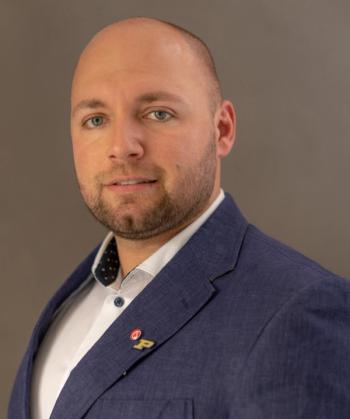
Petr Vozka highlights how GC×GC–TOF-MS reveals time-dependent chemical changes in fingerprints, enabling age estimation through chemometric modeling and advancing forensic timelines beyond traditional ridge pattern analysis.

LCGC International spoke with Ira Lurie, a professional lecturer at George Washington University in the USA, about his research using innovative chromatographic strategies to improve the specificity and efficiency of forensic drug analysis. He details the application of “flip-flop” chromatography using silica hydride stationary phases to alternate between reversed-phase and aqueous normal-phase separations without changing solvents. Lurie also highlights the use of derivative gas chromatography–vacuum ultraviolet spectroscopy (GC–VUV) to differentiate challenging synthetic cannabinoid isomers, emphasizing the critical legal and scientific importance of accurate isomer identification in forensic casework.

Ida Marie Marquart Løber explores postmortem interval estimation using UHPLC–QTOF-MS and machine learning, profiling rat tissue metabolites and outlining pathways for human adaptation toward objective, AI-driven forensic timelines.

As part of “From Sample to Verdict,” LCGC International sat down with Ed Sisco and Sarah Shuda, Research Chemists at NIST, to discuss the work that their groups are conducting that are helping to advance forensic analysis.
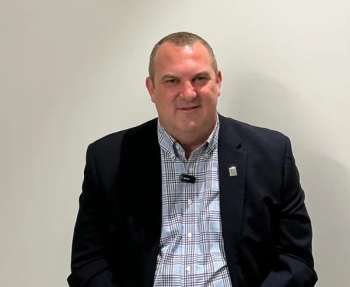


A study conducted by the Georgia Bureau of Investigation Division of Forensic Sciences, (Decatur, Georgia) validated a salt-assisted liquid–liquid extraction (SALLE) with liquid chromatography-tandem mass spectrometry (LC–MS/MS) method for detecting amphetamine-type stimulants (ATS) and cocaine metabolites in forensic toxicology. LCGC International spoke to Jon Stephenson of the Georgia Bureau of Investigation Division of Forensic Sciences about the study and the resulting paper inspired by it.

A recent joint study between Linköping University and the Department of Forensic Genetics and Forensic Toxicology of the National Board of Forensic Medicine (both in Linköping, Sweden) demonstrated a 32-element metal oxide semiconductor (MOS)-based e-nose, integrated with advanced supervised machine learning (ML) algorithms, for forensic applications including distinguishing human vs. animal samples, postmortem vs. antemortem states, and estimating postmortem intervals. LCGC International spoke to Donatella Puglisi, associate professor at Linköping University, and corresponding author of the paper that resulted from this work.

A recent study investigated early post-mortem volatile organic compounds (VOCs) from human donors in an outdoor environment. Using comprehensive two-dimensional gas chromatography time-of-flight mass spectrometry (GC×GC-TOF-MS)—a first for early post-mortem human VOC profiling outdoors—the research aims to track VOC changes, pinpoint the ante-mortem to post-mortem odor transition, and improve scent detection dog training strategies. LCGC International spoke to Darshil Patel, of the University of Windsor and lead author of the article published about his team’s findings.
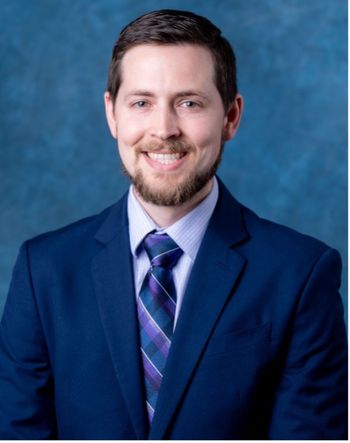
J. Tyler Davidson of the Department of Forensic Science at Sam Houston State University (Huntsville, Texas) used liquid chromatography-electrospray ionization-tandem mass spectrometry (LC–ESI–MS/MS) to structurally characterize 38 nitazene analogs and propose fragmentation mechanisms that generate diagnostic product ions for analog differentiation. LCGC International spoke to Davidson about his work, and the paper that resulted from it.

In the second part of this interview with Maria Olds of the University of Texas at Arlington, she discusses the consequences of not accounting for preanalytical factors in blood alcohol concentration (BAC) analysis.
In the first part of this interview with Maria Olds of the University of Texas at Arlington, she discusses why preanalytical techniques should be considered for ethanol analysis.

Smokeless powders can be vital aspects of forensic investigations, though distinguishing between different powders can prove difficult. Chinese researchers aimed to simplify this process using gel permeation chromatography.

Ink authentication is often complicated by tampering, aging, and chemical variability. Now, forensic scientists are turning to advanced gas chromatography (GC) techniques to enhance the accuracy and efficiency of ink analysis.

The components of explosive devices can be difficult to characterize, whether pre- or post-blast. To rectify this, two-dimensional liquid chromatography was tested as a means of analyzing these compounds.

In a press release, the U.S. Department of Energy's Pacific Northwest National Laboratory announced that BaySpec, an optical instrument manufacturer company, will be commercializing their VaporID device later this year.

In this edition of the LCGC Blog, Zacariah Hildenbrand, Melissa Giguere, and Kevin Schug discuss the complexities of cannabis regulations, forensic testing challenges, and the risks of unregulated products in the evolving landscape of cannabis forensics.
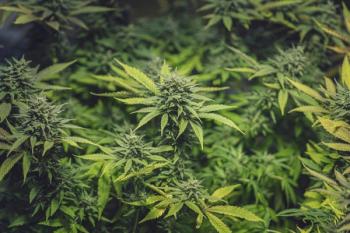
Messina Institute of Technology scientists used gas chromatography–mass spectrometry (GC–MS) to profile illegal samples of Cannabis sativa L.
Messina Institute of Technology scientists used gas chromatography–mass spectrometry (GC–MS) was used to profile illegal samples of Cannabis sativa L.

Here is some of the most popular content posted on LCGC International this week.

Analyzing biological samples is crucial for disease diagnosis and treatment, public safety, and forensic examination.

How can low-resolution mass spectrometry (LRMS) and high-resolution (HR) MS work together to provide unambiguous results in clinical and forensic toxicology?

The level of uncertainty provided by most forensic laboratories for reported blood alcohol results has been woefully underassessed. Not only is this bad science, but someone’s civil liberties may be at stake.

Forensic laboratories need to revise their procedures for uncertainty assessment in blood alcohol determinations. We explain why.
Advertisement
Advertisement
Trending on LCGC International
1
UHPLC-MS/MS Tracks Drug Potency on the International Space Station
2
Vol 3 No 5 LCGC International July/August 2026 North American PDF
3
The Biggest Gap in NIAS Testing for Food Contact Materials
4
Chromatography Tracks Pesticides on Strawberries
5