


LCGC Interviews
Latest News
Advertisement
Latest Videos

Advertisement
More News

Jan H. Christensen is a Professor in Environmental Analytical Chemistry at the University of Copenhagen. At HTC-18, we interviewed him about his presentation about non-targeted screening of environmental samples.
In this continuing series from LCGC, we go on location to the Grinias Research Lab at Rowan University, where graduate students gave advice for up and coming separation scientists following in their footsteps.

In this edition of the LCGC Blog, Amber Hupp of the College of the Holy Cross provides advice for aspiring analytical chemists and shares accounts of other professionals.
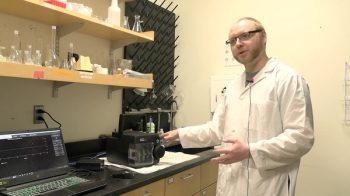
In this continuing series from LCGC, we go on location to the Grinias Research Lab at Rowan University to see a liquid chromatographic analyzer in action.

Here are the top five articles that the editors of LCGC International published this week.

In this continuing series from LCGC, we go on location to the Grinias Research Lab at Rowan University and speak to graduate students about their backgrounds, research interests, and future plans.
LCGC International sat down with Susana Palma of CIAD to discuss her career and work with the Females in Mass Spectrometry (FeMS) group.
Here are the top five articles that the editors of LCGC International published this week.

LCGC International sat down with Colleen Maxwell of the University of Leicester to discuss her career and work with the Females in Mass Spectrometry (FeMS) group.
Here are the top five articles that the editors of LCGC International published this week.
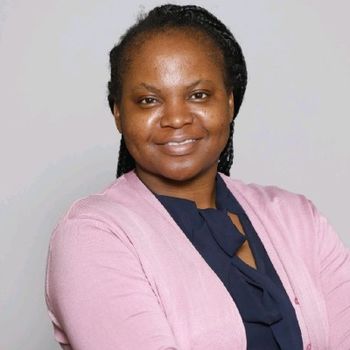
LCGC International sat down with Kemi Osho of the University of Nevada, Reno (UNR) to discuss her career and work with the Females in Mass Spectrometry (FeMS) group.

In this interview, Kristina Hakansson of the University of Michigan discusses her upcoming ASMS 2024 conference, as well as her expectations for the event.

In preparation for ASMS 2024, we recently interviewed Uri Keshet of the University of California, Davis about his upcoming presentation and expectations for the conference.

On the occasion of Earth Day, University of Wisconsin-Madison graduate student and chemist Katelyn Michael speaks with LCGC about the methods she has been using to attempt to degrade known PFAS.

As LCGC International celebrates Earth Day, we spotlight the current chromatographic research that is advancing environmental analysis and sustainability efforts. In this interview, we spoke to Daniel Armstrong, professor of chemistry and biochemistry at the University of Texas at Arlington, about his work using mathematical strategies to minimize analytical method greenness scores (AMGS) in HPLC enantioseparations.

To commemorate the celebration of Earth Day, LCGC International sat down with Laura Kuger of the Institute for Functional Interfaces (IFG) and the Karlsruhe Institute of Technology to talk about her latest research in using magnetic field-controlled chromatography to fractionate rare earth-containing phosphors.

In this written interview with Dwight Stoll, LCGC Columnist and Professor of Chemistry at Gustavus Adolphus College in St. Peter, Minnesota to address the pressing issues of sustainability and environmental awareness in separation science.

In this interview, Angela Calderón of Auburn University discusses the importance of using more environmentally friendly analysis techniques.

Richard Bade of the Queensland Alliance for Environmental Health Sciences (QAEHS) within The University of Queensland (Australia) and colleagues have recently published a paper outlining the development and application of a new workflow utilizing the open-source platform InSpectra, aiming to complement targeted analysis and identify geographical spatial trends in wastewater samples across multiple countries. Bade spoke to LCGC International about their research paper and the work that inspired it.

In this interview to commemorate Earth Day, Ana Torres-Agullo and Silvia Lacorte share the results of using Pyr-GC-Orbitrap-MS to simultaneously determine the presence of 10 polymers in the air.

In this edition of “Inside the Laboratory,” Pascal Cardinael and Valérie Agasse of the University of Rouen in Mont‑Saint-Aignan, France, discuss their laboratory’s work with miniaturizing gas chromatography (GC) columns and systems to improve on-site air analysis of volatile organic compounds (VOCs).

LCGC International sat down with Katarina Marakova to discuss her group’s work in top-down analysis of proteins using capillary zone electrophoresis–mass spectrometry (CZE–MS).
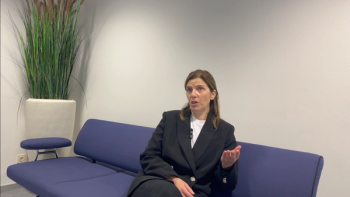
At Analytica 2024 in Munich, Germany, LCGC International sat down with Elia Psillakis of Technical University of Crete to discuss circular analytical chemistry and the importance of sustainable chemistry.

At Analytica 2024 in Munich, Germany, LCGC International sat down with Sebastiaan Eeltink of Vrije Universiteit Brussel to talk about three-dimensional liquid chromatography (3D–LC) separations.

At Analytica 2024 in Munich, Germany, LCGC International sat down with Uwe Karst of the University of Münster to talk about the future of imaging, analytical chemistry trends, and more.
Advertisement
Advertisement
Trending on LCGC International
1
Industry Roundup: Shimadzu Unveils New High-End UHPLC System Aimed at Reducing Laboratory Downtime
2
VASE-GC-MS Detects Personal Care Products in Fish
3
LC-MS/MS Compares Hair Hormone Sampling Methods
4
Industry Roundup: Gerstel Showcased New Twister Phases and Automated Liner Exchange Technology at EPRW 2026 in Rotterdam
5