


LCGC Interviews
Latest News
Advertisement
Latest Videos





Advertisement
More News

Katelynn Perrault Uptmor Receives the 2025 LCGC Emerging Leader in Chromatography Award
Published: | Updated:
November 13, 2024 – LCGC International magazine has named Katelynn A. Perrault Uptmor, Assistant Professor of Chemistry at the College of William & Mary, the recipient of the 2025 Emerging Leader in Chromatography Award. This accolade, which highlights exceptional achievements by early-career scientists, celebrates Perrault Uptmor’s pioneering work in chromatography, particularly in the fields of forensic science, odor analysis, and complex volatile organic compounds (VOCs) research.

Christopher A. Pohl Wins the 2025 Lifetime Achievement in Chromatography Award from LCGC International
Published: | Updated:
November 13, 2024 – LCGC International magazine is proud to announce that Christopher A. Pohl has been named the recipient of the 2025 Lifetime Achievement in Chromatography Award. This honor is awarded to individuals who have made enduring contributions to the field of chromatography. Pohl, a celebrated innovator and thought leader, has influenced the direction of analytical chemistry and chromatography for over 50 years, particularly in the areas of ion chromatography (IC) and separation science.

LCGC International interviewed FeMS Empowerment Award winner Marta Relvas-Santos on her use of mass spectrometry to identify potential biomarkers and therapies for bladder cancer. She also shared insights on her work with FeMS and advice for fellow scientists.

The RIC group has evolved from its humble origins in a garage to a new state-of-the-art research site. LCGC International spoke to Koen Sandra, CEO of RIC group, at the official opening of the new site.

Saer Samanipour from the Van ‘t Hoff Institute for Molecular Sciences (HIMS) at the University of Amsterdam spoke to LCGC International about the benefits of a data-driven reversed-phase liquid chromatography (RPLC) approach his team developed.

Here is some of the most popular content posted on LCGC International this week.

Peng Che fom Vrije Universiteit Amsterdam in the Netherlands discusses the benefits of hyphenating liquid chromatography (LC) with electron activated dissociation mass spectrometry (EAD-MS) to analyze cathinone positional isomers.

LCGC International sat down with Faith Johnson of ECOLAB to discuss her career and work with the Females in Mass Spectrometry (FeMS) group.
Here is some of the most popular content posted on LCGC International this week.

Nicholas Ingram of IQVIA Laboratories recently spoke with LCGC International about using high-resolution mass spectrometry (HRMS) to help monitor drug stability.

Linda S. Lee of Purdue University discusses her latest research investigating whether highly degraded urban soils could be restored using biosolids.

As part of our ISC 2024 coverage, we recently interviewed Anneli Kruve of Stockholm University about her scientific background and her presentation about eludicating toxic chemicals' structures using LC/HRMS.

As part of our ISC 2024 coverage, we recently interviewed Caitlin Cain of the University of Michigan about her scientific background and her thoughts on winning our Rising Stars of Separation Science Award for Gas Chromatography.

As part of our ISC 2024 coverage, we recently interviewed Bram Huygens of Vrije Universiteit Brussel about his scientific background and his thoughts on receiving our Rising Stars of Separation Science Award for Liquid Chromatography.

As part of our ISC 2024 coverage, we recently interviewed Alexandre Goyon of Genentech about his research and his being awarded our Rising Stars of Separation Science Award for Outstanding Achievement in Pharmaceutical Analysis.
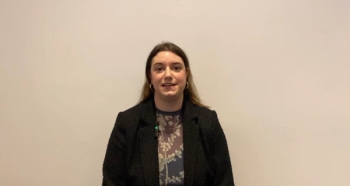
As part of our ISC 2024 coverage, we recently interviewed Amarande Murisier of the University Hospital of Lausanne, Switzerland (CHUV) about her winning the Rising Stars of Separation Science Award for Biopharmaceutcal Analysis and her scientific background.

Julien Crepier of TotalEnergies was one of the researchers that conducted this study, and he recently sat down with LCGC International to talk about his team’s findings.
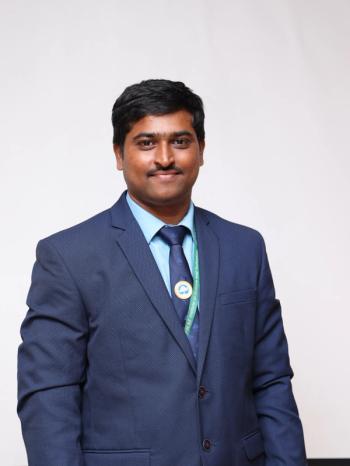
In this interview, we asked Hemanth Kumar Chanduluru from the SRM Institute of Science and Technology in Kattankulathur, India, multiple questions regarding sustainability in analytical separation methods.
Here are the top five articles published on LCGC International this week.

At HTC-18 in Leuven, LCGC International spoke to Claudio Brunelli about the evolution of supercritical fluid chromatography (SFC) techniques in the pharmaceutical industry.
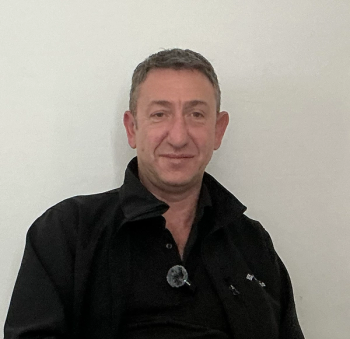
At HTC-18 in Leuven, Executive Editor of LCGC International, Alasdair Matheson, spoke to Brett Paull from the University of Tasmania and HyTECH about his talk entitled: “Analytical Performance and Disruptive Potential of Fully Portable Portable and Field Deployable LC–MS Technology.”

The 28th International Symposium on Separation Sciences (ISSS 2024) will be held in Messina, Italy, on September 22–25, 2024.
Here are the top five articles published on LCGC International this week.
Here are the top five articles published on LCGC International this week.
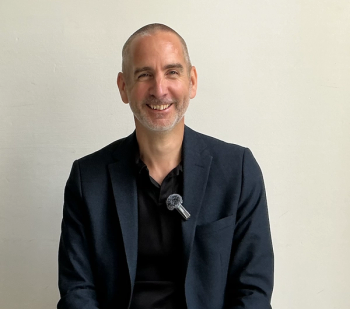
At HTC-18 in Leuven, Executive Editor of LCGC International, Alasdair Matheson, spoke to Jef Focant from the University of Liege about his talk entitled, “Targeted Blood Lipidomics of Colorectal Cancer."
Advertisement
Advertisement
Trending on LCGC International
1
Industry Roundup: Shimadzu Unveils New High-End UHPLC System Aimed at Reducing Laboratory Downtime
2
VASE-GC-MS Detects Personal Care Products in Fish
3
LC-MS/MS Compares Hair Hormone Sampling Methods
4
Industry Roundup: Gerstel Showcased New Twister Phases and Automated Liner Exchange Technology at EPRW 2026 in Rotterdam
5