


LCGC Interviews
Latest News
Advertisement
Latest Videos


Advertisement
More News

In this second part of our interview with Christopher Pohl, we learn about the mentors Pohl turned to throughout his career, and the important teachings he took from them.

In this video interview, Emanuela Gionfriddo, Daniel Armstrong, and Nicholas Snow preview their talks at Pittcon, as well as give their opinions about what topics they hope to explore more at the conference.

In this first part of our interview with Christopher Pohl, he discusses the 2025 LCGC Lifetime Achievement Award, and what this means to him.

LCGC International spoke to Amanda Patrick, associate professor at Mississippi State University, about her research exploring mass spectrometry (MS) applications in ionic liquid analysis.

In a continuation of our Inside the Laboratory interview with Chris Reddy, we asked him about the recent documentary, “Out of Plain Sight,” that featured him and his team’s research.

An investigation into fluoroelastomer watch bands has revealed high levels of perfluorohexanoic acid (PFHxA), a short-chain per- and polyfluoroalkyl substance (PFAS). LCGC International spoke to Professor Graham Peaslee from the University of Notre Dame about his team’s study using liquid chromatography tandem mass spectrometry (LC–MS/MS) and PFHxA's potential for dermal absorption, and the subsequent environmental and health impacts.
In the second part of this edition of “Inside the Laboratory,” Christopher Reddy of Wood Hole Oceanographic Institution discusses why comprehensive two-dimensional gas chromatography is the optimal technique for investigating complex mixtures of organic chemicals in the environment.
In this edition of “Inside the Laboratory,” Christopher Reddy of Wood Hole Oceanographic Institution discusses his laboratory’s work investigating oil spills and uncovering dichlorodiphenyltrichloroethane (DDT) deposits on the ocean floor. This interview is part one of three of our conversation with Reddy.

At the Recent Advances in Food Analysis (RAFA) conference in 2024, LCGC International sat down with Stefan van Leuwen of Wageningen Food Safety Research to discuss his research, which addresses emerging challenges in circular food production, focusing on the risks posed by pollutants when waste and by-products are repurposed in food systems.

At ISC 2024 in Liverpool, United Kingdom, LCGC International interviewed Kelly Zhang of Genentech about her work analyzing new drug modalities, such as mRNA, oligonucleotides, peptides, and cell and gene therapies.

Throughout 2024, the editors of LCGC International attended chromatography conferences across the globe. Below, you’ll find a sampling and overview of our conference coverage from the year.
This article highlights a curated selection of the most popular GC-related content, with a focus on the diverse applications of the technique, as featured in LCGC.

LCGC International sat down with Jose Bernal to discuss his latest research in using pyrolysis gas chromatography–mass spectrometry (Py-GC–MS) and other chromatographic techniques in studying microplastics in food analysis.

LCGC International sat down with Giorgia Purcaro of the University of Liege to discuss the impact that solid-phase microextraction (SPME) and comprehensive multidimensional gas chromatography (GC×GC) is having on food analysis.

Here is some of the most popular content posted on LCGC International this week.

Following the HPLC 2024 Conference in Denver, Colorado, LCGC International spoke with Anne Marie Smith of ACD/Labs about the new ICH Q14 guidelines and how they impact analytical scientists and their work.

The 54th International Symposium on High Performance Liquid Phase Separations and Related Techniques (HPLC 2025) will be held from Sunday through Thursday, 15–19 June 2025, in Bruges, Belgium. LCGC International spoke to the Scientific Committee to find out what’s in store.

LCGC International spoke with Jim Gearing, Associate Vice President of Marketing, Agilent Gas Phase Separations Division; Massimo Santoro, Group Business Development Director at Markes International; Ed Connor, GC Product Manager at Peak Scientific; and Bruce Richter, Vice President of Research & Development at Restek Corporation.

In this edition of “Inside the Laboratory,” Jillian Goldfarb of Cornell University discusses her laboratory’s work with using gas chromatography–mass spectrometry (GC–MS) to characterize compounds present in biofuels.

Recently, we talked with Mary Ellen McNally about her experiences at EAS 2024 and her expectations for sustainable laboratory practices in 2025.
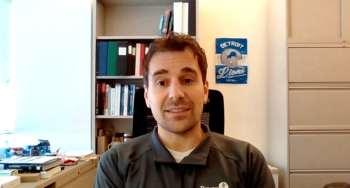
Recently, we talked with Jim Grinias of Rowan University about his experiences at EAS 2024 and his expectations for analytical chemistry trends in 2025.

As part of our RAFA 2024 coverage, we interviewed Rudolf Krska of BOKU University about his research on food safety, specifically regarding using analytical methods to mycotoxins and other secondary metabolites in plants and foods.

During RAFA 2024, Michel Suman of Barilla Spa and Catholic University Sacred Heart talked with us about his food safety and authenticity research, focusing on contaminants, adulterants, and authenticity markers in food processing.

Giorgia Purcaro from the University of Liège was interviewed at RAFA 2024 by LCGC International on the benefits of modern multidimensional GC methods to analyze mineral oil aromatic hydrocarbons (MOAH) and mineral oil saturated hydrocarbons (MOSH).

Michael Sulyok of the University of Natural Resources and Applied Life Sciences discusses a novel “dilute and shoot” LC–MS/MS technique to analyze mycotoxins in grain products.
Advertisement
Advertisement
Trending on LCGC International
1
Industry Roundup: Shimadzu Unveils New High-End UHPLC System Aimed at Reducing Laboratory Downtime
2
VASE-GC-MS Detects Personal Care Products in Fish
3
LC-MS/MS Compares Hair Hormone Sampling Methods
4
Industry Roundup: Gerstel Showcased New Twister Phases and Automated Liner Exchange Technology at EPRW 2026 in Rotterdam
5