


LCGC Interviews
Latest News
Advertisement
Latest Videos

Advertisement
More News

We recently interviewed Emma Guiberson, winner of the ASMS 2025 Research at PUI Award, about her research, professional background, and what she wishes to impart to the next generation of mass spectrometrists.

In the first section of our interview with Christian Bleiholder of Florida State University, he discusses his award-winning research that earned him the ASMS 2025 Ron Hites Awared.

Here is some of the most popular content posted on LCGC International this week.
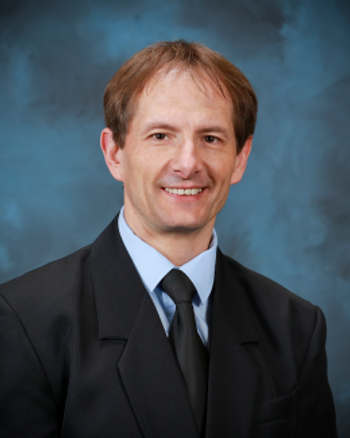
In the final section of our interview with Vilmos Kertesz of Oak Ridge National Laboratory, he imparts the most important lessons he would like future generations of scientists to learn.
In the penultimate section of our interview with Vilmos Kertesz of Oak Ridge National Laboratory, he reflects on the people who guided him throughout his scientific career.
In the third part of our interview with Vilmos Kertesz of Oak Ridge National Laboratory, he discusses his time creating new liquid extractions and his feelings on seeing his work used around the world.
In the second part of our interview with Vilmos Kertesz of Oak Ridge National Laboratory, he discusses the most notable aspects of his previous research efforts.
In the first part of our interview with Vilmos Kertesz of Oak Ridge National Laboratory, he reflects on his winning the 2025 Al Yergey MS Scientist Award and previews what his awards lecture will discuss.

In the final part of our interview with Michael Shortreed, he shares the most important lessons he would like the next generation of mass spectrometrists to learn.
In the second part of our interview with Michael Shortreed, he reflects on how his work is used in laboratories worldwide and discusses those who mentored him throughout life.
In the first part of our interview with Michael Shortreed, we discuss his winning the Al Yergey MS Scientist Award and learn about his research on computational methods.
Best of the Week: Future of Green Chromatography, BASF and Mingyang Collaboration, Cannabis Analysis
Here is some of the most popular content posted on LCGC International this week.

LCGC International spoke to Adrián de la Fuente and Silvia Valverde Bastardo from the University of Valladolid, Spain, about the development of a miniaturized headspace solid-phase microextraction gas chromatography–quadrupole time-of-flight mass spectrometry (HS-SPME-GC–QTOF-MS) method for the analysis of biogenic volatile organic compounds (BVOCs) emitted by native Spanish trees.
Here is some of the most popular content posted on LCGC International this week.

A recent roundtable discussion featuring Aloka Srinivasan of Raaha, Mayank Bhanti of the United States Pharmacopeia (USP), and Amber Burch of Purisys discussed the challenges surrounding nitrosamine analysis in pharmaceuticals.

In the second part of our conversation with Silvia Radenkovic, she shares insights into her involvement in scientific organizations and offers advice for young scientists looking to engage more in scientific organizations.
Here is some of the most popular content posted on LCGC International this week.

In the final part of this interview, Ralph Mead and his group at the University of North Carolina, Wilmington, discuss the biggest challenges in mitigating the effects of PFAS right now. Here’s the final part of our conversation with the Mead Group at UNC Wilmington.
During an LCGC International peer exchange, Aloka Srinivasan, Mayank Bhanti, and Amber Burch discussed the regulatory deadlines and supply chain challenges that come with nitrosamine analysis.
In part 5 of this interview, Ralph Mead and his group at the University of North Carolina, Wilmington talk about climate change and how it impacts carbon fluxes, describing the role of PFAS in these environments.

In the below video segment, we asked Ralph Mead and his team at the University of North Carolina, Wilmington, about the information gaps in understanding the transport of PFAS.
In part three of this interview, they discussed the interactions between bacterial communities and replacement PFAS materials. Here's part three of our conversation with the Mead Group at UNC Wilmington.
In part 2, Ralph Mead and his team explain the challenges of characterizing and quantifying PFAS in environmental samples.
Here is some of the most popular content posted on LCGC International this week.
Silvia Radenkovic is a laboratory clinical biochemical genetics fellow at UMC Utrecht, the Netherlands and a member of Females in Mass Spectrometry (FeMS). She is currently doing a clinical fellowship where she is involved in diagnosing and helping treat patients with inborn metabolic diseases (IMD). Her research focuses on IMD such as congenital disorders of glycosylation (CDG), omics techniques such as tracer metabolomics, and different disease models.
Advertisement
Advertisement
Trending on LCGC International
1
Industry Roundup: Shimadzu Unveils New High-End UHPLC System Aimed at Reducing Laboratory Downtime
2
VASE-GC-MS Detects Personal Care Products in Fish
3
LC-MS/MS Compares Hair Hormone Sampling Methods
4
Industry Roundup: Gerstel Showcased New Twister Phases and Automated Liner Exchange Technology at EPRW 2026 in Rotterdam
5