


LCGC Interviews
Latest News

The Silent Crisis: Can The Demise of Chromatography Teaching in Universities Be Reversed?
By Tony Edge
Advertisement
Latest Videos



Shorts
0:39
Why Pressure Cycling is Key to Life's Origin
a year ago
by
Will Wetzel
Advertisement
More News
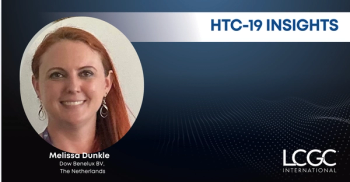
Melissa Dunkle, senior research scientist at Dow Benelux BV, The Netherlands, discusses the revival of interest in pyrolysis gas chromatography.
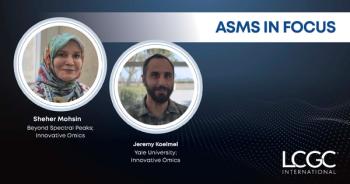
Sheher Mohsin and Jeremy Koemel explore where machine learning and predictive CCS could transform PFAS identification, and what's holding it back.
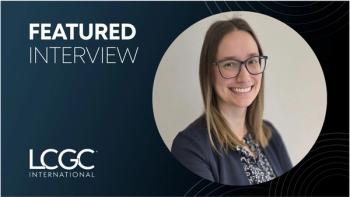
Andrea Hochegger from Graz University of Technology, Austria describes the benefits that comprehensive two-dimensional GC (GC×GC–MS) offers over conventional GC–MS to resolve complex mixtures from recycled packaging materials.
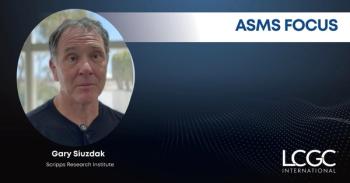
Siuzdak argues the field must correct AI-fueled “phantom metabolites” before trusting predictive models, favoring experimentally grounded measurement.
Sheher Mohsin and Jeremy Koemel identify the biggest bottlenecks in non-targeted PFAS workflows, from CCS libraries to human review.
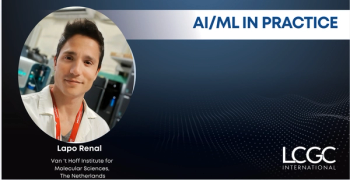
Lapo Renai from the Van 't Hoff Institute for Molecular Sciences, The Netherlands discusses a novel prediction model for estimating chemical space coverage for non-targeted LC–ESI–HRMS workflows.
With 960,000 empirically acquired standards, Siuzdak shows how METLIN delivers reliable, cross-instrument IDs and reveals fragmentation artifacts.
Sheher Mohsin and Jeremy Koemel walk through a real CCS Atlas example showing how homologous series confirm unknown PFAS identifications.
Jeremy Koemel discusses detecting low-intensity PFAS features when MS/MS signal is too weak, and how they work around it.
As metabolomics datasets balloon, Siuzdak explains using retention time and in-source fragmentation checks to separate real molecules from artifacts.
Sheher Mohsin explains how CCS measurements add a physical confirmation layer beyond mass and retention time in PFAS analysis.
Siuzdak separates true standard-based empirical spectra from artifactual signals, warning AI trained on flawed data risks perpetuating errors.
Gary Siuzdak explains how uMRM converts inconsistent untargeted LC–MS data into standardized MRM transitions.
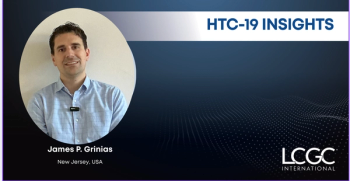
James Grinias from Rowan University, New Jersey, USA, discusses sustainability and modern capillary LC systems.
Jim Grinias from Rowan University, NJ, USA highlights advances in miniaturized capillary LC–MS that simplify system setup and improve ease of use. He also discusses low-flow challenges and how integrated components can enhance performance and reproducibility.
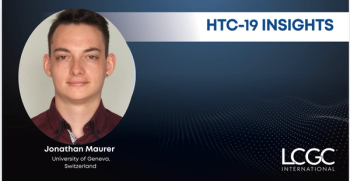
Jonathan Maurer from the University of Geneva, Switzerland describes using HILIC for oligonucleotide analysis in practice and the role of HILIC for other biopharmaceutical applications.
Jonathan Maurer from the University of Geneva, Switzerland describes some of the challenges and misconceptions surrounding hydrophilic interaction chromatography (HILIC) and oligonucleotide analysis.
Wallman argues proteomics is moving from niche tool to high-throughput platform core, with the greatest untapped potential in covalent drug programs and targeted protein degradation.
Wallman explains that PeptDeepKontext is designed to generalize without lab-specific calibration, though highly unusual setups may still benefit from additional fine-tuning in the future.
Wallman unpacks how graph-level fragmentation in fragDETR captures internal fragments and neutral losses, with peak and intensity improvements concentrated in challenging non-standard peptides.
HTC-19 Insights: RPLC×HILIC–cIMS for Data-independent Profiling of Phenolics: Potential Challenges and Future Developments
Published: | Updated:
Nikoline Juul Nielsen from the University of Copenhagen, Denmark explores deprotomer formation for accurate CCS prediction and metabolite identification and the potential of implementing these workflows for routine use.
LCGC International spoke with Nikoline Juul Nielsen from the University of Copenhagen, Denmark on the benefits of RPLC×HILIC–cIMS for data-independent profiling of phenolic constituents in plant extracts. In this episode she explores practical aspects of cIMS and the potential for routine analysis.
Wallman explains how spectral library accuracy, retention time prediction, and instrument-specific variation make deep learning essential yet difficult in data-independent acquisition proteomics.
Wallman details PeptDeepKontext, a model built to predict peptide properties across diverse instruments and PTMs by embracing rather than eliminating inter-laboratory variability.
Advertisement
Advertisement
Trending on LCGC International
1
Industry Roundup: Shimadzu Unveils New High-End UHPLC System Aimed at Reducing Laboratory Downtime
2
VASE-GC-MS Detects Personal Care Products in Fish
3
LC-MS/MS Compares Hair Hormone Sampling Methods
4
Industry Roundup: Gerstel Showcased New Twister Phases and Automated Liner Exchange Technology at EPRW 2026 in Rotterdam
5