

LCGC Interviews
Latest News


Non-Target Characterization and Simultaneous Quantitation for Reformulation of Complex Fragrance Samples with GCxGC–MS/FID: An Interview with Elizabeth Humston-Fulmer
By John Chasse
Inside the Laboratory: The Nontargeted Separations Laboratory at the College of William & Mary
By Will Wetzel
Advertisement
Latest Videos

Advertisement
More News

In this series from LCGC, we go on location to the Grinias Research Lab at Rowan University and speak to Professor James Grinias about his background, teaching philosophy, students, and lab equipment.

Fresh insights on how to succeed in the interview process to secure your dream job.

Need help reaching your full potential as a separation scientist? A career development plan can help set a clear direction to reach your goals more effectively. In this LCGC Blog, we will cover why having a plan is important, what makes a good plan, and how to best use it.
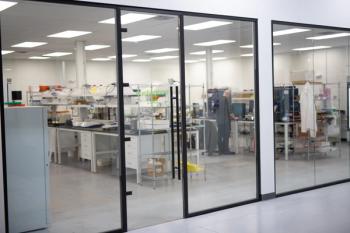
LCGC and Spectroscopy Editor Patrick Lavery spoke with Oligo Factory CEO Chris Boggess about the company’s recently attained compliance with Good Manufacturing Practice (GMP) International Conference on Harmonisation of Technical Requirements for Registration of Pharmaceuticals for Human Use (ICH) Expert Working Group (Q7) guidance and its distinction from Research Use Only (RUO) and International Organization for Standardization (ISO) 13485 designations.

Alena Kubatova, a professor in the Department of Chemistry at the University of North Dakota, in Grand Forks, North Dakota, is exploring new approaches in characterizing lignin, to understand its structural complexities and how these methods can help improve processing in biorefineries. LCGC spoke to Kubatova to discuss her recent research in understanding the chemistry of lignin.

In our first edition of “Inside the Laboratory,” Laura-Isobel McCall, PhD, an associate professor of chemistry at San Diego State University, discusses her group’s most recent work using “chemical cartography” in order to perform effective liquid chromatography–mass spectrometry (LC–MS) data acquisition.

Yuefei Ruan from the City University of Hong Kong discusses her team’s research on the importance of monitoring PFAS in aquatic environments.

At the Eastern Analytical Symposium (EAS) in Plainsboro, New Jersey, LCGC sat down with Robert Kennedy to discuss his research and career in analytical chemistry.

At the Eastern Analytical Symposium (EAS) in Princeton, New Jersey, LCGC magazine sat down with John McLean of Vanderbilt University to discuss his research and career in mass spectrometry.

In this LCGC Blog, André Striegel discusses common rumors about what and what not to do at academic conferences, to educate first-time attendees on what to expect.

This month we interview Zhuoheng Zhou from the Vrije Universiteit Brussel in Belgium, about his focus on advancing instrumental and column technologies for modern chromatography and its applications in novel biopharmaceutical modalities and proteomics. We also spoke to him about his work developing a protocol to help with the design of polymer monolithic capillary columns.

At the 2023 Gulf Coast Conference, LCGC spoke with Jean-Francois Borny of Lummus Technology, who discussed recent developments that will shape how per- and polyfluoroalkyl substances (PFAS) are analyzed. This interview was one of four conducted live at GCC 2023.

At the 2023 Gulf Coast Conference, LCGC spoke with Kevin Schug of the University of Texas at Arlington, about predicting gas phase vacuum ultraviolet spectra using machine learning. This interview was one of four conducted live at GCC 2023.

FDA scientists have expanded the number of analytes in their analytical method for per- and polyfluoroalkyl substances (PFAS), partly in response to updated guidance out of the European Union (EU) on method parameters and limits of quantification (LOQs).

Núria Fontanals, Senior Researcher in the Analytical and Organic Chemistry Department at the Universitat Rovira i Virgili, outlines the benefits of passive sampling in liquids and how the approach can evolve in the future.
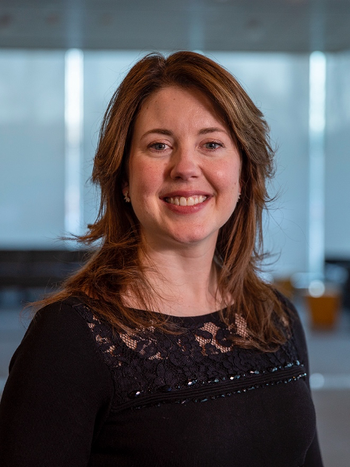
The AES Mid-Career Award recognizes exceptional contributions to the field of electrophoresis, microfluidics, and related areas by an individual who is currently in the middle of their career. This year’s recipient, Robbyn K. Anand, Suresh Faculty Fellow and Carlyle G. Caldwell Endowed Chair in Chemistry at Iowa State University, has, along with her group, developed methods for circulating tumor cell analysis, electrokinetic enrichment and separation of chemical species within water-in-oil droplets, and more sensitive bioanalysis at arrays of wireless bipolar electrodes (1).

This past spring, we convened a panel of six phenomenal separation scientists, where they gave their best advice for separation scientists, newcomers and veterans alike.

In this interview, Hroncich talks with editor Patrick Lavery about her experience and what readers can expect for the future.

Giorgia Purcaro of the University of Liège discusses the advantages offered by the liquid chromatography–comprehensive multidimensional gas chromatography time-of-flight mass spectrometer/flame ionization detector (LC–GCxGC–TOF-MS/FID) method in the analysis of mineral oil.

LCGC North America spoke to Caroline McGregor and Justin Pennington of Merck Research Laboratories regarding what employers are looking for in candidates they are considering for open separation scientist positions.

Five prior winners of our annual Emerging Leader Award give their perspectives on how to thrive and find success in the separation science field.

Stephanie Rankin-Turner and colleagues at Johns Hopkins Bloomberg School of Public Health have recently performed research in Zambia indicating that mosquitoes are more attracted to humans who exhibit abundant levels of certain volatile carboxylic acids.

LCGC and Spectroscopy magazines recently welcomed Caroline Hroncich to lead their joint editorial staff in print and online. In this interview, Hroncich talks with editor Patrick Lavery about her experience and what readers can expect for the future.
At HPLC 2023, LCGC spoke with John Langley of the University of Southampton in the UK. These clips comprise one of several HPLC interviews that were conducted at the conference.

At HPLC 2023, LCGC spoke with Andrea Gargano of the Van 't Hoff Institute for Molecular Science at the University of Amsterdam in The Netherlands. These clips comprise one of several HPLC interviews that were conducted at the conference.
Advertisement
Advertisement
Trending on LCGC International
1
Industry Roundup: Shimadzu Unveils New High-End UHPLC System Aimed at Reducing Laboratory Downtime
2
VASE-GC-MS Detects Personal Care Products in Fish
3
LC-MS/MS Compares Hair Hormone Sampling Methods
4
Industry Roundup: Gerstel Showcased New Twister Phases and Automated Liner Exchange Technology at EPRW 2026 in Rotterdam
5