

At HPLC 2023, Paola Dugo held a lecture on how combining two-dimensional liquid chromatography (LC×LC) with mass spectrometry (MS) can help scientists analyze food samples.

A new method has been developed for detecting and quantifying polycyclic aromatic hydrocarbons (PAHs) in intermediates used in plastics production. The method, based on liquid chromatography column switching, allows for the analysis of 18 PAHs and addresses the lack of regulatory oversight for PAH concentrations in plastic intermediates.

New Algorithm Enables Confidence Intervals for Quantitation of Coeluted Peaks in Liquid Chromatography

At HPLC 2023, Paola Dugo held a lecture on how combining two-dimensional liquid chromatography (LC×LC) with mass spectrometry (MS) can help scientists analyze food samples.

At HPLC 2023, Erin Baker held a lecture on how using liquid chromatography and mass spectrometry together can help scientists further understand diseases that can arise from chemical exposure.

In his plenary lecture at HPLC 2023, Michal Holčapek presented his team's findings on how chromatography can help scientists record the human lipodome and better our understanding of diseases.

Gunda Köllensperger spoke at HPLC 2023 about how using U13C-isotopically labelled biomass extracts can change how scientists approach metabolomics.

In this HPLC 2023 keynote lecture, Mario Thevis discusses how chromatographic–mass spectrometric approaches have led to important advancements in sports drug testing programmes.

At HPLC 2023, Hyukju Kwon hosted a lecture on the roles LC–MS and artificial intelligence can have in autonomous material discovery.

Peter Schoenmakers of the University of Amsterdam presented a talk at HPLC 2023 on multidimensional liquid chromatography (LC).

Award presentations and plenary lectures were some of the attractions as the annual conference got underway on Sunday.

At HPLC 2023, Oliver Fiehn of the University of California explained results gathered from a device that can be used during daily digestion.

In a session on omics at HPLC 2023, Robert T. Kennedy of the University of Michigan revealed how scientists are taking advantage of new developments and cutting down on analysis time.

At HPLC 2023, Kelly Zhang gave a lecture on how machine learning can help further our understanding of the characterization of lipid nanoparticles.

At HPLC 2023, Matthias Pursch presented his findings on using UHPLC and SEC to monitor small molecule and polymer reactions in real time.

An ultrahigh-pressure liquid chromatography–tandem mass spectrometry method (UHPLC–MS/MS) using polarity switching, preceded by solid-phase extraction (SPE), was used to quantify eight ultraviolet filter (UVF) compounds in chlorinated outdoor pools in Winnipeg.

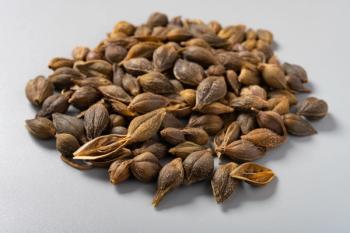
Fresh garlic and aged garlic, both brown and black, were all analyzed for their bioactives, in an attempt to expand those compounds’ applications as food ingredients and dietary supplements.

Scientists have developed a breakthrough MDLC–MS method for in-depth characterization of charge variants in therapeutic antibodies. The innovative approach enables the detection and evaluation of rare charge variants, facilitating improved safety and efficacy in antibody development.

Organic acids, flavonoids, iridoids, and saponins were among the compounds discovered, with significant α-glucosidase inhibitory behavior in vitro that was inconsistent with substance content level.

New research emphasize the importance of identifying metabolite interference in LC–MS targeted metabolomics analysis to ensure accurate results. The study highlights the need for thorough investigation and resolution of metabolite interferences for reliable metabolite measurement in targeted metabolomics.

A research team has developed a fast and sensitive method using UHPLC–MS/MS to simultaneously detect the nematicide fluensulfone (FSF) and its two major metabolites in different agricultural soils, providing valuable insights into the environmental behavior of FSF in soil systems.

A simultaneous, single-run analysis was sought for metabolites of the central carbon metabolism pathway, which is closely related to the occurrence and development of most diseases in humans.

New method enables comprehensive analysis of secondary formation markers in ambient organic aerosols, providing valuable insights into atmospheric pollutants using HPLC–ESI-TOF-MS.

The development of a newly-designed Girard's reagent, HBP, as charged isobaric mass tags has enabled selective capture and sensitive detection of aldehyde metabolites. The LC–dNLS-MS/MS screening approach using this reagent has successfully facilitated the discovery of natural aldehydes and their profiling in complex samples.

Researchers have developed an innovative strategy for compound annotation in offline 2D-LC–MS analysis. The approach combines hand-in-hand alignment with targeted molecular networking (TMN) and was successfully applied to analyze the chemical profile of Yupingfeng (YPF), a traditional Chinese medicine prescription, resulting in the identification of 497 compounds and demonstrating its efficiency and scalability in complex sample analysis.

Samples of honey, chicken breast, and environmental water were analyzed for residue of nitroimidazoles, which are common antibiotics but can have detrimental effects on humans.

Adjustable polyacrylamide stationary phases developed by researchers enhance separation performance in liquid chromatography, according to a recent publication. The study demonstrates the synthesis of vinyl modified silica and the successful preparation of polyacrylamide modified silica (PAM-SIL) stationary phases, allowing for fine control of separation performance.

A newly developed UHPLC–MS/MS method allows for the accurate analysis of bioactive compounds, including apigenin, apigenin 7-glucoside, and chlorogenic acid, in goat serum.