

Sponsored Content
Recombinant mAbs tend to be unstable and susceptible to modification/degradation. These mAbs need to be identified/monitored for successful drug development. New advanced LC–MS workflows have been developed to meet such needs.
Sponsored Content
Recombinant mAbs tend to be unstable and susceptible to modification/degradation. These mAbs need to be identified/monitored for successful drug development. New advanced LC–MS workflows have been developed to meet such needs.
Sponsored Content
This application note describes the isolation of target compounds from Rhodiola rosea using online mass-based 2D-LC purification to quickly achieve the highest purity.
Sponsored Content
LCGC Europe
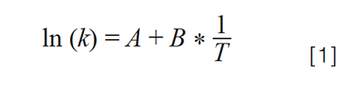
In reversed-phase liquid chromatography, increasing the column temperature usually results in a decrease in analyte retention. Will this cause problems if a method does not call for control of the column temperature but the room temperature of the laboratory environment changes?
LCGC Europe
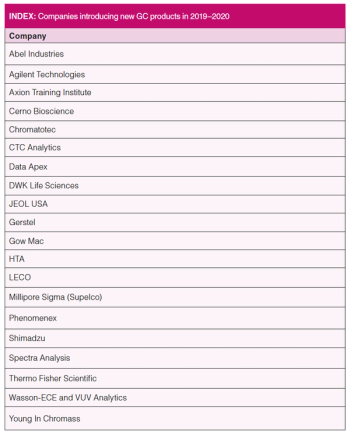
“GC Connections” presents the column’s annual review of new developments in the field of gas chromatography seen at Pittcon and other venues in the past 12 months.
LCGC E-Books
More and more manufacturers are embracing multi-attribute method, which simplifies biopharmaceutical product quality testing, and facilitates the measurement and monitoring of critical quality attributes.
Sponsored Content - NA
Sponsored Content - NA
An HCP analysis workflow including the Agilent AssayMAP Bravo platform for automated sample preparation, 6545XT AdvanceBio LC/Q‑TOF for LC-MS/MS analysis
Sponsored Content
This whitepaper demonstrates the features and benefits of owning an Ultivo LC/TQ in terms of actual tangible benefits to your laboratory operations.
Sponsored Content
A method describing the detection of 12 potentially mutagenic nitrosamine impurities found in sartan drugs using the Ultivo LC/TQ
Sponsored Content - EU
FFF-MALS-DLS provides the detailed characterization of nano-pharmaceuticals that is essential for development and regulatory filing.
Sponsored Content - EU
Stay one step ahead of water regulation, QSight™ LC–MS/MS offers sensitivity, selectivity, and robustness while saving time on maintenance and cleaning operations for your testing.
Sponsored Content - NA
Use interactive calculators included in this whitepaper to determine the incremental economic value of the Agilent 1260 Infinity II Prime LC and InfinityLab LC/MSD iQ.
Sponsored Content - NA
This application demonstrates the efficacy of this chromatographic technique for a fast orthogonal analysis to evaluate mAb ADCC activity.
Sponsored Content - EU
The Zebron ZB-PAH-EU and ZB-PAH-SeleCT offer unparalleled performance of targeted selectivity for PAHs in food, environmental, electronics, and fuel industries.
Sponsored Content
In this application, we look at purgeable volatile organic compounds by GC–MS using Zebron™ ZB-624PLUS™ GC columns.
Sponsored Content
In this application, we look at residual solvents per USP 467 using Zebron™ ZB-624PLUS™ and ZB-WAXPLUS™ GC columns.
Sponsored Content
How to reduce FAME run times by up to 75% and improve the separation of cis/trans FAME isomers while remaining compatible with AOAC, AOCS, and IOC regulatory methods.
Sponsored Content
In this application, we look at the fast analysis of alcohol-based sanitizers by GC–FID using Zebron™ ZB-WAXPLUS™ GC columns.
Sponsored Content
ZB-WAXplus offers performance nothing short of extraordinary – from 100 % aqueous stability to exceptional inertness.
Sponsored Content
Inert GC inlet liners for sample protection are easy to install. Touchless packaging provides protection from cuts or breakage, reducing contamination during installation process.
Sponsored Content
We look at the fast and accurate GC–MS analysis of polycyclic aromatic hydrocarbon (PAHs) in rubber and plastic using a Zebron™ ZB-PAH-EU GC column.
Sponsored Content
The ZB-DHA-PONA GC column has excellent response and peak symmetry for polar oxygenates - for DHA, PONA, PIONA, PIANO, ASTM methods (D5134, D5441, D5501, D6729, D6730, D6733).
Sponsored Content
We look at the Zebron ZB-624plus, the optimal choice for the analysis of volatile compounds for environmental, pharmaceutical, food, cannabis, and specialty chemicals.
Sponsored Content
In this application, we look at the determination of residual solvents and terpenes in cannabis by GC–FID using the Zebron™ ZB-624plus™ GC column.