

Webcasts
Webinar Date/Time: Wed, Sep 13, 2023 11:00 AM EDT
Webcasts
Webinar Date/Time: Wed, Sep 13, 2023 11:00 AM EDT

Sponsored Content
This short video provides an overview of a complete, end-to-end oligonucleotide workflow solutions
Sponsored Content
Characterization of oligonucleotides requires robust analytical instrumentation and methods as well as ease-of-use data analysis tools. Biocompatibility mitigates non-specific sample binding to flow path and it ensures the integrity of biomolecules and robustness of the system. In this study, two workflows, the Target Plus Impurities (TPI) and Sequence Confirmation workflows in Agilent MassHunter BioConfirm software, were carried out to characterize two oligonucleotide samples.
Sponsored Content
In this application note, the determination of oligo sequence confirmation using HILIC LC and high-resolution MS/MS data is described. As with the previous studies, an InfinityLab Poroshell 120 HILIC-Z column was used along with an Agilent 6545XT AdvanceBio LC/Q-TOF mass spectrometer.
Sponsored Content
In this application note, LC separation and MS1 mass identification of a variety of oligos without the use of ion‑pairing reagents is demonstrated. The LC separation allows subsequent positive mode use with little to no flushing or hardware changes. This HILIC-based method uses an Agilent InfintyLab Poroshell 120 HILIC-Z column and MS-friendly ammonium acetate-based mobile phases. The samples were analyzed on an Agilent 1290 Infinity II LC system and a 6545XT AdvanceBio quadrupole time-of-flight mass spectrometer (LC/Q-TOF).
Sponsored Content
End-to-End Workflow Solutions for Oligonucleotide Analysis - From research discovery to production QA/QC
Sponsored Content
UV-Vis spectrophotometers have been used widely for nucleic acid quantification and quality control (QC) utilizing the fact that nucleic acids have a maximum absorbance at 260 nm (1). The concentration of nucleic acids can be easily estimated using the absorbance at 260 nm and the established absorption coefficient. Often a background correction is also performed, for example collecting a baseline using a solution containing everything but the nucleic acid or by measuring the absorbance at a wavelength that nucleic acids do not absorb. Double stranded nucleic acids are bound by hydrogen bonds between the base pairs. The temperature at which double stranded nucleic acids denature to become single stranded depends on the: – sequence and length of the nucleic acid – the pH and buffer conditions – and any mismatches in base pairs between the two strands As such, the melting temperature is very useful analytical tool and can be studied by monitoring the absorbance at 260 nm as temperature is increased or decreased. As the temperature is increased, the hydrogen bonds between the strands are broken and the double stranded nucleic acid separates into two separate strands. When the strands separate, the absorbance at 260 nm increases. The transition temperature is called “melting temperature” (Tm) (1).

Webcasts
Webinar Date/Time: Tue, Jun 27, 2023 11:00 AM EDT

If you are under pressure to deliver meaningful results, the new Agilent 6495 triple quadrupole LC/MS (LC/TQ) provides sensitivity without compromising robustness. Built-in instrument intelligence of the 6495 LC/TQ enhances throughput, and integrates comprehensive workflows to get your lab up and running fast, allowing even novice users to generate expert results.
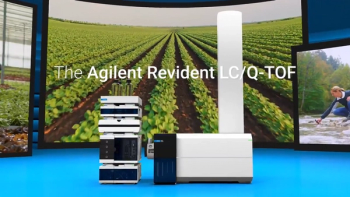
To stay competitive and adjust to changing requirements in food and environmental testing, you need evolved high resolution, high mass accuracy screening instrumentation at the core of your complete workflow solution. The Revident quadrupole time-of-flight LC/MS system (LC/Q-TOF) answers these challenges by maximizing uptime and productivity with sophisticated instrument intelligence.

Webcasts
Webinar Date/Time: Thu, Jun 22, 2023 2:00 PM EDT
In this exclusive video, Agilent gives an inside look at the time-consuming process behind manual integration in GC/MS, and showcases its upcoming AI/ML technology and the key benefits this software can bring to GC/MS processes – learn more in June 2023.
Get ready to be inspired by a smarter lab. View the video to see a sneak peak of the new intelligent Agilent LC/MS solutions launching at ASMS 2023.
Webcasts
Webinar Date/Time: Tue, Jun 13, 2023 11:30 AM EDT
Sponsored Content
Time to results can be significantly reduced with the use of RapidFire high-throughput mass spectrometry (MS). With this technique, a lab’s next great innovation can be brought from conception to reality in a timely and efficient manner.
Sponsored Content
Helium supply is unreliable. Prices are increasing, supply is decreasing, and the need for an alternative carrier gas is growing. So does your lab reduce its helium consumption or switch to an alternative carrier gas?

Webcasts
Webinar Date/Time: Wed, Jun 28, 2023 1:00 PM EDT

Webcasts
Webinar Date/Time: Thu, May 18, 2023 11:00 AM EDT
Sponsored Content
This application note demonstrates that the Agilent 6475 triple quadrupole LC/MS system can confidently quantify nitrosamine impurities at the low concentration levels specified by regulatory requirements. This method can be used to quantify these impurities in different ARB drug products, with some changes in chromatographic conditions based on the elution pattern of the drug product.
Sponsored Content
Introducing InfinityLab Poroshell 120 Aq-C18 columns—the latest addition to Agilent's Poroshell 120 column portfolio. With InfinityLab Poroshell 120 Aq-C18 columns, you can now maximize reversed-phase retention for highly polar analytes with 100% aqueous mobile phases and develop separations that retain polar and nonpolar compounds togethe
Sponsored Content
A group of polar compounds was separated on a newly developed Agilent InfinityLab Poroshell 120 Aq-C18 column. The retention loss due to pore dewetting was investigated by comparing the new InfinityLab Poroshell 120 Aq-C18 column to the current C18 phase and other superficially porous columns from various manufacturers
Sponsored Content
This application note demonstrates improved performance when separating polar compounds using Agilent's InfinityLab Poroshell 120 Aq-C18 column
Sponsored Content
This application note demonstrates the analysis of ten vitamin B compounds plus ascorbic acide and caffeine using Agilent's InfinityLab Poroshell 120 Aq-C18 column.
Webcasts
Webinar Date/Time: Wednesday, April 26th, 2023 at 11am EDT | 8am PDT | 4pm BST | 5pm CEST
Sponsored Content
This application note presents a side-by-side comparison of the AdvanceBio and GlycoWorks kits for the preparation and analysis of released N-glycans.

Webcasts
Webinar Date/Time: Tuesday, June 6th, 2023 at 11am EDT | 8am PDT | 4pm BST | 5pm CEST