

Webcasts
Webinar Date/Time: Thu, Nov 9, 2023 2:00 PM EST
Webcasts
Webinar Date/Time: Thu, Nov 9, 2023 2:00 PM EST

Sponsored Content
GPC/SEC-viscometry enables measurement of true molar masses for carrageenan and detects subtle differences between samples with similar molar mass distributions.
Sponsored Content
GPC/SEC-MALLS analysis of hyaluronic acid obtains absolute molar mass while conventional GPC/SEC with concentration detectors only provides apparent molar masses.
Sponsored Content
This technical overview discusses best handling practices for IVT mRNA and analysis with the Fragment Analyzer systems, including sample handling and quantification tips.
Sponsored Content
Discover how SEC can be used in biopolymer applications including bioconjugates, proteins, mAbs, mRNA1, viruses, extracellular vesicles, and liposomal nanoparticles.
Sponsored Content
This paper discusses sustainable solutions for size separation of macromolecules that align with the 12 principles of green chemistry.
Sponsored Content
Tips & Tricks designed to support GPC/SEC users in their daily work, providing comprehensive overviews on different aspects of this powerful technique.
Sponsored Content
Robust, reliable GPC/SEC analysis of saccharides and polysaccharides can occur with very high resolution using Agilent SUPREMA columns with 3 and 5 µm particles.
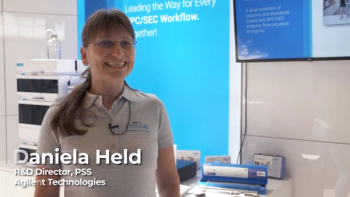
Explore Agilent's innovations—from advanced light scattering to versatile software solutions—shaping the landscape of GPC SEC for enhanced macromolecule insights

Webcasts
Webinar Date/Time: Thursday, September 14th, 2023 at 8am PDT | 11am EDT | 4pm BST | 5pm CEST Thursday, September 14th, 2023 at 11am PDT | 2pm EDT | 7pm BST | 8pm CEST Friday, September 15th, 2023 at 11am CST | 12pm JST
Sponsored Content
The new Revident LC/Q-TOF system is leveraged for the screening of pesticides in complex matrix utilizing data independent acquisition (DIA). Confident identification is made through a combination of high-resolution, extended dynamic range, stable accurate mass, and isotopic fidelity which can be quickly and easily analyzed via the customizable LC Screener Tool, simplifying the processing of complex screening data. Along with this screening capability, new automated software, Intelligent Reflex, uses the results and allows for the reinjection and targeted confirmation of questionable and/or identified residues. This reduces the amount of time from sample introduction to confident characterization.

Webcasts
Webinar Date/Time: Tue, Aug 15, 2023 11:00 AM EDT
Sponsored Content

Webcasts
Webinar Date/Time: Wed, Aug 23, 2023 11:00 AM EDT

Webcast
Webinar Date/Time: Thu, Aug 31, 2023 2:00 PM EDT
Sponsored Content
In this study, the automatized Agilent 1290 Infinity II system was used for purification of native single stranded oligonucleotides (ONs). The separations were performed with IP-RPLC using dibutylamine (DBA) and tris(hydroxymethyl) aminomethane (TRIS). The combined separation methods with instrumental setup with columns, allowed for the target compound to be collected faster and with higher purity, compared to conventional methods.
Sponsored Content
This poster evaluates the performance of the end-to-end workflow for the extraction, screening, identification, and quantitation of over 80 sphingolipids from 10 classes in plasma, a method using Agilent 1290 Infinity II LC coupled to an Agilent 6495 triple quadrupole LC/MS system.
Sponsored Content
This poster exhibits how combining XF and LC/MS technologies can provide deeper insight into the cellular and molecular metabolic response to drug treatment for cancer research.
Sponsored Content
This poster illustrates the outstanding quantification performance for large panel pesticide screening analysis in a known difficult matrix such as cinnamon, using a novel LC/TQ platform, including the Agilent 1290 Infinity II Bio LC system coupled to the 6495 Triple Quadrupole LC/MS with the Jet Stream Technology Ion Source (AJS).
Sponsored Content
This study assesses a workflow developed for PFAS analysis in wastewater, based on the existing EPA draft Method 1633 with additional PFAS of varying size and functional group. This workflow contains off-line solid phase extraction (SPE) and a clean-up step, followed by LC-MS/MS analysis, and automatic reporting using SLIMS. The workflow demonstrates a reliable solution for the targeted analysis of PFAS in complex matrices with high robustness.
Sponsored Content
This study demonstrates the 6495 LC/TQ (G6495D) is suitable for comprehensive protein quantification assays in complex matrix.
Sponsored Content
This poster demonstrates how the HILIC polar metabolite workflow is enhanced with the new 4th generation 6495 LC/TQ, and robust quantitation is enabled with new 13C metabolite transitions.
Sponsored Content
This poster shows that over 200 pesticides screened for using a DIA mode of acquisition from 0.625 ppb to 100 ppb, good Mass Accuracy, Low RSD’s, and Scored Coelution of Fragment Ions are demonstrated.
Sponsored Content
This poster demonstrates that the Agilent 6495 triple quadrupole LC/MS system shows increased analytical sensitivity of nitrosamine impurities at the low concentration levels specified by regulatory requirements.
Sponsored Content
In an ever-evolving cannabis industry where regulatory compliance and accurate testing are paramount, staying ahead requires a deep understanding of how to build an efficient testing lab that meets compliance standards: