Daniela Held

Daniela Held studied polymer chemistry in Mainz, Germany, and works for PSS – A part of Agilent as an R&D director in Mainz. She is also responsible for education and customer training.

Articles by Daniela Held

Figure 1.jpg

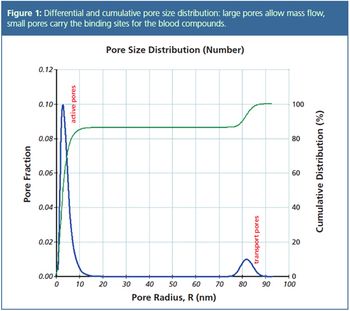
Gel permeation/size-exclusion chromatography (GPC/SEC) is the standard method for separating samples by molecular size and determining molar mass distributions. However, GPC/SEC instruments can also be used to investigate porous materials and to learn more about pore size distributions, as a powerful alternative to nitrogen gas (N2) adsorption or mercury (Hg) intrusion porosimetry.

figure 11450181739833.jpg

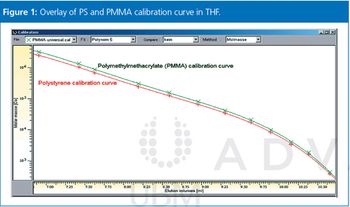
Polystyrenes (PS) are the most commonly used reference standards in gel permeation chromatography/size-exclusion chromatography (GPC/SEC) for nearly all organic GPC/SEC separations including high temperature GPC and pullulan or dextran for aqueous GPC/SEC. The majority of users rely on these standards for reproducible results. However, there is potential for improvements and this instalment of Tips & Tricks will discuss some general points that should be considered when determining calibration standards.

Tetrahydrofuran (THF) - a widely used solvent in gel permeation chromatography/size-exclusion chromatography (GPC/SEC) - is set to be classified as carcinogenic as proposed by the Committee for Risk Assessment (RAC). Analytical laboratories therefore need to find ways to reduce THF solvent use and waste, far beyond the demands of green chemistry. This instalment of Tips & Tricks presents different strategies to meet this goal.

TipsTricks-840958-1408520960504.jpg

There are many sources of advice on how to select the most appropriate stationary phase for sample analysis, but the mobile phase is not often discussed. This article provides tips for selecting the most appropriate mobile phase for your analysis.

The complexity of method development for GPC/SEC is often underestimated. Although only isocratic separation is applied, the development of a robust and stable method can be challenging. It is important that measures are taken to develop a suitable method that will deliver long-term reproducible results, especially when biomolecules, ions or functional groups are present.

GPC/SEC (gel permeation chromatography/size exclusion chromatography) methods generally contain multiple detectors in order to gather more information about the molecular structure of macromolecules.1. Up until now, however, the practice and the impact of detector combination has not been discussed.

Traditionally GPC/SEC is a slow technique. A typical, non-optimized GPC/SEC run with 3 analytical columns and a precolumn needs about 45 to 60 min to be completed. This limits the number of samples that can be analysed.

A stable baseline is a prerequisite for precise, accurate and reproducible GPC/SEC analysis, especially for samples with a broad molar mass distribution. Baseline problems can include drift, wander (long-term noise), noise/spikes (short-term noise), as well as positive or negative system peaks.

In comparison to other GPC/SEC detectors such as light-scattering detectors or UV detectors, viscometers need more care. It takes a longer time to get a stable baseline after changing from one solvent to another and the quality of the LC components plays an important role. Nevertheless, a viscometer is worth these efforts as it provides unique information that is not available with any other detector.

i4-547966-1408670464057.jpg

Size exclusion chromatography is a powerful tool for the characterization of molecules differing in size and molar mass. It is widely used and well known for the determination of molar mass distributions and molar mass averages. For membranes GPC-SEC is a useful characterization method as it can measure the membrane characteristic pore size distribution, average pore size and molecular cut-off significantly faster than other methods.