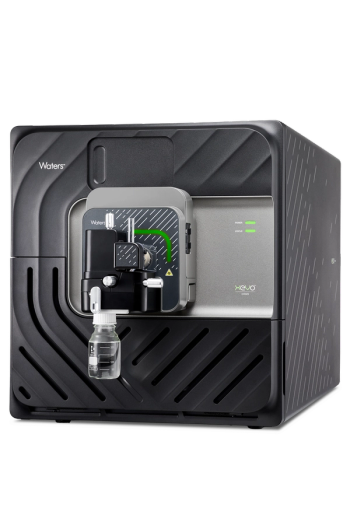
In this “Equipment Roundup,” the editors of LCGC International present MOBILion’s novel high resolution mass spectrometry (HRMS) functionality and Agilent’s InfinityLab LC Series portfolio.

In this “Equipment Roundup,” the editors of LCGC International present MOBILion’s novel high resolution mass spectrometry (HRMS) functionality and Agilent’s InfinityLab LC Series portfolio.

In this Equipment Roundup, the editors of LCGC International feature Refeyn Ltd.’s upgraded MassFluidix HC system, optimizing efficiency and quality of mass photometry experiments.

A recent study aimed to characterize the fine-flavor cocoa in parent-hybrid combinations using widely targeted gas chromatography-mass spectrometry (GC–MS) and bean phenotype analysis.

A recent joint study between the Department of Forensic Science of the College of Criminal Justice at Sam Houston State University (Huntsville, Texas) and the Department of Criminal Justice of the School of Social Sciences at Ming Chuan University, (Taipei, Taiwan) developed artificial intelligence (AI) by transfer learning in a convolutional neural network (CNN), GoogLeNet, with the image classification AI fine-tuned to create intelligent classification systems to discriminate samples containing gasoline residues from burned substrates.

A joint study by the Department of Food and Nutritional Sciences at the University of Reading and Synergy Flavours aimed to identify volatiles that contribute to the aroma of cooked cheese, including the role of fat content in development during cooking.

Although automated peak detection functionalities are available in commercially accessible software, utilizing visual inspection and manual adjustments to achieve optimal true positive rates is often necessary. A recent study conducted by the Department of Chemical Engineering at the Indian Institute of Technology (Delhi, India) used liquid chromatography-mass spectrometry (LC–MS) to distinguish hetero-variants (glycoforms) resulting in a monoclonal antibody (mAb) able to be characterized, revealing discernible peaks at the intact level. LCGC International spoke to Anurag Rathore, corresponding author for the article, about his department’s findings.

Researchers from the Department of Bioscience and Technology for Food, Agriculture and Environment at the University of Teramo (Italy) used gas chromatography-mass spectrometry (GC-MS) investigated the contribution of Kluyveromyces marxianus to the gross composition and aroma profile of cow cheeses.

A pilot study conducted by the University of Split School of Medicine (Split, Croatia) used gas chromatography-mass spectrometry (GC–MS) to measure the urine levels of nicotine and its metabolites in research participants exposed to second-hand smoke in nightclubs.

A recent study ascertained metabolic biomarkers and investigated the metabolic alterations associated with aqueous humor (AH) in wet age-related macular degeneration (AMD). Analysis was performed using liquid chromatography-tandem mass spectrometry (LC-MS/MS) to identify and quantify metabolites.

A new, fast, and accurate method to measure the levels of ivermectin in blood and plasma samples was developed using a new technique to prepare the samples and liquid chromatography-tandem mass spectrometry (LC-MS/MS) to analyze them.

A recent study examined three drug overdose deaths resulting from an Italian prison riot during the initial wave of the SARS-CoV-2 pandemic. To ascertain the nature of these deaths, a comprehensive toxicological analysis was conducted, employing gas chromatography-mass spectrometry to reveal high concentrations of various substances in the biological fluids of the deceased inmates.

The influence of chitosan's physicochemical characteristics on the functionality of lactic acid bacteria and the production of lactic acid remains very obscure and contradictory to date, thus inspiring a research team to study the effect of chitosan on growth and productivity of that bacteria in its presence.

Changes in volatile compounds (VCs) during air frying of tilapia were researched in a recent study by quantitative gas chromatography–ion mobility spectrometry, followed by the identification of key VCs based on their odor activity value (OAV).

A recent study focused on identifying molecular markers capable of discriminating between different origins and, at the same time, predicting their sensory attributes adopting a sensomics approach. An untargeted method was adopted, based on the coupling of ultra-high performance liquid chromatography-high-resolution mass spectrometry (UHPLC-HRMS), followed by the application of chemometric tools for the selection of 71 discriminating molecular markers for six origins.

A recent study determined the insecticidal activity of essential oils (EOs) from leaves of P. aduncum cultivated in southeastern Brazil, collected during the dry and rainy seasons, against fleas. Through this research, researchers hope to promote the utilization of these natural resources, particularly those now in cultivation and available for industry, in ways that align with traditional practices.

A recent study focused on improving the flavor of beef from Xinjiang brown cattle utilized two-dimensional gas chromatography–time-of-flight mass spectrometry (GC×GC-TOF MS to analyze volatile flavor compounds across different beef cuts.

A recent study investigated the significance of quantifying amino acids in minute sweat volumes using high performance liquid chromatography (HPLC) with fluorescence (FL) detection, offering a non-invasive and efficient way to screen for diseases by detecting amino acids in sweat, even with minimal sweat volumes.

Researchers set out to clarify whether adders of black or nearly black pigmentation may indeed have distinct venom profiles or increased toxicity in comparison to normally colored conspecifics.

Researchers built a reliable breath collection and analysis method using thermo-desorption gas chromatography-mass spectrometry (TD-GC–MS) that can produce a comprehensive list of known volatile organic compounds (VOCs) in the breath of a heterogeneous human population.

A study investigating the changes in volatile compounds in chicken flesh after being chilled in storage for 7 d and subsequently boiled at various pHs assessed the compounds qualitatively and quantitatively via headspace gas chromatography–mass spectrometry (GC–MS) analysis.

Researchers analyzed 31 different brands of hand sanitizers using headspace gas chromatography-mass spectrometry (GC–MS) to assess volatile impurities and ethanol content in ethanol-based hand sanitizers.

To gain insight into the effect of drying temperature on its composition, headspace solid-phase microextraction-gas chromatography-mass spectrometry (HS-SPME-GC–MS) was used for the identification of volatile organic compounds (VOCs) of 86 mushroom samples that were divided into five groups and dried at different temperatures.

A recent journal article provided an overview of a dataset that includes 10,000 experimental retention times, derived from 30 different reversed-phase liquid chromatography (LC) methods.

Researchers from the University of British Columbia have introduced an assay developed and validated to measure steroids in human primary teeth using liquid chromatography-tandem spectrometry (LC-MS/MS).

Plasma samples from 47 patients with stages 1– 4 chronic kidney disease were analyzed with liquid chromatography-mass spectrometry to identify early biomarkers of the disease’s progression through metabolic pathway analysis.

A multi-faceted approach consisting of targeted quantitation, chemical profiling, and suspect screening via ultra-high performance liquid chromatography-high-resolution mass spectrometry (UHPLC-HRMS) determined the environmental and health risks stemming from crumb rubber recycled from end-of-life tires and repurposed for a variety of uses, including artificial turf fields.

A recent study of 56 Italian ciders utilizing comprehensive two-dimensional gas chromatography coupled to time-of-flight-mass spectrometry (GC×GC–TOF-MS) detected the presence of approximately 130 semi-volatile organic compounds.

In a new study, researchers explored the dynamics of immune gene expression, ruminal metabolome, and gut microbiota in cows.

Using nanoflow liquid chromatography electrospray ionization in tandem with mass spectrometry (LC-ESI-MS), researchers were able to assess baleen whale blubber and proteins extracted from that blubber.

The Agricultural Biotechnology Research Institute of Iran (Tabriz, Iran) recently utilized gas chromatography-mass spectrometry (GC-MS) to explore the impact of different animal sources and regions in Iran on the metabolome profiles of traditional yogurts.