Articles by Maria Ofitserova
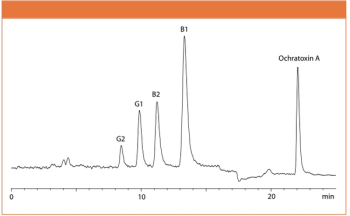
Pickering Laboratories developed an easy and sensitive method to analyze aflatoxins B1, B2, G1, G2, and ochratoxin A in hemp and hemp-containing edible products. Mycotoxins are isolated using immunoaffinity clean-up columns and analyzed with fluorescence detection. To increase sensitivity of aflatoxins B1 and G1, an in-line photochemical reactor (UVETM) is installed before the detector. This method utilizes standard HPLC equipment and allows laboratories to easily determine these mycotoxins at low ppb levels.


Pickering Laboratories developed an analytical method to comply with all the chromatographic requirements of Commission Regulation (EC) No 152-2009.

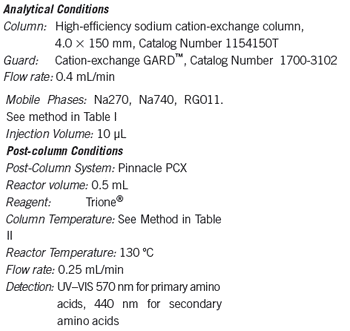
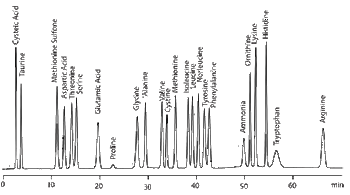
Commission Regulation (EC) No 152-2009 published in the official Journal of European Union laid down the methods of sampling and analysis for the official control of feed. The Regulation describes methods of analysis to control the composition of feed materials and compound feed products. Establishing the amino acids profile is an important way to control quality and nutritional value of feeds.

Homogenize 2 g of dry tea leaves with 25 mL of Li220 for 5 min. Centrifuge and filter through 0.45 µm nylon filter.
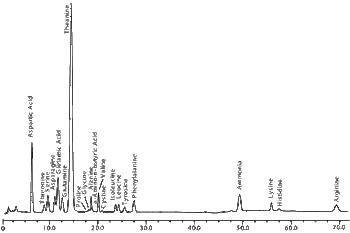
Theanine is a neurologically active amino acid found in tea plants. L-Theanine is a dominant amino acid in green tea and is responsible for its unique pleasant taste as well as known relaxation effect.

B vitamins are a group of water soluble vitamins that play an important role in cell metabolism. This group consists of a number of compounds including thiamine (vitamin B1), riboflavin (vitamin B2), niacin and nicotinamide (vitamin B3), and pyridoxine and pyridoxal (vitamin B6).

Immunoaffinity column sample clean-up and HPLC post-column photochemical derivatization with fluorescence detection to analyze sflatoxins B1,B2, G1, and G2.
Immunoaffinity column sample clean-up and HPLC post-column derivatization method to analyze aflatoxins B1, B2, G1, G2 and Ochratoxin A.
HPLC and post-column derivatization method for analysis of antioxidants in foods and dietary supplements using Folin-Ciocaltea and 2,2’-azinobis(3-ethylbenzothiazoline)- 6-sulfonate (ABTS).
HPLC and post-column derivatization method for analysis of thiamine and its biologically active phosphorylated derivatives in foods and dietary supplements.
HPLC and post-column derivatization method for analysis of thiamine and its biologically active phosphorylated derivatives in foods and dietary supplements.
Immunoaffinity column sample clean-up and HPLC post-column derivatization method to analyze aflatoxins B1, B2, G1, G2 and Ochratoxin A.
Immunoaffinity column sample clean-up and HPLC post-column photochemical derivatization with fluorescence detection to analyze sflatoxins B1,B2, G1, and G2.
HPLC and post-column derivatization method for analysis of antioxidants in foods and dietary supplements using Folin-Ciocaltea and 2,2’-azinobis(3-ethylbenzothiazoline)- 6-sulfonate (ABTS).
Pickering Laboratories, Inc.

The paralytic shellfish toxins are a group of 18 secondary metabolites deposited in bivalve mollusks by dinoflagelates. Dinoflagelate blooms are seasonal, occurring during warm months.

Glyphosate is a broad-spectrum herbicide widely used around the world. Monitoring of glyphosate in crops and water is mandated in many countries.

Voglibose is an Alpha-Glucosidase inhibitor widely used for the treatment of diabetes. Alpha-glucosidase inhibitors are agents that delay the glucose absorption at the intestinal level and thereby prevent sudden surge of glucose after a meal. Voglibose is the safest and most effective drug of its class.

Aminoglycoside antibiotics are among those commonly used in animal feeds to manage intestinal microorganisms. The beneficial effects include improved growth and generally healthier animal populations. Use of antibiotics creates a demand for analytical procedures to verify concentrations in pre-mixes and feeds and in some instances for residue analysis in animal products.