

The Future of Oligonucleotide Analysis: Final Thoughts
Published: | Updated:
Michael Bartlett, Torgny Fornstedt and Mark Dickman conclude the series with their expert insights into what the future of oligonucleotide analysis could involve.

Mark Dickman obtained a First Class Honours Degree in Biochemistry/Chemistry at the University of Sheffield. He continued at the Krebs Institute, where he obtained his PhD. Following his PhD, he joined a biotechnology company, Transgenomic LTD, where he worked as a research scientist developing analytical techniques, including DNA/RNA Chromatography.He joined the Dept of Chemical and Biological Engineering in 2003. He has over 20 years of experience in the development and application of analytical methods for the characterization of nucleic acids. In particular, his research focuses on the development of bioseparations using HPLC, including IP-RP-HPLC and biological mass spectrometry for the analysis and characterisation of OGN therapeutics and mRNA vaccines/therapeutics.
Michael Bartlett, Torgny Fornstedt and Mark Dickman conclude the series with their expert insights into what the future of oligonucleotide analysis could involve.

The panel discuss the innovations in sample preparation that are being developed for oligonucleotide analysis.
The sensitivity and selectivity of high resolution mass spectrometry (HRMS) for oligonucleotide analysis is discussed.
The panel explore the unique challenges associated with analysing double- stranded oligonucleotide products and oligonucleotides with higher-order structures.

Mark Dickman shares his views on analyzing larger oligonucleotides, including mRNAS.

The panel explore the potential of multidimensional chromatography for the analysis of oligonucleotides.
Torgny Fornstedt describes how machine learning can work in practice for oligonucleotide analysis.
The panel discuss the role of ion-exchange chromatography (IEX) and hydrophilic interaction liquid chromatography IHILIC) in oligonucleotide analysis, and if these techniques could challenge ion-pair reversed-phase high performance liquid chromatography (IP-RP-HPLC) in the near future.

Michael Bartlett, Torgny Fornstedt and Mark Dickman elaborate on the possible reasons why ion-pair reversed-phase high performance liquid chromatography (IP-RP-HPLC) has risen to such prominence for the separation of oligonucleotides.
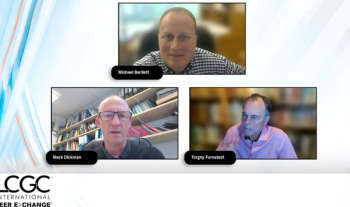
The panelists introduce themselves and outline their practical experience and knowledge of oligonucleotides, setting the stage for an illuminating discussion on current challenges, solutions and innovations in this ten-part panel discussion series organised by LCGC International in collaboration with the Chromatographic Society (ChromSoc).

Published: October 22nd 2025 | Updated: October 23rd 2025
Published: October 22nd 2025 | Updated: October 23rd 2025
Published: October 21st 2025 | Updated: October 21st 2025

October 21st 2025
September 30th 2025