


News|Videos|October 21, 2025
The Pros and Cons of Multidimensional Chromatography for Oligonucleotide Analysis
The panel explore the potential of multidimensional chromatography for the analysis of oligonucleotides.
Advertisement
Episodes in this series





The panelists explore the potential of multidimensional chromatography as an advanced analytical technique for oligonucleotide analysis. They highlight the method's strength in improving resolution, separating complex mixtures, and providing deeper molecular insights. The advantages of combining different chromatographic modes enhances specificity and structural characterization are highlighted. However, challenges such as increased system complexity, method development time, and data interpretation are also acknowledged. Watch the full video above.
Advertisement
Related to this article

Liquid chromatography–tandem mass spectrometry (LC–MS/MS) reveals distinct sphingolipid patterns in anorexia and obesity.
Leon Niezen and Gert Desmet discuss uncertainty-driven LC method development, peak overlap, and moving from in silico to real data.
Leon Niezen and Gert Desmet describe how predictive uncertainty can make automated LC method development more reliable.
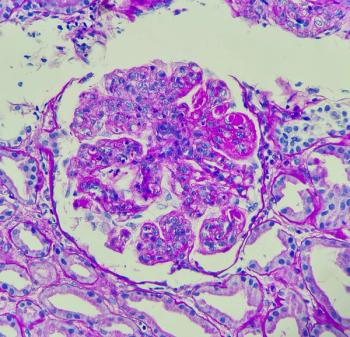
Liquid chromatography–mass spectrometry (LC–MS) serum profiling ties lysine compounds to lupus kidney disease.

Liquid chromatography-mass spectrometry (LC–MS) growth lifts Waters Q3; MOBILion ion mobility buy expands proteomics.

Liquid chromatography–tandem mass spectrometry (LC–MS/MS) measures galactose-1-phosphate in dried blood spots to monitor galactosemia.
Sam Whitmarsh explores how retention-time models handle interlaboratory data, novel chemotypes, unusual phases and ionisable compounds, and what labs need to do to build useful in-house models.

Advertisement
Advertisement
Trending on LCGC International
1
AI/ML Now: Toxicity Prediction for Unknown LC–HRMS Features Using Machine Learning
2
LCGC Blog: Building a Career Series That Goes Beyond the Surface
3
From 9000 Clues to a Clinical Test: Mass Spectrometry-Driven Lipidomics for Early Cancer Detection
4
Testing Plastic Packaging for PFAS Without SPE: A Fast, Cost-Effective Direct Shoot LC-MS/MS Method on the QSight® 500 System That Meets Regulatory Requirements
5