

|Videos|October 23, 2025 (Updated: October 23, 2025)
Innovations in Sample Preparation For Oligonucleotide Analysis
The panel discuss the innovations in sample preparation that are being developed for oligonucleotide analysis.
Advertisement
Episodes in this series





The field of oligonucleotide analysis has recently witnessed developments in the realm of sample preparation. As more kit-based solutions enter the market, researchers are seeking faster, more consistent, and automation-friendly methods. This shift raises an important question: Are we seeing a turning point where solid phase extraction (SPE) overtakes traditional liquid-liquid extraction (LLE)? In the video above, the panel explore current innovations, market trends, and their perspectives on trends shaping the future of oligonucleotide sample preparation.
Advertisement
Related to this article

High-performance liquid chromatography (HPLC) shows atropine for myopia contact lenses stays stable for a year.

Bin Sun of Cytiva explains his study testing whether USP <665> 50% ethanol extractables data covers DMA and DMSO in antibody–drug conjugate processing.
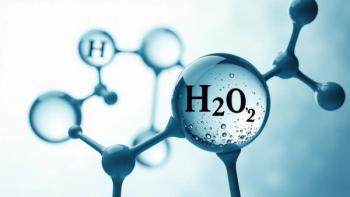
Derivatization-based liquid chromatography–tandem mass spectrometry (LC–MS/MS) preserves the O–O bond for specific hydrogen peroxide detection.

Sarah Foster’s principal component analysis of mead fermentation kinetics found Brix drove separation, with mean centering the best preprocessing.
Liquid chromatography–mass spectrometry (LC–MS) proteomics shows spreading colorectal and pancreatic tumors differ.
Sarah Foster found Abbaye yeast meads clustered apart in PCA and HCA, driven by furfural, ethyl octanoate, ethyl decanoate, and furan-2,5-dicarbaldehyde.
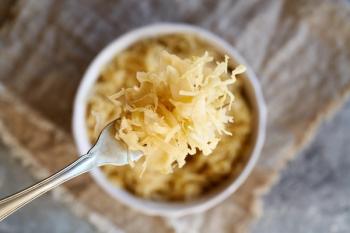
Gas chromatography–mass spectrometry (GC–MS) links Lactococcus and Enterococcus to fruity esters in sauerkraut.
Tuned liquid chromatography–tandem mass spectrometry (LC–MS/MS) separation beats brain matrix effects to quantify psilocin.
Advertisement
Advertisement