September 2025

Portrait of a Female Lab Scientist at Work in a Modern Medical Research Facility. Bioengineer in a White Coat Handling Test Tubes and Putting Them Inside an Advanced Machine for Analysis | Image Credit: © Gorodenkoff - stock.adobe.com.

In the fifth part of this roundtable discussion focused on the experiences, challenges, and contributions of Women in Chromatography, LCGC International spoke to Noor Abdulhussain, Lotte Schreuders, and Mimi den Uijl—co-founders of the Sisters in Science initiative—about how industry and academia can offer better support for women in STEM.

Lotte Schreuders, Noor Abdulhussain, and Mimi Den Uijl © Image courtesy of the Sisters in Science

In the fourth part of this roundtable discussion focused on the experiences, challenges, and contributions of Women in Chromatography, LCGC International spoke to Noor Abdulhussain, Lotte Schreuders, and Mimi den Uijl—co-founders of the Sisters in Science initiative—about how popular chromatography is as a subject.

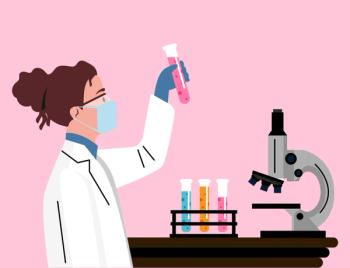
doctor scientist female test tube laboratory advancing healthcare innovation research experimentation vector illustration design  | Image Credit: © SachiDesigns - stock.adobe.com.

In the third part of this roundtable discussion focused on the experiences, challenges, and contributions of Women in Chromatography, LCGC International spoke to Noor Abdulhussain, Lotte Schreuders, and Mimi den Uijl—co-founders of the Sisters in Science initiative—to ask what advice they would offer to young women aspiring to enter a STEM career.

Portrait of a Female Lab Scientist at Work in a Modern Medical Research Facility. Bioengineer in a White Coat Handling Test Tubes and Putting Them Inside an Advanced Machine for Analysis | Image Credit: © Gorodenkoff - stock.adobe.com.

In the second part of this roundtable discussion focused on the experiences, challenges, and contributions of Women in Chromatography, LCGC International spoke to Noor Abdulhussain, Lotte Schreuders, and Mimi den Uijl—co-founders of the Sisters in Science initiative—about how the group has evolved over the last four years.

Lotte Schreuders, Noor Abdulhussain, and Mimi Den Uijl © Image courtesy of the Sisters in Science

In the first part of this roundtable discussion focused on the experiences, challenges, and contributions of Women in Chromatography, LCGC International spoke to Noor Abdulhussain, Lotte Schreuders, and Mimi den Uijl—co-founders of the Sisters in Science initiative—about their movement, which was started in 2021.

Trap focusing offers a powerful solution to common challenges in headspace (HS) and solid-phase microextraction–gas chromatography (SPME–GC) analysis of foodstuffs, including poor peak shape, limited sensitivity, and restricted dynamic range. This article explores how automated cryogen-free focusing, combined with multi-step enrichment and re-collection capabilities, can improve the detection and quantitation of both aroma-active compounds and trace-level contaminants. Using real-world examples, including flavor profiling of cola and garlic, and quantitation of ethylene oxide and epichlorohydrin in spices, enhanced chromatographic performance, greater confidence in compound identification, and lower detection limits than traditional workflows such as direct SPME or QuEChERS (Quick, Easy, Cheap, Effective, Rugged, and Safe) are demonstrated.

Atmospheric volatile organic compounds (VOCs) impact human health, quality of life, and the environment. Since industry contributes significant VOC pollution, fenceline monitoring is essential to ensuring compliance with applicable regulations. Conventional use of passive or grab samples analyzed at the laboratory fails to capture dynamic changes, and particularly fails to detect pollution incidents rapidly. In contrast, SIFT-MS instruments mounted in mobile laboratories provide on-site, real‑time analysis that enables rapid identification of “hot” zones via both on-the-move analysis and monitoring at fixed locations. Combined with drone sampling, the specific pollution source can be located.

High performance liquid chromatography (HPLC) is a widely used and well-established technique, routinely employed by thousands of analytical scientists worldwide. Nonetheless, certain challenges—arising from the complex interplay of multiple factors affecting peak retention and separation—persist. In this context, multidimensional modeling approaches can provide valuable support.

The main objectives of this study were to develop a method for the measurement of cocaine derivatives in oral fluid by coupling a probe electrospray ionization (PESI) source with quadrupole time-of-flight (QTOF). The three cocaine derivatives considered were: benzoylecgonine (BZE), cocaine, and ecgonine-methylester (EME).

Gas chromatography (GC) liners are offered in dozens of different configurations and internal diameters. The liner is designed with baffles or glass wool to best vaporize and mix the sample prior to transferring it to the head of the analytical column. Split liners have considerably more flow and are designed to handle high split ratios. For example, some liners have a glass dimple at the bottom to allow for higher flow rates (low pressure drop). Some split liners have an outer diameter of 6.3 mm while splitless liners have an outer diameter of 6.5 mm. It has been reported that these liners have been used interchangeably, which begs the question: Does the outer diameter matter?

Assorted liquor bottles in a bar with focus on the foreground. Generated with AI. | Image Credit: Artyom - stock.adobe.com

Researchers at the Dalian Institute of Chemical Physics at the Chinese Academy of Sciences, have developed a rapid FastGC-PICI-TOFMS method that detects the carcinogenic compound ethyl carbamate in Chinese liquor in under four minutes.