
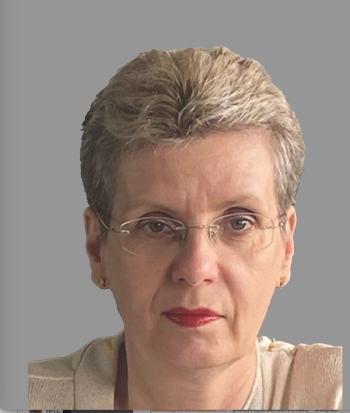
Kerstin Thurow, who achieved first professorship in “Laboratory Automation” at the Faculty of Engineering at the University of Rostock, in Germany, offers insights into the constantly-evolving field of laboratory automation.
Kerstin Thurow, who achieved first professorship in “Laboratory Automation” at the Faculty of Engineering at the University of Rostock, in Germany, offers insights into the constantly-evolving field of laboratory automation.

LCGC International’s Rising Star of Separation Science Winner for the LC Category, Bram Huygens from the Vrije Universiteit Brussel in Brussels, Belgium, recaps the work he presented for his award and his current research focus.

The 54th International Symposium on High Performance Liquid Phase Separations and Related Techniques (HPLC 2025) will be held from Sunday through Thursday, June 15–19 2025, in Bruges, Belgium. LCGC International spoke to the Scientific Committee to find out what’s in store.

Brett Paull from the University of Tasmania, Tasmania and his team describe the latest development in portable LC instruments and their experience of taking portable systems out to the field.

Elia Psillakis from the Technical University of Crete, Greece, and winner of this year’s Silver Jubilee Award from the Chromatographic Society, which will be presented at HPLC 2025, gives an update on current initiatives in green analytical chemistry.
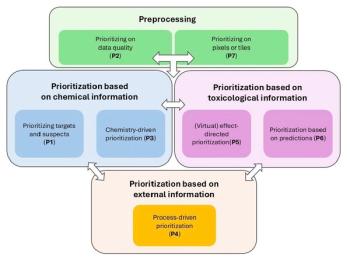
This article discusses how integrating seven prioritization strategies can enhance compound identification, support environmental risk assessment, and accelerate decision-making.

Analyzing trace compounds from complex samples often requires purification and pre-concentration, and online coupling of solid-phase extraction (SPE) with liquid chromatography (LC) helps minimize analysis time and solvent/sample use. Monoliths with large macropores are ideal for this coupling due to their low back pressure and versatility in various formats.

Combining silicon micro-nanofabrication technology to create perfectly ordered separation beds on a silicon chip, i.e. micro-pillar array columns (µPACs) is a powerful innovation in liquid chromatography. This article discusses the numerous possibilities of micro-nanofabrication in the future of analytical chemistry in life science, covering sample preparation, separation science, and detection technologies.
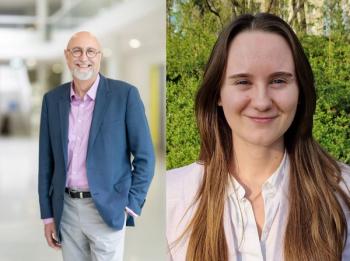
The article discusses advancements in two-dimensional liquid and gas chromatography (LC×LC and GC×GC) to address the challenges of analyzing complex samples in non-target analysis.

Michael Lämmerhofer from the Institute of Pharmaceutical Sciences, University of Tübingen, Germany, spoke to JFK Huber Lecture Award winner of 2024 Torgny Fornstedt, professor in analytical chemistry and leader of the Fundamental Separation Science Group, Karlstad University, Sweden, about his pioneering work in high performance liquid chromatography (HPLC) with a focus on fundamentals, ion-pair chromatography, and oligonucleotide applications.
Michael Lämmerhofer from the Institute of Pharmaceutical Sciences, University of Tübingen, Germany, spoke to JFK Huber Lecture Award winner of 2024 Torgny Fornstedt, professor in analytical chemistry and leader of the Fundamental Separation Science Group, Karlstad University, Sweden, about his pioneering work in high performance liquid chromatography (HPLC) with a focus on fundamentals and industrial applications.