

LCGC Europe
A panel of experts discuss the latest trends in sample preparaion.
LCGC Europe
A panel of experts discuss the latest trends in sample preparaion.

LCGC Europe
Benefits of elevated-temperature seperations in LC are discusssed.

LCGC Europe
MS: The Practical Art Editor Kate Yu interviews Fred McLafferty about his pioneering career in mass spectrometry
LCGC Europe
The first three important stages in any GC analysis are explained.

The Application Notebook
Polar lipids and other metabolites extracted from plasma from lean, diabetic, and obese Zucker rats were analyzed by flow injection using high resolution time of flight mass spectrometry. Metabolites were confidently identified and differences in the metabolite profiles determined.
LCGC North America
A systematic approach for the identification of nontargeted species, searching both mass spectral and "spectra-less" databases

LCGC Europe
Answers to common questions about operational qualification software.

LCGC North America
How to use small columns to test potential biphasic liquid systems for use in large-scale countercurrent chromatography separations
LCGC Europe eNews
The Swiss-based Global Discovery Chemistry platform of the Novartis Institutes for BioMedical Research has an immediate opening for an accomplished PhD-qualified Chemist with significant work experience with a variety of chromatographic methods for the preparative separation, isolation, and purification of chemical substances.

LCGC North America
A guide to using HPLC in an iterative form to clarify decision-making during method development

LCGC North America
An interview with Fred McLafferty, professor emeritus at Cornell University, about his pioneering career in mass spectrometry
Thermo NA - Analysis of Cephalosporins on a Polar Endcapped C18 3 ?m Particle Column
LCGC Europe eNews
Click here to view the complete LCGC Europe E-Newsletter from 1 February 2013
Thermo NA - Analysis of Non-Steroidal Anti-Inflammatory Drugs Using a Highly Pure, High Surface Area C18 HPLC Column
Thermo NA - An Improved HPLC Method for the Separation of Norethindrone and Mestranol with Progesterone as Internal Standard
ALMSCO EU - Analysis of polycyclic aromatic hydrocarbons from vehicle exhaust using TD?GC/TOF MS

LCGC Europe eNews
LCGC has announced a major new partnership in China, with Sepu.net, the China Chromatography Network. Through this partnership, LCGC Asia Pacific will be distributed to more than 130,000 practicing chromatographers in Greater China.
LCGC Europe eNews
Malvern Instruments (Malvern, UK) has opened a new applications laboratory in Sao Paulo, Brazil.
LCGC Europe
Click the title above to open the LCGC Europe February 2013 regular issue, Vol 26 No 2, in an interactive PDF format.
LCGC North America
Click the title above to open the LCGC North America February 2013 regular issue, Vol 31 No 2, in an interactive PDF format.
The Application Notebook
Click the title above to open the LCGC North America February 2013 Application Notebook, Vol 31 No s2, in an interactive PDF format.
Thermo NA - LC-MS/MS Method for the Rapid Analysis of Five Artificial Sweeteners Using a Core Enhanced Technology Column
Thermo NA - Comparative Analysis of Cooking Oils Using a Solid Core HPLC Column
LCGC Asia Pacific eNews
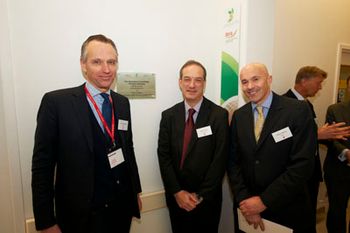
The Food and Environment Research Agency (Fera) and Waters (Milford, Massachusetts, USA) have officially opened the first food safety training facility (York, UK), the first of its kind in Europe. Fera is an executive agency of the UK government?s Department for environment, food and rural affairs (Defra).
LCGC Asia Pacific eNews
Quintiles (North Carolina, USA) has announced the formation of an exclusive partnership with BioCore Co., Ltd, (Seoul, South Korea) to extend the provision of bioanalytical services in Asia.

LCGC Europe eNews
A new strain of the enzyme ?-glucosidase isolated from the microbial strain Aureobasidium pullulans (Sp? ?-gl) improves the aroma of wine, according to a team of Brazilian researchers.1 Published in Appl. Biochem Biotechnol., the study indicated that the Sp? ?-gl strain functioned over a wide range of pH levels, had two peaks of optimum temperature and was tolerant to ethanol.
LCGC Europe eNews
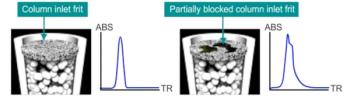
In this months technical tip we answer some often asked questions and dispel some myths regarding HPLC column abuse and reconditioning