
Bruker Daltonics and Kiestra Lab Automation have announced an alliance in the co-marketing and cross selling of their products, as well as a joint research and development programme for interfacing their technologies.
Bruker Daltonics and Kiestra Lab Automation have announced an alliance in the co-marketing and cross selling of their products, as well as a joint research and development programme for interfacing their technologies.
The Column
Agilent Technologies has released a statement reporting that its portfolio of DNA microarrays is now manufactured under ISO 13485 certification, a recognized standard for quality management systems (QMS).
LECO Apps Notes - Pegasus® 4D GCxGC-TOFMS analysis of 3-MCPD esters in edible oils
Thermo Fisher Scientific has acquired Proxeon A/S, a supplier of products for proteomics analysis headquartered in Odense, Denmark.
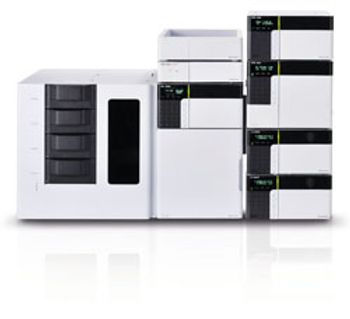
UHPLC systems represent the latest development in liquid chromatography instrumentation. Beside enhancements necessary to operate with sub 2 µm particle columns, they differ from each other through their versatility in handling various applications on the same instrument without any changes.
Now you can get comprehensive repair, maintenance and compliance support for all major LC, GC and MS models in your lab regardless of manufacturer.
The Column
Pittcon has always served as a showcase for innovations in laboratory science, as well as provided the perfect venue for leading scientists to share their latest research and findings... and this year is no exception.
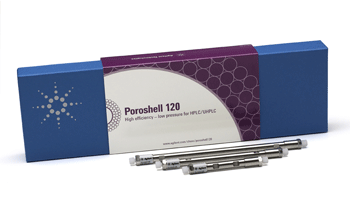
New from Agilent: Poroshell 120 — A total lab productivity enhancer!
Thermo Fisher Scientific and Symyx Technologies have collaborated to offer Thermo Scientific?s chromatography data system integration solution on Symyx Technologies? electronic laboratory notebook.
E-Separation Solutions
A person-portable gas chromatography–mass spectrometry (GC–MS) system employing a toroidal ion trap mass spectrometry (TMS) detector was used to analyze chemical threat related compounds.
On Wednesday 21 and Thursday 22 April, Metrohm UK will be hosting open days at the company?s Runcorn facility in Cheshire, UK.

E-Separation Solutions
Participants in this Technology Forum are Richard Jack of Dionex, Jack Cochran of Restek, and Lucas Smith of LECO.
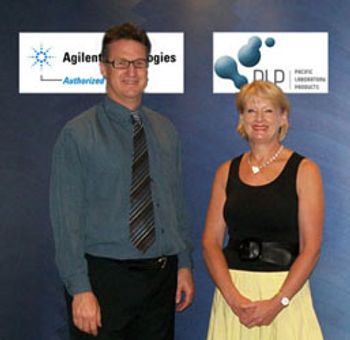
Agilent Technologies has announced a strategic partnership with Pacific Laboratory Products in Australia.
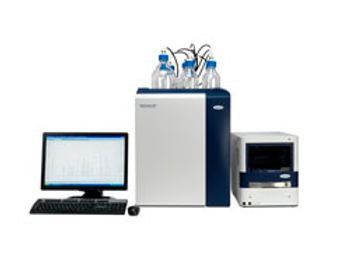
Biochrom launches the Biochrom 30+ Series of amino acid analyzers - the gold standard in dedicated amino acid analysis...
The Green Chemistry Group proudly hosts SFC 2010 from 15–16 September in Stockholm, Sweden. This year's conference will be chaired by Drs Shalini Andersson of AstraZeneca and Eric Francotte of Novartis and will feature some of the top analytical chemists and purification specialists from around the world...
A2 Technologies is offering a programme with its FTIR technology for researchers and teachers in colleges and universities...
The Column
Recently formulated pesticides are quite different in their physical properties from their predecessors such as 4,4'-DDT.
The Application Notebook
LCGC is planning to publish the next issue of The Application Notebook special supplement in June.
The Column
Broad spectrum chemical analysis of trace level components is a continuing challenge for any analytical chemist.
Bruker Corporation has revealed the creation of a Chemical Analysis Division within its Bruker Daltonics subsidiary. This division will be headquartered in Fremont, California, USA...

An independent survey has ranked Agilent #1 for Compliance Services since 1995...
The Scottish Metabolomics Facility ScotMet is to gain four Thermo Fisher Scientific mass spectrometers...
E-Separation Solutions
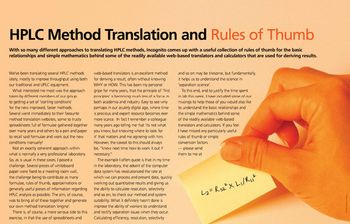
Incognito comes up with a useful collection of rules of thumb for the basic relationships and simple mathematics behind some of the readily available web-based translators and calculators that are used for deriving results.
E-Separation Solutions
What do you advise using as gases with electron-capture detection (ECD) for gas chromatography? Would it be better to purchase higher quality gases or to place an oxygen trap between the gas bottle and the detector? Which setup would be the most cost-effective?
E-Separation Solutions
With LC–MS continuing to make headway into application areas previously reserved for other techniques, the growth of this lab workhorse technique shows no sign of slowing down.
Dionex has announced that a beverage company is using its ion chromatography (IC) instruments to test water for contamination...