

All News
Advertisement
Advertisement
The Column
Additional upcoming events in the chromatography community as of March 2010.
The Column
Sugar alcohols like mannitol, sorbitol, and xylitol are often used as excipients in tablet formulations of pharmaceutical compounds, serving as binders and fillers.
The Column
Now it its third year, the LCGC Awards have quickly grown into one of the industry's premier honors for both emerging and veteran practitioners of chromatography.
Advertisement
LCGC Europe eNews
Bruker has announced that it is to purchase certain product lines of Varian, including a global laboratory gas chromatography instruments business in The Netherlands.

Waters® Empower? Software tutorials and workshops at Inform 2010 Informatics User Conference.
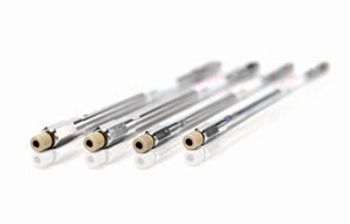
Tosoh Bioscience is extending the portfolio of TSK-GEL ODS-100 reversed phase columns by a new 3µm TSKgel ODS-100Z stationary phase and additional column dimensions for all TSK-GEL ODS-100 phases.
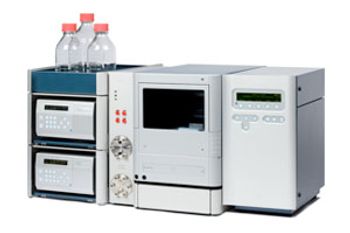
Antec is a worldwide supplier of Analyzers based on HPLC with electrochemical detection. With the newly introduced ROXY? System, on-line Electrochemistry/LC/MS for metabolic profiling of drug compounds, oxidative damage of Proteins, DNA, etc., becomes possible for the first time.
Advertisement

E-Separation Solutions
With issues such as food safety pushing gas chromatography to the forefront of the research community, this mature technique has seen something of a renaissance in recent times.

LCGC Europe eNews
With issues such as food safety pushing gas chromatography to the forefront of the research community, this mature technique has seen something of a renaissance in recent times.
LCGC Europe eNews
Agilent Technologies and the American research consortium, National Center for Food Safety and Technology (NCFST), announced that they have entered into a collaboration to develop new scientific methods for food testing, with the goal of solving a wide range of persistent problems facing global food supply chains.

John Di Mare, Agilent Account Manager, talks with us about what the company is up to at this year's Pittcon, as well as the acquisition of Varian.
E-Separation Solutions
In this application note, two column pairs were exhibited for organochlorine pesticide analysis. The Zebron ZB-XLB and ZB-35 are traditionally used for this analysis but the Zebron ZB-MultiResidue-1 and -2 pair show additional benefits of improved resolution.
LCGC Europe eNews
Merck and Millipore have announced that the two companies have reached an agreement that will see Merck acquire Millipore for around $7.2 billion.
Acetaminophen (paracetamol; APAP; IUPAC: N-(4-hydroxyphenyl)acetamide) was chosen as model drug to investigate oxidative metabolism using the ROXY EC System dedicated for single component screening. Electrochemical conversion of the acetaminophen into reactive phase I metabolites and the NAPQI ? GSH phase II conjugate was successfully achieved.

The Column
CHROMacademy offers continuing professional development. Tony Taylor spoke to The Column about the benefits this approach offers chromatographers.
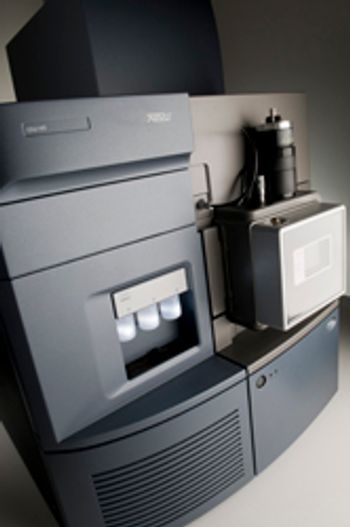
Waters designed every component of the Xevo? Family with Engineered Simplicity? in mind.
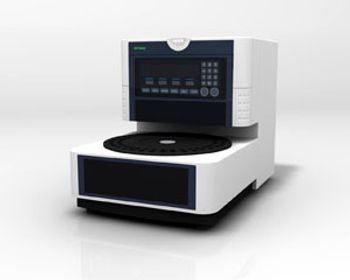
Leading supplier, Spark Holland, will be showcasing the new OPTIMAS ? a dependable no-nonsense HPLC autosampler.

All of the most important sessions, awards and events from Pittcon 2010 covered here in this convenient and easy-to-read daily e-newsletter.
LCGC Europe eNews
Waters and DAISO have jointly announced that they are entering into a collaborative agreement to globally market and supply DAISOGEL bulk packing materials for process chromatography.
The Application Notebook
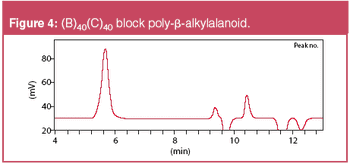
There is considerable attention placed on the synthesis and characterization of polypeptoids, a new class of synthetic polypeptide analogues. Because of intense hydrogen-bonding among chains of these polymers, aggressive solvents such as hexafluoroisopropanol (HFIP) must be used as the mobile phase to support solubility.
The Application Notebook
Ultra fast separations of acetaminophen, caffeine, propofol and parabens are achieved in 30 s using the Thermo Scientific Accela UHPLC system with the 80 Hz PDA detector. The performance of the Accela PDA detector is highlighted by its low noise level, low drift, four orders of magnitude linear working range and high sensitivity.
The Application Notebook
Recent technological advances in macromolecular crystallography led to focus on the study of more and more sophisticated biological systems, such as protein–protein complexes. Nevertheless, they represent one of the most challenging areas in modern structural biology.
The Application Notebook
The procedure involves a rapid and efficient pretreatment with SampliQ QuEChERS kits. The homogenized liver sample was initially extracted in a buffered aqueous/1% acetic acid acetonitrile system with an extraction and partitioning step after the addition of salts. Finally, the sample was cleaned up using dispersive solid-phase extraction (dispersive-SPE). The final extracts were analysed by the sensitive and selective determination of all compounds in a single run using LC–ESI-MS–MS operating in positive ion multiple reaction monitoring (MRM) mode. Sulphapyridine was selected as the internal standard. The accuracy of the method, expressed as recovery, was between 53 and 93%. The precision, expressed as RSD, was between 2.1 and 16.8%. The established 5 ng/g limits of quantification (LOQ) were much lower than the respective maximum residue limit (MRL) for sulphonamide in animal food products (20–100 ng/g).
The Application Notebook
The procedure involves a rapid and efficient pretreatment by SampliQ QuEChERS kits. The homogenized liver sample was initially extracted in a buffered aqueous, 5% formic acid acetonitrile system. An extraction and partitioning step was performed after the addition of salts. Clean-up was done using dispersive solid-phase extraction (dispersive-SPE). The final extracts allowed determination of all compounds in a single run using LC–ESI-MS–MS operating in positive ion multiple reaction monitoring (MRM) mode. Norfloxacin was selected as the internal standard. The accuracy of the method, expressed as recovery, was between 62 and 113%. The precision, expressed as RSD, was between 2.2 and 13.4%. The established limit of quantification (LOQ) was 5 ng/g and is significantly lower than the respective maximum residue limit (MRL) for quinolones in food producing animals.

The Application Notebook
In the past decade, supercritical fluid chromatography (SFC) has experienced a steady growth in acceptance, particularly in pharmaceutical and chemical laboratories. In SFC, "supercritical" CO2 combined with one or more polar organic solvents, most commonly alcohols, are used as mobile phase. Preparative SFC is deemed by many to hold the greatest promise to attain mainstream acceptance. The reduction in solvent consumption and collection in relatively small volumes of volatile organic solvents, hence, a much less stringent post-purification endeavour, lead to significant savings on operation costs. For example, Ripka et al. calculated that 20000 samples purified by SFC instead of reverse phase liquid chromatography (RPLC) would realize a 48 times reduction in solvent consumption.1
The Application Notebook
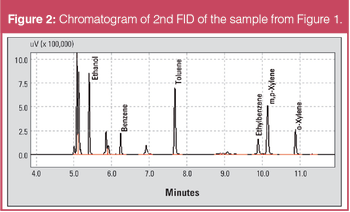
The determination of BTEX in gasoline is usually performed in accordance with the standard test method ASTM D3606 using gas chromatography. However, particularly in the presence of ethanol, co-elutions are observed in one-dimensional chromatography. In this application note a method is described applying multidimensional GC to overcome the separation problem.
Advertisement
Advertisement