LCGC North America
LCGC hands out a pair of awards at Pittcon 2009 in Chicago.
LCGC North America
LCGC hands out a pair of awards at Pittcon 2009 in Chicago.



LCGC Europe
What measurements are required for system suitability?
2009 Emerging Leader Winner

LCGC Europe
Columnist Ron Majors discusses some of the practical considerations in the successful application of the popular yet age-old technique of solvent extraction (also known as liquid–liquid extraction, or LLE). After a brief review of the basics, guidelines on the selection of the appropriate extraction solvents and how to use acid–base equilibria to ensure efficient extractions of ionic and ionizable compounds are provided. Problems in LLE and the solutions to these problems are highlighted. A newer technique called dispersive liquid–liquid microextraction (DLLME) is introduced.
LCGC Europe
Pittcon celebrates 60 years of service to the scientific community and remains an unmissable event in the analytical chemistry calendar.
2009 Lifetime Achievement Winner
LCGC Europe
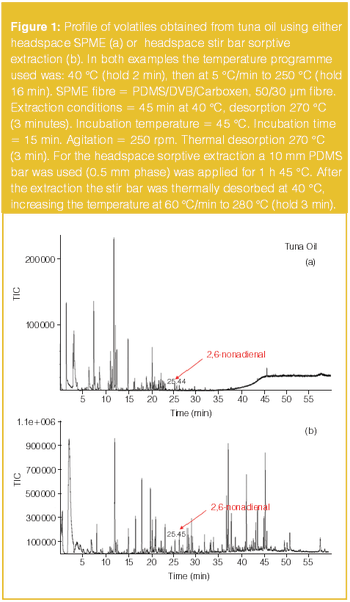
A review of the role of Solid-phase Microextraction (SPME) in quality control (QC) in the fish oil industry.
LCGC Europe
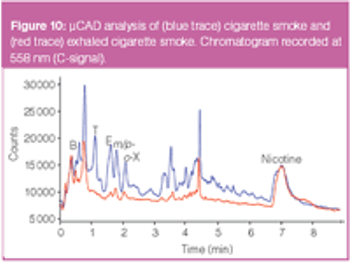
A miniature gas chromatograph incorporating a miniaturized chemical trap for enrichment, rapid thermal desorption of the trap, a resistively heated capillary column for programmed GC analysis and a micro-chip-based plasma emission detector (PED) is described. The sampling and chromatographic conditions for the analysis of volatile compounds in air are presented. The performance of the µCAD is illustrated in the universal (carbon) mode and for the selective detection of chlorinated and organo-mercury compounds. Detection limits (DLs) are at the sub-μg/L level in the carbon mode and 10 ng/L for organo-mercury compounds.
LCGC Europe eNews
PerkinElmer has announced that it is developing interface software for Agilent?s EZChrom Elite chromatography data system (CDS) to allow it to control the company?s own Clarus range of gas chromatographs.
LCGC Europe eNews
Evogen and LGC have signed a worldwide licence agreement, which will allow Evogen to augment its rapid molecular diagnostics and detection platform with LGC?s HyBeacons PCR probe chemistry technology.
LCGC Asia Pacific eNews
Restek has announced the opening of a new branch office in Japan. According to the company, Restek Japan is an integral part of the company?s growth in Asia and will strengthen its position as a supplier of LC and GC chromatography columns and accessories, analytical reference standards and sample preparation products in Japan.
This training course provides theory lectures and practical sessions for modern analysis of macromolecules using gel permeation chromatography (GPC), also known as size exclusion chromatography (SEC).
LCGC Europe eNews
The answer to the following reader question about degassing mobile phase solvents was supplied by LCGC Europe?s ?LC Troubleshooting? columnist John Dolan.

E-Separation Solutions
Joining us for this discussion are Diab Elmashni and Eric Phillips of Thermo Fisher Scientific; Michael McGinley of Phenomenex; and Doug Later of Torion.
The financial reports for Agilent Technologies' first quarter of 2009 have identified trends in the demand for product platforms.
LCGC Europe
Pittcon celebrates 60 years of service to the scientific community and remains an unmissable event in the analytical chemistry calendar.
LCGC Europe eNews
Agilent Technologies and the National University of Ireland (NUI), Galway, announced the opening of a biological mass spectrometry facility on the NUI Galway campus. The facility features Agilent?s latest quadrupole time-of-flight (Q?TOF) and triple quadrupole (QQQ) mass spectrometer platforms.
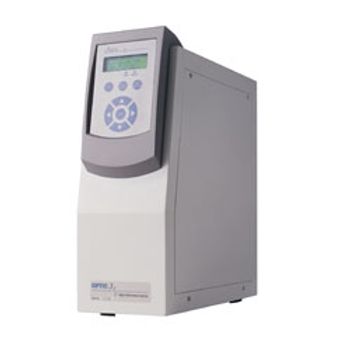
Shimadzu - LINEX (Automatic Liner Exchange) New Capping/Decapping station with Optic 3 injector The Optic 3 injector is a versatile tool for the Shimadzu GC and GCMS product range. It can be operated with split, splitless, on-column/AT-Column, LINEX–TD (Thermodesorption), LINEX–DMI (Difficult Matrix Introduction) and large volume injections.

State-of-the art solutions, technologies, scientific achievements and a unique opportunity to learn about products of leading companies and institutions in chemical analytics, metrology, biotechnology and Life Science - this is just a part of the offer at the International Trade Fair of Analytical Measurement and Control Technology "EuroLab".

LCGC Europe eNews
Millipore has announced that it will be acquiring Guava Technologies. The agreement, which is expected to close in the next two weeks, will see Millipore pay around $22.6 million. This follows the distribution and co-development partnership that the two companies announced in March 2008.
The Column
Additional education events in the chromatography field.
The Column
The current global shortage of acetonitrile has made a significant impact on the productivity and cost of most high performance liquid chromatography (HPLC) applications.
The Column
Pittcon 2009 will celebrate its 60th anniversary of showcasing the most advanced instrumentation and technologies and presenting the latest advances in scientific research.